Get Full Government Meeting Transcripts, Videos, & Alerts Forever!
Get email alerts on the School Safety Discipline topic
No spam. Unsubscribe anytime.
District details code-of-conduct rollout, behavior trends and campus safety upgrades
Summary
District leaders described student code-of-conduct implementation, reported a drop in early-year discipline referrals compared with 2024, and outlined campus safety measures including access-control audits, SRO presence and expanded camera work.
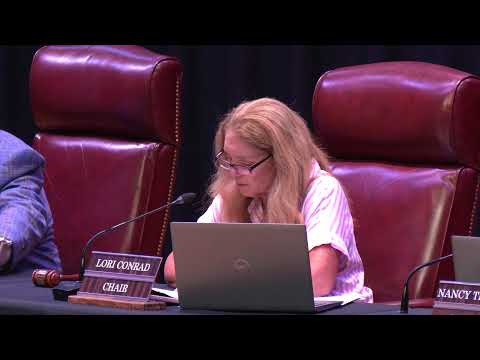
Marion County Public Schools staff told the school board on Aug. 21 that the district has implemented the new student code of conduct and is pursuing several safety and behavior measures intended to reduce repeat discipline incidents and improve school climate.
Student-services staff said the code-of-conduct implementation began with targeted training for principals, assistant principals and student-service managers in July and during staff return sessions. The district plans an electronic Skyward acknowledgment for students and parents and said the acknowledgment will go live after official approval; students logging in after that date will complete the acknowledgment.
Dr. Curley (student services) reported discipline data from the 2024–25 year: 49,513 total referrals across the district, and that 40 of 50 schools had 80% or more of students receiving one or no referrals. She said 84% of students districtwide received one or fewer referrals, and highlighted reductions in alternative placements and expulsions. Early in the 2025–26 year, Curley reported a decrease in first-two-week referrals compared with the previous year: 578 first-two-week referrals in 2022–23, 941 in 2023–24, and 387 so far in the current year (through the date of the report).
Board members asked whether the drop reflected fewer device-related violations after new wireless-communication plans at middle and high schools; Curley said middle- and high-school plans were intended to reduce device violations and that implementation and communication were factors in the early reductions.
Separately, safety officer Mr. McFadden walked the board through campus safety work: required drills and emergency preparedness, school resource officers, access-control reviews and a vendor contract to add surveillance cameras at critical locations. McFadden said the state recently used Westport and Liberty high schools as training sites for regional compliance officers and that district compliance checks are performed and remediated, typically within 24 hours. He said the district has a threat-management team and investigates reports of student threats with law enforcement and mental-health staff.
Board members raised staff-safety survey results and concerns that frequent drills and preparedness training can leave some teachers reporting lower perceived feelings of safety. McFadden and Whitehouse said an intense focus on readiness can lead to those perceptions even as physical security measures and threat-assessment processes are strengthened.
No formal board action was taken; staff said training, audit work and additional cameras will continue under existing budgets and contracts.