Get Full Government Meeting Transcripts, Videos, & Alerts Forever!
Get email alerts on the Urban Forest Management topic
No spam. Unsubscribe anytime.
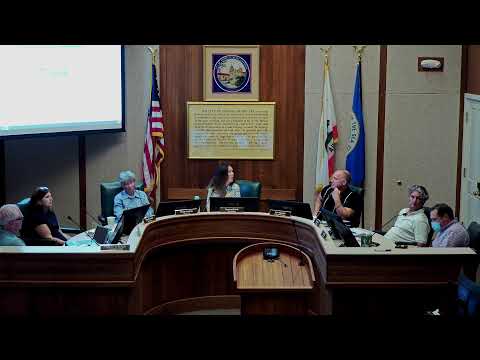
Forest and Beach Commission moves to form tree-protection ad hoc committee; seeks updated fines, better tracking and more resources
Summary
Commissioners agreed to create an ad hoc committee to study tree fines, permit language and enforcement. Staff outlined forestry operations, reporting gaps, and a deferred-maintenance catch-up plan including stump removal, replanting and watering logistics.
The Forest and Beach Commission discussed launching an ad hoc Tree Protection Committee to study updates to tree-related fines and municipal code language and to return recommendations to the full commission. Commissioners said current fines and valuations are outdated and that a short-term committee would help align ordinance language, enforcement tools and the forestry master plan.
Commission action and next steps: Commissioners agreed informally to staff the ad hoc with Chair McKee, Vice Chair Buzowski and Commissioner Rutta (committee membership to be finalized at the next meeting). The commission described the committee’s charge as producing recommendations to update fines, streamline permit language and identify enforcement resources and reporting metrics to bring back to the commission and, ultimately, the City Council. The committee’s timeline was described as meeting in the next month and producing initial work over the following months.
Why it matters: Several commissioners and staff said existing fines and tree valuations do not reflect current conditions or deterrence needs. Commissioners also said enforcement capacity is limited across the city and recommended using more complete data on permits, replanting and removal to justify resource requests.
Staff report and operational data: City forestry staff provided a monthly update that included these items: - Budget: staff cited a forestry catch-up budget of $981,500 split between operating and capital-improvement funds. - Inspections and staffing: staff said the defensible-space crew has performed just over 500 inspections (focused on the red zone) and that the department’s prevention staff number about 15, with 13 defensible-space inspectors. - Permits and planting: in the most recent month staff recorded 25 permit intakes and 13 permits issued; staff said some intake records are consultations or pre-permit assessments that do not result in issued permits. - Work completed: crews removed nine dead, dying or invasive trees, planted 12 trees and pruned 15 trees during the reporting period; a prior phase removed 386 stumps.
Discussion highlights: Commissioners and staff discussed several recurring topics: - Fines, valuation and enforcement: Commissioners said updates should include clearer municipal-code language, consistent job titles (the code references "Director of Forestry" in places where the department is now organized differently) and a review of fines and tree-value calculations. Staff said the municipal code allows valuing a tree under an established appraisal method (American Tree and Landscape Appraisers Association guidance was mentioned in discussion of replacement values). Several commissioners asked staff to compile historical permit and enforcement counts so the committee can target the most frequent violations. - Stump removal and replanting: staff said stump-removal estimates in the earlier plan were conservatively high and that field checks reduced the number of stumps slated for removal; staff emphasized they will prioritize stump sites best suited for replanting and where public benefit is clear. Staff also noted constraints such as underground utilities and steep terrain that prevent grinding in some locations. - Watering, plant survival and contractors: commissioners and members of the public urged a stronger watering/maintenance program for newly planted trees. Staff said the city has secured access to a watering truck and will catalogue newly planted trees going forward, and that watering records will be captured moving forward. - Permitting process: staff described a two-step approach used to reduce homeowner costs: a "pre-permit assessment" that is lower-cost and designed to reduce unnecessary full removal permit applications. Staff said consultation is common and helps reduce removals where pruning is sufficient.
Public comments and community concerns: Multiple residents spoke during public comment urging more watering for parks and street trees, faster response for marine mammal removal on beaches, clearer replanting follow-up and careful messaging about tree removal and forest health. One resident urged the commission to consider outdoor sprinkler systems and increased surveillance for early fire detection; staff responded that sprinklers can reduce local ignition risk but noted municipal-water-pressure constraints during major fire events.
Votes at a glance: During the same meeting the commission approved two consent items by roll call: the meeting minutes (June 12 and July 10) and the Public Works Director's report. Both motions passed on roll call with five commissioners voting yes (Burling, Ryzowski, Ross, Bridal, Chair McKee).
Ending: Commissioners agreed to form the ad hoc committee and to return materials—permit and fine counts, code crosswalks and recommended ordinance language—to the full commission at future meetings so members can weigh options before a City Council referral.