
Orono technology team reports security, roster automation, device refresh and early AI planning
Get AI-powered insights, summaries, and transcripts
Sign Up Free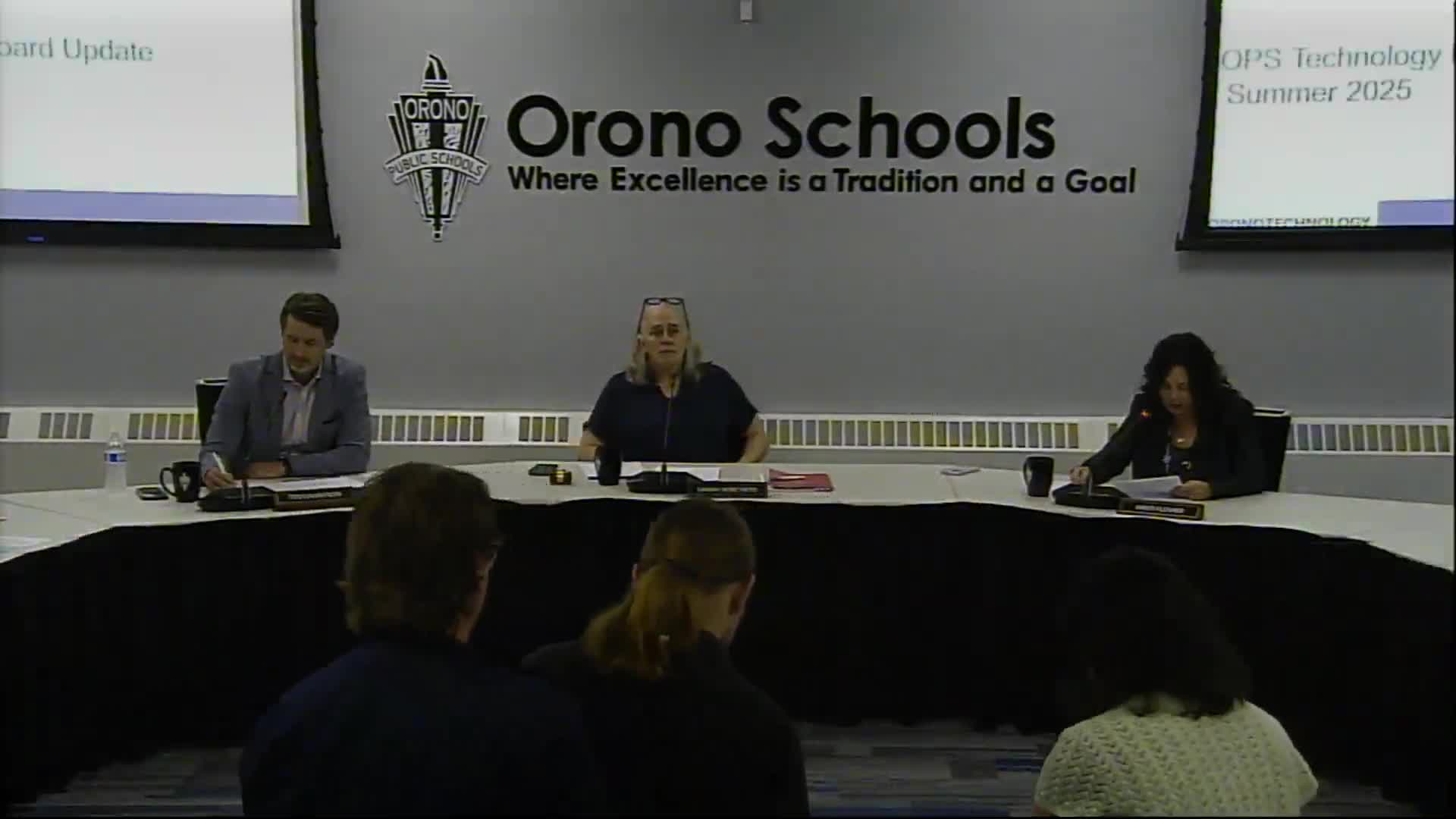
Summary
District technology staff described upgrades to ClassLink roster automation, MFA/geofencing, a ticketing system with 2,145 tickets and a 93.6% resolution rate, a student-intern program, device refresh, custom digital signage and an enterprise AI capability available through Google Workspace.
Orono Public Schools’ technology team presented a summer 2025 update on districtwide infrastructure, classroom technology and early work on artificial‑intelligence policy and tools.
Sean Beverson, the district’s director of technology, told the board that after three summers of major infrastructure work—phones, wireless and classroom display upgrades—"2025 was the summer of stability," characterized by systems modernization and operational improvements across safety, infrastructure and classroom learning. The team credited voter support for a technology levy and highlighted system changes intended to reduce friction for teachers and students.
Joel Mallor, cloud systems specialist, described ClassLink and its OneSync and roster-server capabilities that automate account and roster creation: when a staff hire or new student is entered into the human resources or student information systems, ClassLink provisions accounts and places users into the correct groups and resources. Mallor said the roster automation supports single sign‑on to platforms such as Seesaw, IXL and McGraw‑Hill resources, and that the district moved high‑school students to password ownership this summer as a step toward broader multi‑factor authentication (MFA).
The team also reported operational improvements in support and security. The district implemented Freshservice as a ticketing system and logged 2,145 tickets last school year with a 93.6% resolution rate, which technology staff said helped identify trends and target fixes during the classroom AV refresh and standardized testing season. Jason Wojak (systems and security specialist) described a tabletop cyber‑exercise run by an outside firm and participation in a local education security consortium to strengthen monitoring, device visibility and incident preparedness. Wojak also reported migrating older transcript files into a searchable archive using an AI‑assisted script that converted about 16,000 transcripts into a secure, searchable format.
Leah Staples, operations specialist, summarized summer workforce activity: five paid student interns and one volunteer cleared inventories, repaired Chromebooks, set up 105 new mini‑PCs for middle and high schools and organized consistent loaner-device models for students. The district said those changes should improve day‑to‑day reliability for teachers and students.
Digital learning specialists Paul Ivers and Bailey Net described teacher cohorts working on responsible AI use and classroom integration. Beverson told the board that Orono uses Google Workspace and that in June Google added Gemini and NotebookLM to its core services agreement, giving the district an enterprise large language model (LLM) available within its Google Workspace environment. The technology team emphasized four nonnegotiables for AI: a human in the loop, protecting data privacy, applying a responsible‑use scale, and aligning AI uses to learning progressions that vary by grade level.
District leaders said they are taking a cautious, experimental approach this year—piloting internally built tools (peer‑evaluation app, digital signage) and testing the scalability of AI tools—while working with parents and staff to develop clear expectations for student use by grade level.
No formal board action was required during the technology presentation; the board thanked the team and staff for summer work that administrators said reduces administrative burden and improves classroom reliability.