Get Full Government Meeting Transcripts, Videos, & Alerts Forever!
Get email alerts on the Governance Compensation topic
No spam. Unsubscribe anytime.
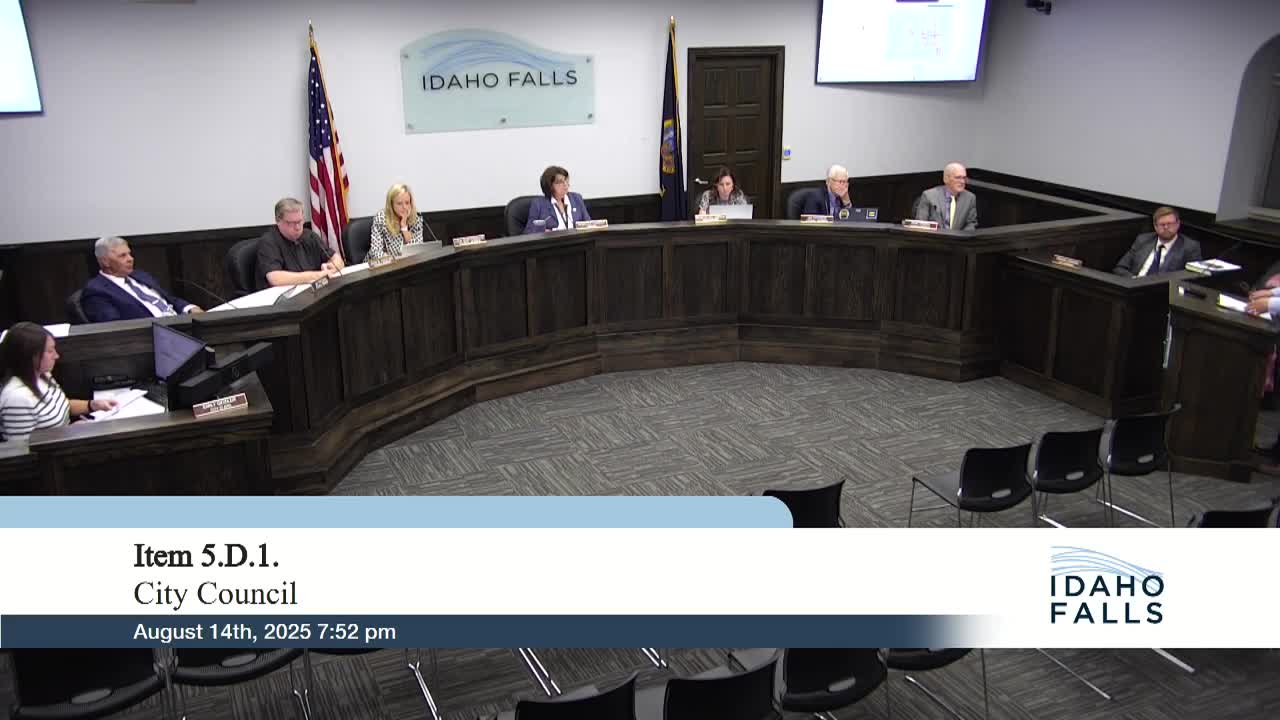
Council approves ordinance updating mayor and council compensation effective Jan. 1, 2026
Summary
After deliberation the council voted 4–2 to adopt an ordinance increasing council and mayor compensation with phased salary adjustments effective Jan. 1, 2026; ordinance will be published by summary and the changes take effect at the start of 2026.
The council considered an ordinance amending city code chapters that set mayoral and council compensation. The Human Resources director presented benchmark data comparing neighboring and similar‑sized Idaho cities and described a multi‑year phased adjustment for mayor and council pay.
Key provisions
- Mayor: proposed phased increases (as presented in the ordinance text) to take effect Jan. 1, 2026, with later increases in 2027 and 2028. The ordinance summary presented to council specified the effective start date of January 1, 2026 for the first adjustment.
- Council members: proposed increases that similarly phase in beginning Jan. 1, 2026 and in subsequent years.
Council debate and rationale
Several councilors emphasized that the vote sets compensation for the position, not for an individual, and cited the increased time commitment and complexity of city government in recent years as justification. One councilor expressed discomfort with the scale and pace of the raise and said they likely would vote no. The mayor and other councilors said the increases were phased to reduce near‑term budget impact.
Vote and next steps
A motion to adopt the ordinance passed on roll call by a recorded council majority. The clerk read the ordinance title for a publication‑by‑summary requirement; staff confirmed the ordinance changes will not take effect until Jan. 1, 2026. The city clerk will publish the required summary in the newspaper and staff will implement the ordinance on the stated effective date.
Why it matters
The ordinance adjusts compensation for elected officials to reflect the workload and market comparisons presented to council; because adjustments take effect at the start of a calendar year, voters will have the opportunity to weigh in in the next election cycle if they choose to do so.
Ending note
The council framed the action as a position‑level adjustment intended to reflect the demands of the office rather than a change targeted at current officeholders.