Get Full Government Meeting Transcripts, Videos, & Alerts Forever!
Get email alerts on the County Budget topic
No spam. Unsubscribe anytime.
Seward County outlines worst-case $5.96 million tax payback as commissioners consider mill-levy increase
Summary
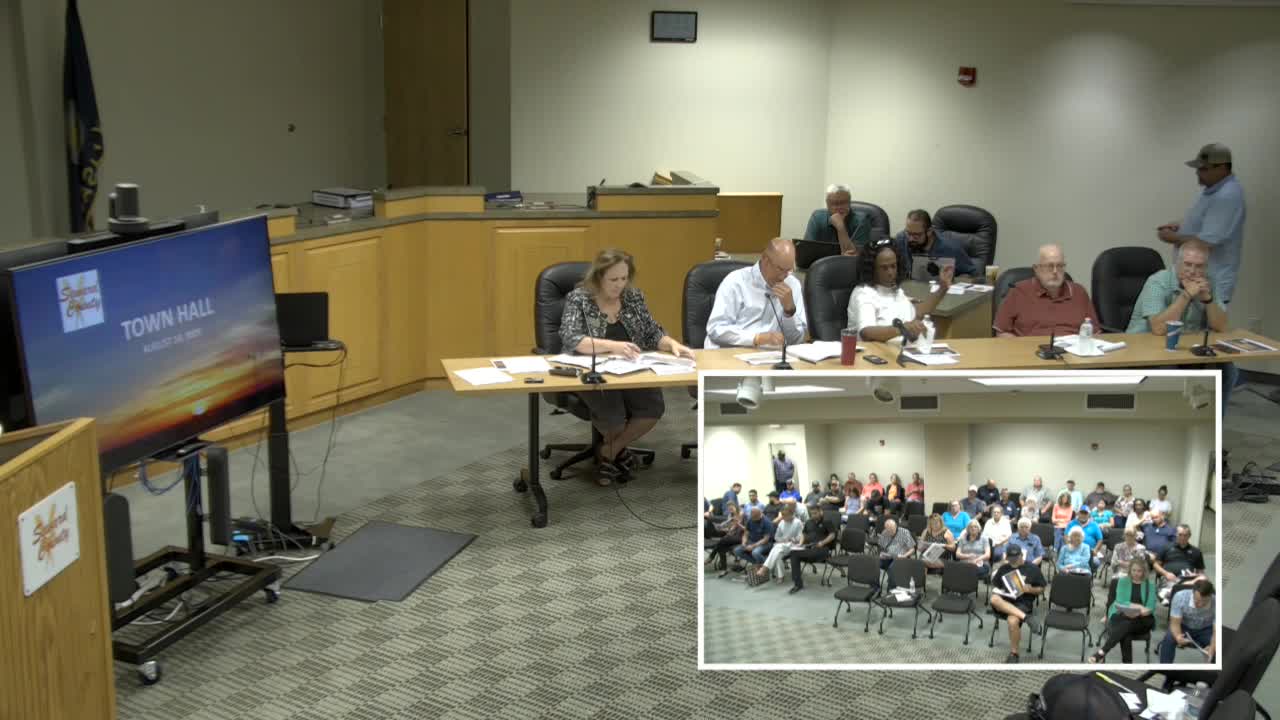
Seward County officials told a crowded Aug. 14 town hall that the county’s 2026 budget proposal currently assumes a worst-case payback of $5,955,361.12 tied to an outstanding Board of Tax Appeals case, and that most of a proposed mill-levy increase would cover that potential liability.
Seward County officials told a crowded Aug. 14 town hall that the county’s 2026 budget proposal currently assumes a worst-case payback of $5,955,361.12 tied to an outstanding Board of Tax Appeals case, and that most of a proposed mill-levy increase would cover that potential liability.
The declaration came during a presentation by April Wharton, Seward County administrator, who summarized the county’s budget process and the drivers behind the proposed revenue increase. “This is a worst case scenario number,” Wharton said of the $5,955,361.12 figure, adding that it “does include statutory interest, which the statute rate of interest is 8.25% right now.”
Why it matters: a single large tax protest could reduce county assessed value for multiple years and require retroactive refunds to several taxing entities. County staff told residents the $5.96 million estimate covers protests dating to 2018 through 2020 and includes the interest that would accrue if the county must repay the protested amount.
County context and next steps
Wharton and commissioners said the payback stems from a tax protest brought to the Board of Tax Appeals that was appealed to district court and is currently being heard in Sedgwick County. The county’s outside counsel and financial advisors advised budgeting to the worst-case figure because of timing uncertainty: budgets must be certified to the county clerk by Oct. 1 and the county was required to publish notices by July 20 showing whether it planned to exceed the revenue-neutral rate.
Commissioners have held multiple budget work sessions since June and instructed department heads to identify cuts. Wharton told the meeting that department-level reductions already proposed include reduced hours, delayed hiring and eliminating several vacant positions; the county has also set aside $500,000 per year since the current commission took office in 2023. “We were able to save close to a million” through cuts asked of departments, Wharton said.
Public impact and uncertainty
Residents at the town hall asked how the county would collect a potential judgment and whether taxes would be refunded if the court reduces the obligation. Wharton said the published budget would reflect a worst-case revenue need but that commissioners can lower mill levies later if the court decision reduces the liability. “If we found out something before it has to be certified by October 1, they could make that adjustment,” Wharton said.
The county also described possible repayment arrangements with the protesting taxpayer. Wharton said the county negotiated a multi‑year repayment with DCP National Helium in an earlier case; commissioners said they would seek similar arrangements if the current taxpayer agreed.
Other budget details discussed
- Revenue drivers: County appraiser procedures, assessment rates (residential assessed at 11.5%, commercial at 25%, agricultural at 30% of production value) and the role of oil, gas and agricultural valuations in the tax base. - Statutory deadlines: valuation notices, revenue-neutral publication rules and the Oct. 1 budget certification deadline. Wharton explained that revenue-neutral notices are informational — not bills — and trigger public hearings when a jurisdiction plans to collect more property-tax revenue in dollars than the previous year. - Mandates and cuts: Wharton listed 18 state-mandated county services (public health, road and bridge, jails, elections, property valuation, etc.) and told attendees that some cuts would reduce services. The county is constrained by cash-basis budgeting laws and by the need to meet legally mandated services.
Quotes and attributions in context
- “This is a worst case scenario number,” — April Wharton, Seward County administrator, on the $5,955,361.12 payback estimate. - “We were able to save close to a million,” — April Wharton, on department-level budget reductions after commissioners asked department heads to cut line items.
Ending
County leaders said they prefer not to raise taxes and urged residents to follow public hearings this fall; the commission plans a public hearing on the county budget Sept. 15 at 5:30 p.m. in the Commission Chambers. Officials reiterated that the published figures reflect worst-case assumptions required by statutory deadlines and said they will lower the proposed levy if a court ruling reduces the county’s liability.