Get Full Government Meeting Transcripts, Videos, & Alerts Forever!
Get email alerts on the Fiscal Health Services topic
No spam. Unsubscribe anytime.
Washtenaw County officials warn federal funding changes could squeeze mental‑health, housing and senior services
Summary
County health and community development staff told commissioners they expect higher psychiatric inpatient costs, loss of Medicaid coverage for some residents and rising demand for safety‑net programs if federal and state funding is reduced. Officials urged planning for volunteer and staffing supports and continued monitoring of appropriations.
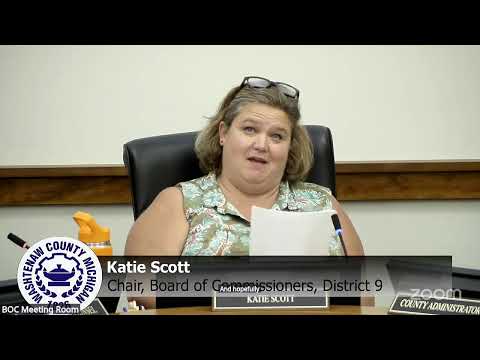
Washtenaw County officials told the Board of Commissioners on Aug. 6 that proposed federal budget changes, state funding uncertainty and the end of continuous Medicaid enrollment could sharply increase demand for local safety‑net services and push up mental‑health spending.
Staff from Community Mental Health (CMH), the Office of Community and Economic Development (OCED) and the county health department described growing psychiatric inpatient costs, the risk that people who lose Medicaid will also lose access to care, and pressure on housing and senior nutrition programs.
Why it matters: the county relies on a mix of federal, state and local dollars and on hospital and provider capacity to treat people with severe behavioral‑health needs. If federal grants are cut or Medicaid redeterminations result in coverage losses, county leaders said they expect higher local costs and rising need for emergency assistance, housing help and community health services.
CMH officials said the county is monitoring monthly Medicaid enrollment because enrollee counts drive revenue to behavioral‑health providers and to the local CMH budget. “Certified Community Behavioral Health Clinic. Thank you. And for those of you there yeah. It's like the mental health version of a federally qualified health clinic of FQHC,” a CMH presenter summarized when explaining CCBHC status and its obligations to serve people who fall off Medicaid.
CMH finance staff also reported a sharp rise in inpatient spending. “Our psychiatric inpatient line…has grown significantly. So we're looking at, you know, being at about 11 and a half million dollars when we close out, fiscal year 25, and then I'm likely going to be budgeting about $12.12 and a half million next year,” one finance presenter said, citing rising acuity and length of stay after the pandemic.
County officials pointed to additional pressure on hospitals from a proposed provider tax change and other macro trends. OCED staff briefed commissioners on programs that could be affected if federal and state appropriations shrink, noting the county’s community‑facing programs—weatherization, home repair, housing access, Barrier Busters emergency assistance and senior nutrition—rely on a complex braid of federal and pass‑through state funds.
Commissioners pressed staff on what the county could do to reduce harm if residents lose Medicaid. Suggestions included standing up a volunteer assistance program modeled on United Way’s VITA tax‑help model to assist with Medicaid renewals and administrative appeals, and expanding community health‑worker capacity to reach vulnerable populations.
Several commissioners emphasized the need to preserve staff positions that provide continuity of services. “You can't replace 20 years of on‑the‑job experience with a brand‑new hire,” one commissioner said when urging investments in permanent staff rather than relying solely on volunteers.
County staff said they are monitoring two fronts: the congressional appropriations process and state budget negotiations for pass‑through funds, and executive‑branch policy changes and agency rulemaking that could affect contract terms. They also warned that cuts in federal program staff could delay technical assistance and reimbursements that local grantees rely on.
Next steps: staff advised continued tracking of Medicaid enrollment data, development of volunteer training and navigator programs to help residents through renewals, and follow‑up reporting to the board as federal and state decisions become clearer. OCED and other departments said they will return with more detailed options for the board, including potential local funding priorities and operational plans for programs likely to face shortfalls.
The board made no formal vote on program changes during the meeting; commissioners asked staff to continue monitoring, refine cost projections, and present specific recommendations for potential local responses.