Get Full Government Meeting Transcripts, Videos, & Alerts Forever!
Get email alerts on the Budget And Strategic Plan topic
No spam. Unsubscribe anytime.
Buncombe County officials outline fund‑balance risks, Helene recovery needs and 2030 strategic priorities
Summary
County staff warned that Tropical Storm Helene and slower tax and sales revenues have tightened the county's fund balance, prompting discussion of reimbursements, loans and a capital reserve while commissioners reviewed draft 2030 strategic plan goals on housing, greenways, public safety and education.
Buncombe County staff told commissioners at a budget workshop that fallout from Tropical Storm Helene, combined with weaker-than-expected property and sales tax receipts, has reduced available reserves and will require steps to replenish the fund balance while recovery work continues.
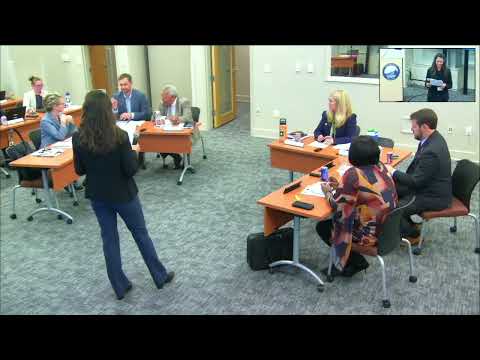
Heather Parkinson, a budget office staffer, opened the session with an exercise intended to show how new priorities or emergencies require trade-offs in an operating budget. “For every action, there is a budgetary reaction,” Parkinson said.
The review that followed detailed revenue and expenditure projections for fiscal 2025 and planning considerations for the county's 2027 and 2030 budget and strategic planning cycles. John (staff member) summarized the fiscal year's shock, saying, “This is easily the most challenging budget year in my tenure.”
Why it matters: County officials cautioned that available reserves are near policy minimums and that some disaster costs may not be reimbursed, which would force the county to cover remaining expenses. Commissioners and staff discussed using additional state cash-flow loans, pursuing FEMA and other reimbursements, establishing a capital reserve and prioritizing replenishment of fund balance before adopting long-term strategic commitments.
Most current projections and recovery funding County staff told the board they previously estimated between $15 million and $25 million in potential lost revenue for fiscal 2025 after the disaster, and that midyear expenditure reductions were implemented to manage the impact. Later projections presented to the board showed expenditures running about $17.3 million under budget and revenues about $8.4 million under, which staff said would result in roughly $5.9 million of fund‑balance use and leave about 15.1% of fund balance before assigning Helene-related expenses. After assigning Helene expenses, staff projected available fund balance of about 11.8%.
Staff warned that prior, alternate estimates had shown higher uses of fund balance (an $11.3 million projected use that would have left 13.8% and fallen to about 10.5% when Helene expenses were assigned). Finance staff said those numbers have shifted as reimbursements, cash-flow loans and some disaster-related restricted intergovernmental revenues arrive.
Amber (staff member) — who spoke for finance during the session — told commissioners that most FEMA reimbursements are submitted and are moving through multiple review stages, but many remain pending. “So we do need to do better on our fund balance going forward,” she said, describing replenishment as a necessity for the coming budget year.
Options and immediate actions discussed - State cash-flow loans: Staff said the state offered additional rounds of interest-free cash-flow loans; the county is considering applying and had information about a new $50 million tranche that requires communities to register interest by a state deadline. Commissioners asked whether forgiveness of those loans was likely and how loan repayment schedules would affect future budgets. - FEMA and other reimbursements: Staff said most reimbursements have been submitted to FEMA but that many claims are held up at the state level; some disaster-related restricted intergovernmental revenue (about $3.4 million) has already been recorded for specific rental, SNAP, social work and energy benefits. Staff emphasized that some local expenditures, such as community navigators deployed after Helene, likely are not FEMA‑eligible. - Fund‑balance policy and capital planning: Staff reiterated the county's 15% fund-balance minimum and said the board must adopt a replenishment plan if reserves fall below that threshold. Commissioners asked staff to bring forward a capital reserve plan and an updated capital improvement program (CIP) that would include Helene recovery projects, and staff said they will expand the CIP to a seven-year view and return with more detailed proposals.
Strategic-plan priorities tied to budget choices Staff from the county's Strategy and Innovation team presented a revised draft of the 2030 strategic plan and asked commissioners to indicate which goals required further discussion. The draft retained six community-facing focus areas (growth and development, education, economic development, community health, public safety, energy and environment) and one internal focus area for county operations.
Key staff and commissioner exchanges highlighted how strategic priorities intersect with constrained finances: - Housing: County planners said a prior target of 1,500–1,850 rental units and a separate home ownership target remain ambitious but achievable if public‑initiated projects (for example Ferry Road and Cox Avenue) proceed and the market supports private construction. Commissioners discussed the county's role in supporting units for households at or below 80% of area median income and the limits on which bond or county funds may be used. - Greenways and parks: Staff said some greenway projects originally planned along rivers and streams must be re-evaluated after Helene because riparian land was lost; NCDOT and other partners have paused and then re-reviewed alignments, delaying construction timelines. The draft strategic goal for county-managed greenways was reduced to a minimum of 3.5 miles by 2030 to reflect uncertainty about constructability and timing. - Flood resilience and FEMA Community Rating System: Planners said the county is moving toward joining the FEMA Community Rating System to pursue flood-insurance discounts and higher regulatory standards; staff suggested a phased approach and noted new code and staffing steps that will be required. - Education and schools funding: Commissioners discussed aligning strategic goals with school-district priorities. Staff said the county will explore longer-term funding formulas and multi-year planning so the county and school districts can coordinate capital and operating expectations. - Public safety and early warning: Commissioners and staff emphasized hazard mitigation, stream gauges, emergency operations and early-warning systems as high priorities. Recovery staff reported letters of interest and grant applications submitted for mitigation and communications upgrades.
Grants and staffing impacts Staff told the board that the county currently manages roughly two dozen grant-funded positions; some grant-funded roles will be proposed for addition to the general fund in future budget cycles. Commissioners asked staff to map which grant-funded positions carry a local-match obligation and which positions would require ongoing county funding if federal or state grants end.
What commissioners asked staff to return with During the workshop commissioners directed or requested staff to: - Return to the board with a fund‑balance replenishment plan and scenarios showing the impact of loan forgiveness versus repayment schedules. - Present a capital reserve and updated CIP (expanded to seven years) showing how Helene recovery projects fit with existing capital work. - Continue pursuing FEMA and state reimbursements and report status of outstanding claims at future briefings. - Bring back clearer timelines and feasibility assessments for greenway segments and other recovery projects. - Work with school-district leaders and county staff to review funding formulas and develop a more predictable multi-year approach.
Ending note Staff and commissioners agreed the county must balance near-term recovery and operating needs with long-term resilience and strategic goals. Staff said they will return to the board with more detailed budget scenarios, a recovery-office staffing update and proposed capital and fund‑balance plans ahead of the fall budget retreat.
(Quotes and attributions reflect the workshop transcript: Heather Parkinson, John (staff member), Amber (staff member).)