Get Full Government Meeting Transcripts, Videos, & Alerts Forever!
Get email alerts on the Opioid Settlement Funding topic
No spam. Unsubscribe anytime.
Bangor advisory committee agrees to seek community input via letter of intent before issuing grants
Summary
The Opioid Settlement Funds Advisory Committee reviewed a Moss Center grant template, debated geographic and sustainability priorities, and asked staff to draft a letter of intent to gather community needs before a formal RFP.
The Opioid Settlement Funds Advisory Committee in Bangor reviewed a draft grant application template and agreed Wednesday, Aug. 6, to ask staff to circulate a letter of intent to gather community priorities before issuing a full request for proposals.
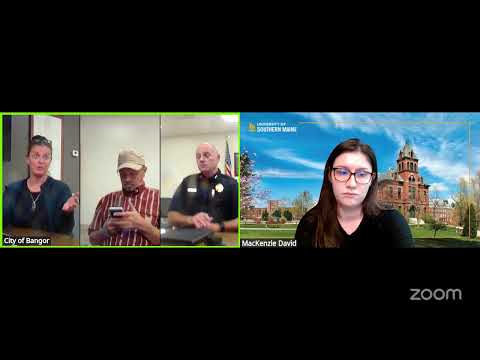
The committee’s decision follows a presentation of a Moss Center grant-application template and a lengthy discussion about whether the city should limit awards to projects located inside Bangor, how quickly awarded funds must be spent, and how to balance small rapid-impact awards with larger, sustainable investments. Mackenzie David, a Moss Center representative, told the committee the center did not have a letter template on hand but that “we could very easily create one.”
Committee members spent the bulk of the meeting on how best to gather information from providers and residents before finalizing award criteria. Several members argued a pre-RFP step would help the committee design a scoring rubric and avoid asking for projects that the community cannot implement; others raised concerns that extra outreach could delay spending on urgent needs. Participants repeatedly returned to two practical questions: whether to require projects to serve only Bangor residents and how to avoid funding short-term operations that cannot be sustained after settlement monies decline.
Discussion details and technical points included: that some municipalities allow service providers located outside a municipality to receive funds if they serve local residents; that the city receives roughly $200,000 per year from settlement proceeds; and that committee members may need to abstain from scoring proposals from organizations that are represented on the panel. Committee members suggested several outreach mechanisms in addition to a letter of intent, including provider workshops, public meetings, surveys and a short ‘‘letter of interest/intent’’ step that would identify likely applicants and funding ranges.
As part of the decision, the committee directed city staff to draft a short letter of intent template for committee review; members asked that the draft be returned at the committee’s next meeting for edits before public dissemination. The group also agreed to hold two back-to-back Wednesday meetings to accelerate work (the committee identified the 13th and 20th of the month for those meetings) and to invite the Penobscot County committee on opioid settlement funds to the next session to coordinate efforts.
Committee members also discussed public records and transparency: staff notified members of an incoming Freedom of Access Act request and explained the city will coordinate responses through the assistant city attorney and return a consolidated package of responsive communications.
The committee did not award funds or adopt a final RFP at the meeting; members framed their action as a direction to staff and as an agreement on next steps. Staff said the proposed two-week response window for letters of intent was on the table but that the committee could lengthen that window if members preferred.
The committee's next meeting is scheduled as two consecutive Wednesdays (the 13th and the 20th) at 6 p.m. in the new council chambers at City Hall; the staff draft of the letter of intent will be circulated in advance for committee edits and approval.