Get Full Government Meeting Transcripts, Videos, & Alerts Forever!
Get email alerts on the Transportation Micromobility topic
No spam. Unsubscribe anytime.
Commission discusses micromobility and active transportation plan; enforcement and education flagged as key challenges
Summary
The Planning Commission spent more than an hour discussing micromobility devices and an active transportation plan, with staff and residents highlighting conflicts on multi‑use paths, enforcement limits, e‑bike classifications and the need for education and infrastructure changes.
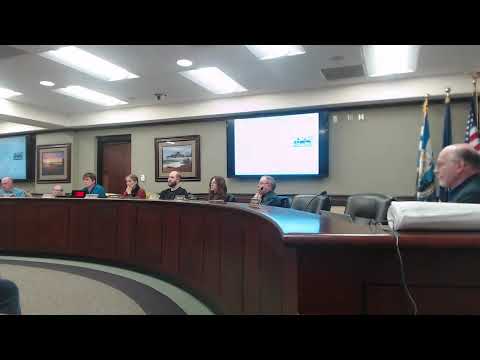
The Market City Planning Commission took public comment and discussed the city's active transportation plan and how to accommodate micromobility devices — scooters, e‑bikes and similar devices — on pedestrian and multi‑use pathways.
City planning staff member Dave said the active transportation plan will recommend how to incorporate micromobility devices into the city's existing multi‑path and street network, but he warned that "the bad behavior problem is probably gonna have to be resolved through enforcement and ticketing people." He described a goal of designing a pedestrian- and bicycle‑centered public realm but acknowledged operational challenges with device riders and shared fleets.
Why it matters: micromobility devices and e‑bikes are increasingly present in the city. The commission's work on an active transportation plan could influence infrastructure investments, policing and education programs that affect roadway and path users across the city.
Main points from staff and public discussion
- Conflicts on multi‑use paths: staff and commenters described behavior issues on multi‑use paths, including speed and risky riding; staff said class 2 and 3 e‑bikes (faster e‑bikes) are technically not allowed on state‑funded multi‑use paths under vehicle code rules but enforcement and vehicle classification pose challenges.
- Enforcement vs. design: staff and commissioners emphasized that enforcement, education and possibly speed limits may be more effective than attempting to ban specific devices. One commenter, who identified himself as Mr. Rodriguez, described riding a class 3 e‑bike at 25 mph and feeling unsafe when cars accumulated behind him on the street.
- Education and school programs: commissioners and residents noted school‑based safety programs and local events (a recently held "bike rodeo") as avenues for promoting safe riding behavior. Staff pointed to funding sources such as Safe Routes to School and similar programs as possible support for education and outreach.
- Timeline and next steps: staff said work on the active transportation plan should yield recommendations by the fall or end of the year; commissioners urged residents to take the city survey and participate in public input sessions.
Public comments and context
Several residents said they had seen unsafe riding and asked for clearer rules and better enforcement. Commissioners raised the possibility of speed limits on paths, clarified that bicycles retain street rights in most places except limited‑access highways, and discussed design options used by other cities to create safer environments for cyclists and micromobility users.
The commission encouraged continued public input and noted that implementing plan recommendations may involve multiple city departments, enforcement resources and possible future planning commission involvement for street redesigns or policy changes.