Get Full Government Meeting Transcripts, Videos, & Alerts Forever!
Get email alerts on the Transportation topic
No spam. Unsubscribe anytime.
Marquette commission approves $42,000 traffic study for former hospital redevelopment site
Summary
The Marquette City Commission on July 14 approved a contract with DLZ Michigan Inc. at a cost not to exceed $42,000 to produce a traffic study for the former Marquette Hospital redevelopment site, with the expense reimbursed by the Marquette Brownfield Redevelopment Authority revolving loan fund.
The Marquette City Commission on July 14 approved a contract with DLZ Michigan Inc. at a cost not to exceed $42,000 to produce an in-depth traffic study for the former Marquette Hospital redevelopment site. The expense will be fully reimbursed by the Marquette Brownfield Redevelopment Authority revolving loan fund. The motion passed 6-0.
City Clerk read staff background explaining that the formal demolition of the former Marquette Hospital is complete and that the city wants traffic modeling to guide roadway and infrastructure improvements as redevelopment planning proceeds. Staff recommended DLZ because of the firm's prior work for the city; the Marquette Brownfield Redevelopment Authority approved allocating funds for the project at its June meeting. The contract authorizes the city manager to waive competitive bidding requirements and authorizes the mayor and clerk to sign the agreement.
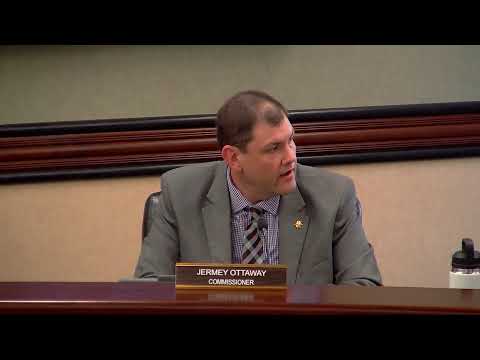
Commissioner Davis said he supported doing the study but raised concerns about the currency of data in the consultant proposal. "The data that they're gonna use is 2013," Davis said, noting the city and campus traffic patterns have changed since then and suggesting the city collect data when Northern Michigan University (NMU) students return to session. The Deputy City Manager responded: "I believe we're looking at collecting the data when Northern's back in session." That timing, staff said, would capture typical campus-related peak traffic.
Commissioners also discussed the study's scope. Some asked whether Piqua Street should be included because of nearby housing development, and whether the study — which primarily detects cars and trucks — should explicitly capture walking, bicycling and micromobility use in the area. Staff and commissioners said multimodal planning will be coordinated with the city's broader active-transportation and bike studies, even if the immediate traffic-count equipment focuses on vehicular flows.
During the meeting's final public comment period, resident Matt Bloomberg addressed the former hospital site directly, suggesting the city consider using portions of the site as distributed parking with a commuter-bus-type terminal to improve access to multiple destinations, including NMU. Bloomberg described the idea as a way to "allow residents to be tourists in our own town" by making it easier to move between destinations without seeking curbside parking.
Next steps: staff will execute the DLZ contract, schedule data collection to reflect NMU's presence near the start of the academic term, and coordinate study findings with planning and active-transportation efforts. The commission did not adopt any immediate zoning or site-plan decisions at the July 14 meeting; the traffic study is intended to inform future planning and permitting for the site.