Get Full Government Meeting Transcripts, Videos, & Alerts Forever!
Get email alerts on the School Construction Finance topic
No spam. Unsubscribe anytime.
Olentangy board approves placing $235 million "no new millage" bond on November ballot to build one elementary and a high school
Summary
The Olentangy Local School District board voted to place a $235 million bond issue on the November ballot that district officials say would build one elementary school and a new high school without increasing the district's current tax rate, citing sustained enrollment growth and building capacity concerns.
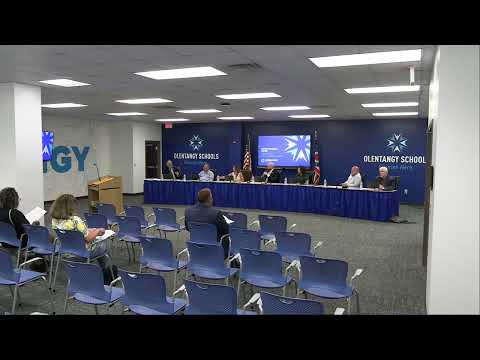
The Olentangy Local School District board voted unanimously at a special meeting July 24 to approve a resolution to place a $235 million bond issue on the November ballot that district officials say would fund construction of one elementary school and a new high school without increasing the district's current tax rate.
District leaders said the proposal is aimed at relieving sustained enrollment growth. "We have been adding 500 new students every single year for the past decade," Board President Mister Lester said, describing the increase as the main reason for the proposal. The board and district staff told members that growth has stretched facilities: the district now operates about 27 or 28 buildings, including 17 elementary schools, six middle schools, four high schools and an academy.
Officials framed the proposal as a narrowed follow-up to a larger 2024 request that failed. "We paired this back from 5 building asked to 2 buildings, to meet the short term immediate need," district staff member Mister Meyer said, identifying one elementary (on the district's west side) and one high school as the most pressing needs. Meyer said two existing elementary schools could reach more than 900 students each by 2027; he noted typical elementary capacity is 625 students and that several campuses already exceed 700.
The district outlined timing and capacity concerns for high schools as well. Construction lead times mean a new high school would take about three years to open. "If this measure passes, we would be able to open High School 5 in 2028," Meyer said. Board members said that without a new building, Berlin High School alone could be more than 2,300 students by 2028 and that continued growth could push some attendance areas toward much larger enrollments.
Cost and construction volatility were cited as additional reasons for acting now. When a board member asked how much more expensive buildings are compared with two years ago, Meyer said, "The answer to your question is $10,800,000 more to start now than it was 2 years ago." Board members referred to supply-chain and equipment availability issues as factors that add uncertainty to future construction pricing.
Finance mechanics: what "no new millage" means
District staff explained the bond measure is structured so the tax rate would not have to increase for taxpayers. "What no new millage means is that the tax rate will not have to increase," Mister Jenkins said, explaining that the district's existing debt-service millage (currently about 6 mills) provides capacity to repay the new bonds without raising the rate. Jenkins noted that Ohio law requires ballot language to show the maximum mills that could be associated with the issue in isolation; that figure can differ from how the district actually plans to collect debt service. "There is a requirement by Ohio Revised Code for the auditor to put a value on—in a vacuum—where there's nothing else going on," Jenkins said, adding the statute-driven calculation can show up to 1.77 mills even when the district does not intend to collect that amount.
Board members emphasized past steps to limit taxes. The board has reduced debt-service millage by 1.5 mills over the past two years, they said, and district staff said those reductions have produced direct tax savings for homeowners. Jenkins and other speakers said lowering the rate from 7.5 mills to 6.25 mills would have averted roughly $8.5 million in taxes (compared with leaving the higher rate in place), and the subsequent cut from 6.25 to 6 mills averted an additional approximately $1.7 million.
What the bond would and would not do
District leaders cautioned the proposal would not solve all growth needs. They said it is a targeted, shorter-term plan focused on immediate pressure points. "It will not solve all of our growth problems," Lester said, "but it is focused specifically on doing it in a way that will not raise those costs." Officials said continued public conversation and planning will be necessary whether the measure passes or fails.
Votes and related board actions
The board approved the resolution to proceed with placing the $235,000,000 bond issue on the ballot by a unanimous roll call: Doctor Dabrico: yes; Doctor Wallach: yes; Mister O'Brien: yes; Miss Schreiber: yes; Mister Lester: yes.
The board also approved a separate resolution to nominate Doctor Elizabeth Libby Wallach for the Ohio School Boards Association Recognition Award (Wallach abstained), and it approved two human-resources consent items (administrative hires and an accepted resignation) by unanimous votes. Those items were presented as standard consent business and received no separate discussion.
Why it matters
Board members said the proposal is intended to preserve student opportunities and limit the frequency of disruptive, ad-hoc redistricting or portable-classroom expansions as enrollment climbs. "The larger our schools get, the harder that is to develop positive relationships," Meyer said, noting research on student mental-health and the importance of trusted adults.
The measure must be approved by voters in November to take effect. The board indicated it will pass a resolution on Aug. 5 to clarify the district's intent not to collect additional mills authorized in the ballot language and said staff will meet with the county auditor's office in coming weeks to finalize technical details.