Get Full Government Meeting Transcripts, Videos, & Alerts Forever!
Get email alerts on the Parks Accessibility topic
No spam. Unsubscribe anytime.
Peace Park groups ask task force for $1.25 million study to restore Shoal Creek crossing
Summary
Peace Park Conservancy and Shoal Creek Conservancy asked the task force to fund a $1,250,000 engineering study and first steps toward an accessible crossing at the southern edge of a landslide on Shoal Creek, restoring trail connectivity.
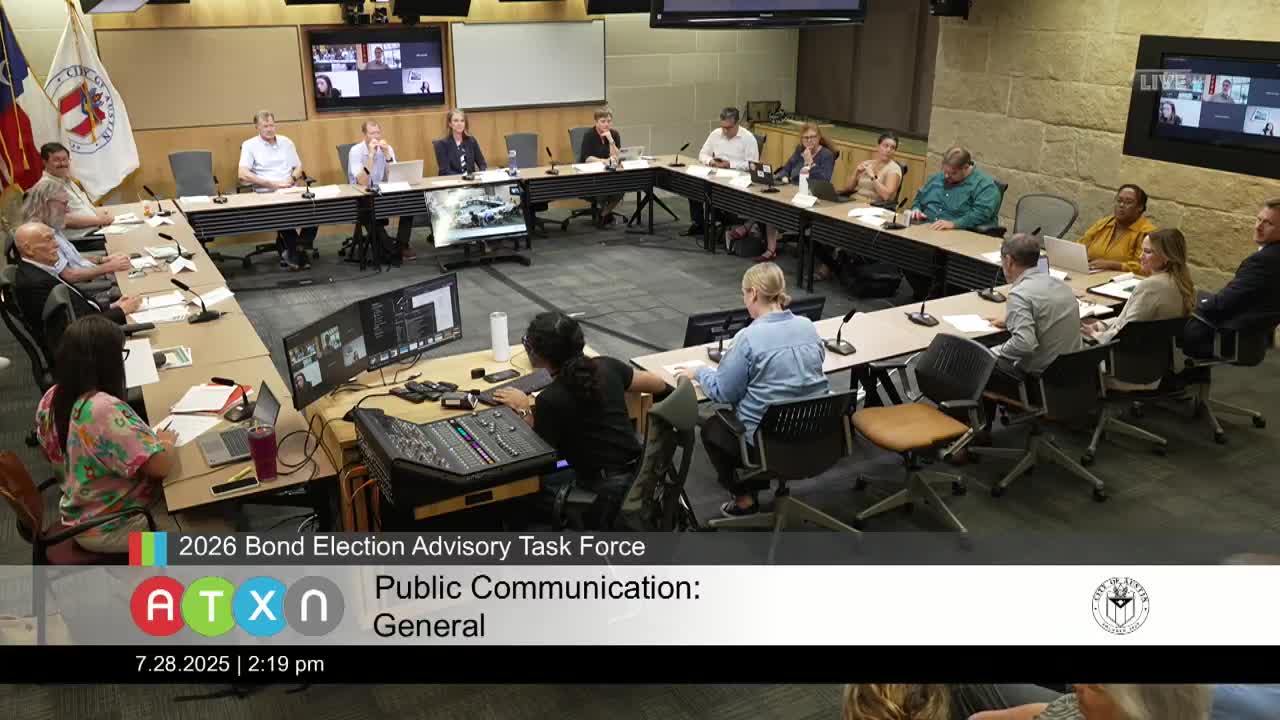
Nicole Netherton, CEO of Peace Park Conservancy, asked the 2026 Bond Election Advisory Task Force on July 28 to recommend $1,250,000 for engineering and initial steps toward a crossing at a landslide site on Shoal Creek near 20th and Lamar to restore an accessible connection on the Shoal Creek Trail.
Netherton said major landslides in 2018 and 2019 blocked the trail and left no accessible crossing; park users currently must detour and backtrack. She told the task force the $1.25 million figure came from John Eastman in Urban Trails and Transportation and would fund a study to determine whether a bridge or a low‑water crossing is the appropriate long‑term solution.
Why it matters: Netherton said the gap has prevented safe, accessible trail use for seven years, and restoring connectivity would expand equitable access to central Austin parkland and urban trails. She said the project involves Parks and Recreation staff and local park partners and could be advanced efficiently because of existing cooperation among agencies and nonprofits.
What speakers said: Netherton cited visitation and usage statistics for Peace Park and the Shoal Creek Trail — more than 240,000 visitors to Peace Park in 2024 and nearly 100,000 users on the trail segment she described — to argue the crossing would benefit a large number of users.
Next steps: Netherton asked the task force to support the study and bring more information to the working groups and public meetings. The task force did not take a formal vote on the request at the July 28 meeting.