Get Full Government Meeting Transcripts, Videos, & Alerts Forever!
Get email alerts on the Housing Policy topic
No spam. Unsubscribe anytime.
Urban Leaders Fellowship presents incremental housing policy recommendations including faith-based development and ADU changes
Summary
Urban Leaders Fellows presented analysis on Tulsa’s 13,000-unit housing gap and recommended incremental zoning changes: overlay incentives for faith-based organization (FBO) housing and easing ADU approvals by right in targeted zones; fellows also presented vacant-land and ADU variance data to support recommendations.
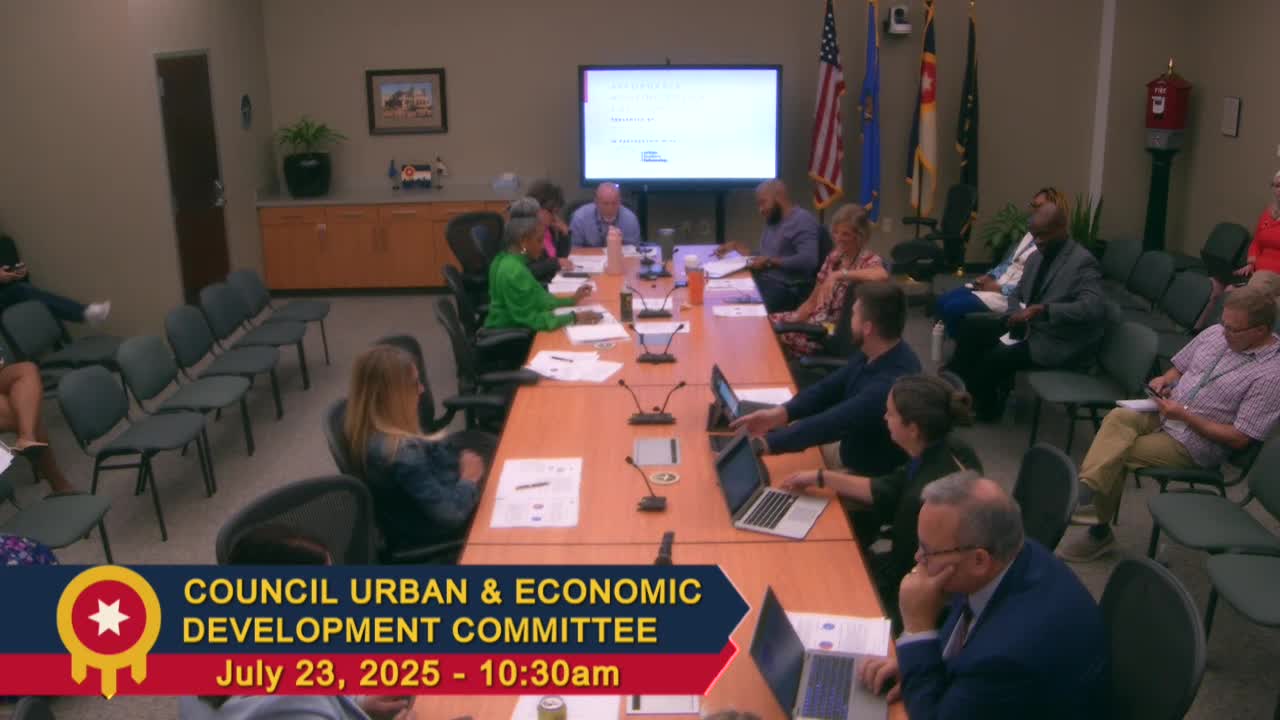
Urban Leaders Fellowship participants briefed the council on policy recommendations aimed at closing Tulsa’s estimated 13,000-unit housing gap, advocating for small, high-impact zoning changes and community-led development strategies.
Presenters summarized an analysis of vacant land, zoning and infrastructure, saying much of the city’s vacant residentially zoned acreage is in single-family zones and that fewer than 1,000 acres are favorable for "missing middle" housing without additional inputs. They recommended two incremental policy areas: enabling faith-based organizations (FBOs) to opt into a zoning overlay that would ease redevelopment of church-owned parcels into affordable housing (with safeguards tied to building regulations and voluntary opt-in) and expanding by-right accessory dwelling unit (ADU) allowances in selected residential zones to reduce the number of special-exception cases before the Board of Adjustment.
The fellows cited data showing 20 ADU special-exception cases from June 2024 to June 2025 (32 board agenda items, none denied, two withdrawn), and estimated that expanding by-right ADU allowance in certain RS zones could address a substantial portion of the Board of Adjustment caseload. Presenters pointed to national and municipal examples (South Bend's incremental approach as a success case; Austin's CodeNEXT as an example of rapid change that stalled amid lawsuits) and noted local examples of interest among churches to redevelop property.
Councilors asked about NIMBY opposition and community-led engagement; fellows and councilors emphasized the need for neighborhood facilitation and targeted mapping. Councilors requested more detailed maps and lists by council district, and some raised concerns about potential faith-based service conditions and equitable access. Presenters said more granular mapping and follow-up engagement materials are available in their presentation packet and that further work could return with district-level data. No formal action was taken on July 23.