Get Full Government Meeting Transcripts, Videos, & Alerts Forever!
Get email alerts on the Transportation topic
No spam. Unsubscribe anytime.
Lee County OKs transmission of prioritized transportation projects to Central Pines RPO
Summary
The Lee County Board of Commissioners held a public hearing on the county Transportation Committee’s prioritized list of projects for submission to the Central Pines Rural Planning Organization and voted to waive a waiting-period policy and move the ranked list forward for scoring by NCDOT.
The Lee County Board of Commissioners voted July 21 to waive its standard waiting-period policy and transmit a prioritized list of transportation projects developed by the Lee County Transportation Committee to the Central Pines Rural Planning Organization for scoring by the North Carolina Department of Transportation.
The motion to waive the board’s policy and the subsequent motion to forward the LCTC’s ranked projects carried after a brief public hearing and questions from commissioners. The prioritized list covers four modes: aviation, highway, bicycle-and-pedestrian and rail, and will be considered for inclusion in the State Transportation Improvement Program (STIP) that programs state construction funding for 2028–2037.
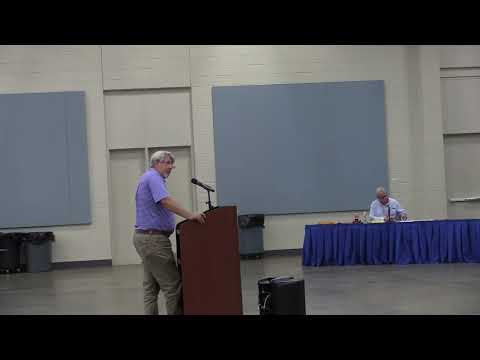
David Montgomery, representing the Lee County Transportation Committee, described the submission process and the committee’s rankings. “We are at that time again, 2 year process of submitting projects to NCDOT for scoring and hopefully placement on the State Transportation Improvement Program, better known as STIP,” Montgomery said. He said each county in the Central Pines RPO is asked to identify three guaranteed projects in each of the four modes; the RPO will narrow projects to 14 per mode across its member counties and submit that list for scoring.
Montgomery outlined top-ranked projects submitted by the county and local governments: in aviation, a control tower and reconstruction of T-hangar taxi lanes were listed; in highways, the Colon Road widening and extension from U.S. 1 to U.S. 15-501 was the county’s No. 1 priority, followed by a project at the Highway 87–Trace Way intersection near Carolina Trace and a Commerce Drive modernization; for sidewalks, Bragg Street was No. 1 and Seventh Street No. 2; rail priorities included design, right-of-way acquisition and a downtown mobility hub intended to connect rail, paratransit and microtransit services.
During the public hearing, resident David Smoak said he supported improvements at the Highway 87–Trace Way intersection but said some neighbors would resist a superstreet design. “I do support an improvement in that area… I don’t think the members of my community… would be thrilled with the design of a super street,” Smoak said, noting that past improvements such as back gate openings onto Cox Mill Road and additional flashing lights had already helped reduce crashes.
Commissioners asked staff about traffic-count timing and scoring categories; Montgomery said DOT conducts multi-day counts and that scoring combines a quantitative DOT score and a qualitative local component. The RPO’s coordinating committee is scheduled to adopt the consolidated draft lists on Aug. 14, 2025, with scoring anticipated in spring 2026 and STIP draft materials in 2027.
The board approved sending the ranked list forward so the projects can be scored and considered for state-funded programming; commissioners also requested follow-up information on specific counts and on how proposed regional changes (for example, the potential Interstate 685 alignment) might affect local needs.
The RPO and NCDOT will now proceed with scoring and scheduling; local staff said they will follow up with commissioners about traffic counts on Tramway/Trace Way and about Cox Mill Road capacity.