Get Full Government Meeting Transcripts, Videos, & Alerts Forever!
Get email alerts on the Zoning topic
No spam. Unsubscribe anytime.
Lake City staff outlines mixed‑use zoning proposal, recommends higher density and smaller lots
Summary
City planning staff presented a new mixed‑use zoning district and recommended raising maximum residential density from 20 to 40 dwelling units per acre and reducing minimum lot size to 4,500 square feet to encourage downtown redevelopment and reduce infrastructure costs.
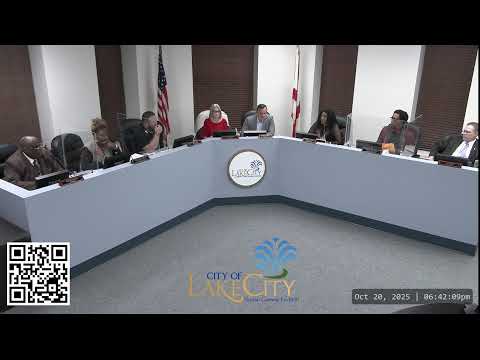
City planning staff presented a draft mixed‑use zoning district and outlined benefits for downtown redevelopment at the Lake City Council meeting on Oct. 20.
Planner Robert Angelo told the council the city currently has mixed‑use in its comprehensive plan but lacks a matching zoning category. “This is a new text — our new zoning district that we're looking to add into the city,” Angelo said, explaining that mixed‑use allows residential and commercial uses on the same site in either vertical or horizontal configurations.
Angelo said vertical mixed use typically places retail or offices below residential units and is suited to urban cores; horizontal mixed use places residential behind or adjacent to commercial uses. He listed community benefits including reduced infrastructure needs, increased walkability and property values, and fewer vehicle miles traveled.
The presentation included examples and suggested changes to Lake City’s development standards. Angelo said, “Currently, the highest that we have is 20. And, so ... one of my recommendations ... would be raising our density from a 20 dwelling units [per] acre to 40 dwelling units per acre,” and proposed lowering the smallest lot size from about 6,000 square feet to 4,500 square feet to encourage infill and redevelopment.
Council members praised the presentation and tied it to broader mobility and redevelopment goals. Councilman Robert Carter said he “loves the presentation” and compared the concept to larger mixed‑use projects in other cities, while stressing Lake City lacks the density of larger municipalities and the city should expect smaller, incremental changes. Carter and Angelo discussed examples and the financial feasibility developers need to build multi‑story mixed‑use projects.
Mayor Noah Walker and other members asked procedural questions and expressed support for more detail in follow‑up drafts. Angelo said a draft plan is ready to begin the adoption process and that key takeaways are that mixed‑use zoning can reduce sprawl, require less infrastructure than single‑use zoning, and support economic growth in downtown areas.
The council did not take any formal votes on the mixed‑use text during the meeting. Angelo and planning staff signaled they will return with formal language and recommended density and lot‑size changes for the council’s consideration in the adoption process.
Looking ahead, city staff said the mixed‑use zoning will be coordinated with the mobility plan and other redevelopment efforts to ensure zoning changes align with infrastructure and transportation priorities.