Norwalk City outlines design, schedule and safety plans for new PK–8 campus
Summary
District officials and the architect, construction manager and commissioning team presented plans, timeline and site considerations for a consolidated PK–8 building across from Norwalk High School, including security, traffic and demolition plans and a target occupancy of summer 2029.
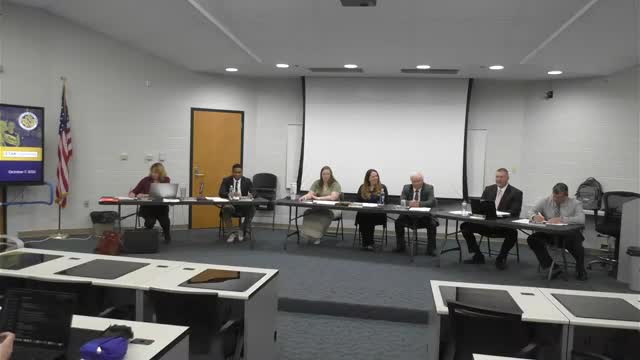
These are exciting times for Norwalk City School District. Consultants and district leaders presented an overview of the design, construction and commissioning teams and walked the board and public through a preliminary timeline and key design priorities for a new PK–8 campus across the street from Norwalk High School.
The presentation explained roles and schedule. Garvin Miller (architect) described the team’s visioning process, which included workshops with district staff, administrators, board members, teachers and community members and visits to five comparator schools. Paul Settle of Garvin Miller said Laura Little will be the “day-to-day” project manager and named Katie Vinger as lead architect and Luke Bauchner as the on-site liaison as the work moves into construction.
CT Taylor, the district’s construction manager at risk, told the board it will participate in the design phase and then manage bidding and construction. Ian Picetti, CT Taylor project manager, said he will be the district’s primary point of contact during construction; Dan Nichols will serve as site superintendent. Matt Collier, CT Taylor chief executive, said the firm will run a prequalification and vetting process that considers safety records, local capacity and prior work as the team sizes and packages bid scopes.
Matt Gable of STEM Engineers explained commissioning, calling it “a quality assurance process that verifies the building systems are designed, installed, tested, documented [and] meet the owner requirements.” He described commissioning tasks that begin in design and continue through construction: systems reviews, site visits, witnessing pre‑functional testing, functional testing (including envelope thermal imaging), and developing a maintenance/training plan for the district’s staff.
Steve Shregales of Westwood Consulting Group, the owner’s representative, described the owner’s‑rep role as guiding the district in decision points and helping the board and administration “play the role that the owner has to play.” He emphasized coordination among architect, construction manager and owner to reduce later change orders.
Key schedule and scope points presented to the board: - The team expects a site plan by early 2026, with more detailed construction documents to follow. Staff said they anticipate some site work by summer 2026 and moved construction through 2026–2028, with an intended turnover in May 2029 so the district can occupy the building for the 2029–30 school year. Demolition of vacated buildings would follow; district staff said abatement, demolition and disposition of vacated properties will be coordinated with Huron County and potential developers. - The new campus is planned as a single PK–8 facility with internal separations for three school bands (PK–2, grades 3–5 and grades 6–8). The presentation noted separate circulation and program needs for each band and said the design will include distinct entrances and age‑appropriate spaces. - The team expects the new campus to include two gyms (an elementary and a competitive middle/high school gym), outdoor play areas sized by age band, tennis courts and non‑irrigated grass play fields. Exact athletic/facility footprints will be determined during site planning and must satisfy OFCC (Ohio Facilities Construction Commission) requirements the team referenced.
Security, traffic and community engagement The team described layered security strategies and access control: controlled front‑entry sequencing (sally ports/buzz‑in zones), door access control, camera coverage and the ability to lock down specific zones. Staff said they will coordinate with school resource officers and local police to select the right mix of technology and personnel.
The presenters said a traffic study is under contract and work is already underway to model curb access, parent drop‑off and bus circulation. CT Taylor and district staff emphasized they will separate bus and parent traffic and said traffic work will consider multiple campus access points and timing to avoid mixing buses and cars. Dan Nichols (site superintendent) said construction logistic planning will account for school start/stop times to minimize congestion and safety risks during deliveries and heavy site work.
Local contracting and bidding approach CT Taylor outlined an open prequalification process and multiple bid packages (site, masonry, electrical, HVAC, plumbing, general trades, etc.). The firm said it will give local contractors a chance to bid; the team emphasized that the priority is the “right fit” — availability, safety, quality and capacity — not a mandatory preference for any contractor type. The presenters said the construction manager can work with both union and non‑union contractors.
Community engagement and student involvement The team described public touchpoints (community meetings, webcams, social media updates), and school‑centered engagement such as beam signings, student art contests and site visits to connect pupils with the build process. Presenters suggested staged community meetings tied to key milestones such as bidding or major site work.
Questions and clarifications from the board and the public addressed soil testing and contingency money for ground stabilization, play‑field acreage, whether the district’s central office could move into the current high school media center, and the likely fate of existing buildings once the new campus opens (abate, demolish, and potential sale). Presenters acknowledged that more specific answers require final site placement and geotechnical sampling at the building footprint.
Why it matters District leaders framed the project as a long‑term investment in Norwalk City’s school facilities that will consolidate five buildings into one campus, improve operational efficiency and modernize learning spaces. The team repeatedly emphasized safety, maintainability and minimizing change orders by coordinating design, commissioning and construction early. Officials said the schedule and many details remain subject to design development, site testing and OFCC reviews.
Next steps The design team said detailed site testing (soil borings and pavement samples) will begin once the building footprint is set, and the project will move into successive bid packages as drawings are completed. The team invited further board and public questions at upcoming design meetings.