
Tulsa board waives second reading, adopts revised policy on epinephrine amid public concern; district outlines emergency medical staffing
Get AI-powered insights, summaries, and transcripts
Subscribe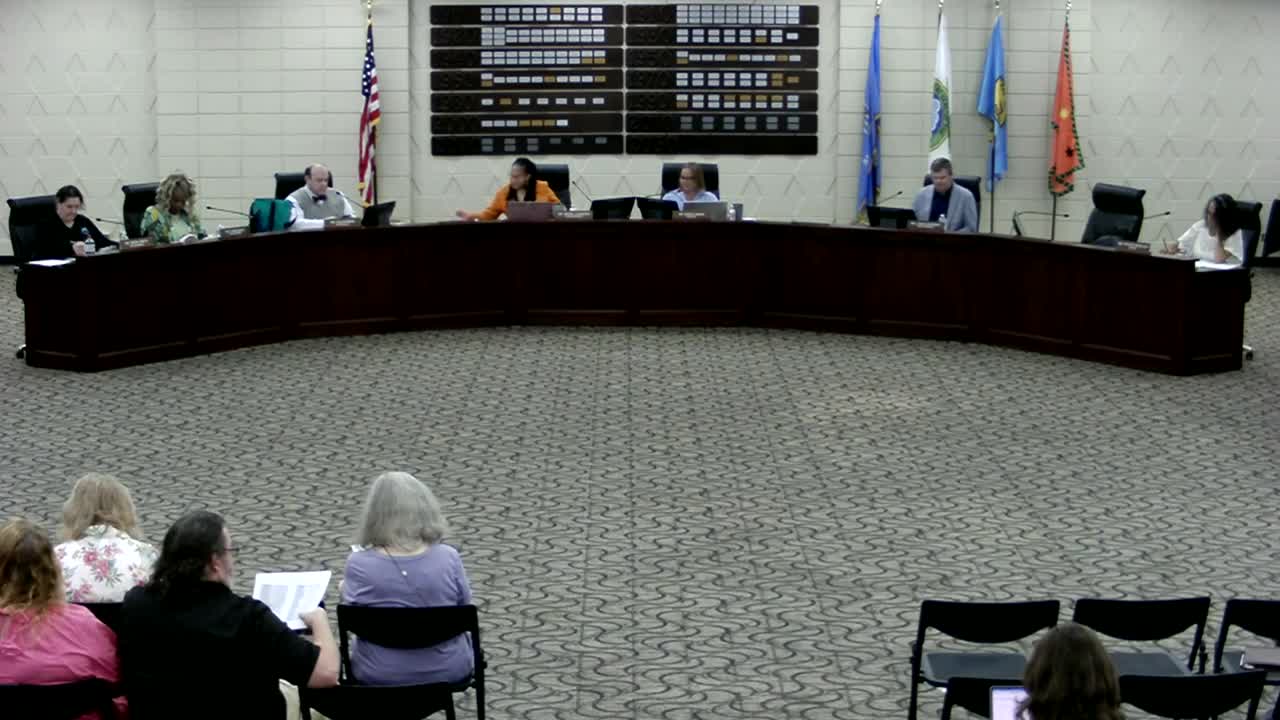
Summary
The Tulsa Public Schools Board of Education on Monday voted to waive a second reading and approve a revised Policy 2105 that updates how the district will administer medicine to students, including the use of epinephrine auto‑injectors.
The Tulsa Public Schools Board of Education on Monday voted to waive a second reading and approve a revised Policy 2105 that updates how the district will administer medicine to students, including the use of epinephrine auto‑injectors.
The vote — moved by Vice President Moniz and seconded by board member Croissant — approved both an emergency waiver of the district’s two‑reading requirement for policy revisions and the revised policy itself. Board members recorded aye votes from President Susan Lampkin, Vice President Moniz, board members Crossant/Croissant, Smith and Woolley; board member Ashley announced an abstention during the roll call.
The policy change was met with several public comments urging caution and more operational detail. John Huffines, speaking during public comment on agenda item G1, said the change “will impact the present and at some level generations.” Daryl Bright, who identified himself from District 3, told the board that the draft lacks key operational details and urged the board to table the item: “Who’s that employee? What do they do? When and to what extent? ... It could kill them,” Bright said, arguing the policy as written did not specify who would take which steps in an emergency. Larry Williamson, another public commenter, opposed waiving the second reading and said routinely waiving the second reading reduces public notice and input.
Board members who spoke during debate said the revision responds to new state law and that the policy sets high‑level requirements while site‑level regulations will govern day‑to‑day implementation. Vice President Moniz said the policy “is legislatively mandated” and that execution details will be contained in district regulations rather than the policy. Board member Croissant described site‑level planning he has seen, and board member Woolley said governance requires the board to approve policy but not to “get in the weeds of the day to day.”
District staff said site teams will be responsible for local procedures and training. Dr. Stacy Vinson, associate superintendent for school operations, outlined the district’s approach to complying with the Chase Morris Sudden Cardiac Arrest Act and district accreditation expectations: each school has submitted a site plan that lists a Chase Morris team, documents locations of AEDs, and verifies annual training in CPR, AED use, first aid and sudden cardiac arrest response. Vinson said student athlete forms and health documentation are kept in the district’s Rank 1 platform.
On staffing, Chief Armstrong said the district provides either a registered nurse at secondary schools or a health assistant at elementary schools and that traveling registered nurses support multiple sites. Vinson said the district added a second district registered nurse position this year to support traveling RNs and health assistants during implementation of policies like the Chase Morris plan.
Board member Ashley, who earlier raised questions about what created the emergency and asked for specifics about local execution, announced an abstention on the final vote, saying she was “not comfortable waiving a policy based on future expectations.”
The board and staff emphasized that the policy provides a high‑level, legally required structure and that site regulations — which are not subject to board approval — will define local steps, staff roles, training schedules and recordkeeping needed to implement the policy. Vinson said the district will provide samples of site plans and that school teams will be responsible for meeting training and equipment maintenance requirements.
The board approved the motion to adopt the revised Policy 2105 after the discussion.
Ending: The board’s action places the policy change in effect under the emergency waiver; district staff said they will follow up with school‑level procedures, training verification and sample plans for board members and the public.