Get Full Government Meeting Transcripts, Videos, & Alerts Forever!
Get email alerts on the Utilities Rate Case 2026 topic
No spam. Unsubscribe anytime.
City utilities cites aging infrastructure, fluoride problems and cash pressures; proposed rate case moves to USB and council this month
Summary
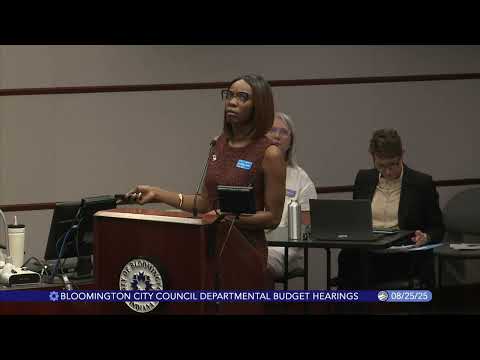
CBU Director Zager told the Common Council on Aug. 25 that rising operating costs, aging treatment infrastructure and a persistent fluoride‑delivery problem have put the water fund under pressure and prompted a proposed rate case that the Utility Service Board and council will consider in September.
Director Zager presented the City of Bloomington Utilities (CBU) 2026 budget to the Common Council on Aug. 25, describing operational progress and significant fiscal pressures in water, wastewater and stormwater systems.
Zager said CBU completed filter media replacement and solids‑handling improvements at Monroe Water Treatment Plant and advanced a chemical feed line replacement project; Dillman wastewater capacity improvements are ahead of schedule and Blucher wastewater upgrades to instrumentation and fiber are near completion. He noted the utility’s work to accept lead sampling in its state‑certified lab and stormwater grants and residential stormwater projects awarded in 2025.
But Zager flagged cash‑flow pressures in the water fund because operating expenses and capital costs rose after the pre‑pandemic estimates used in the last rate case. He said staff has closely monitored water cash balances and that a “one‑time loan” from sewer to water is a short‑term option if revenue shortfalls materialize; the loan would be repaid after rate changes are implemented. Zager said the proposed rate case was presented to the Utility Service Board (USB) and will return there for a vote on Sept. 8; council was scheduled to receive a first reading Sept. 17 and second reading Sept. 30 if the USB approves it.
Zager described aging equipment and three specific operational issues: older chemical tanks and feed lines (many more than 20 years old), outdated electrical and instrumentation at the Monroe plant, and persistent difficulties maintaining the target fluoride level (0.7 mg/L) since 2019 because of leaks and safety concerns with temporary delivery systems. He said staff is testing temporary solutions for fluoride that are safe for employees and expects a temporary fix in 2026, with a larger capital overhaul planned for 2027 and included in the rate case.
Zager also said bonds and interdepartmental payments make up a significant portion of the budget and that the utility is working to make interdepartmental charges more transparent. He encouraged public attendance at USB and council hearings on the proposed rate changes.
The presentation included a detailed budget split by division, revenue estimates (water $23.1M, sewer $29.8M, storm $4.7M), and a notice that about 26.6% of the total budget goes to debt service. No council vote occurred at the hearing; a USB vote and council readings are scheduled in September.