Get Full Government Meeting Transcripts, Videos, & Alerts Forever!
Get email alerts on the Parks Budget topic
No spam. Unsubscribe anytime.
Parks and Recreation seeks to preserve core services as master plan points to multimillion‑dollar facilities needs
Summary
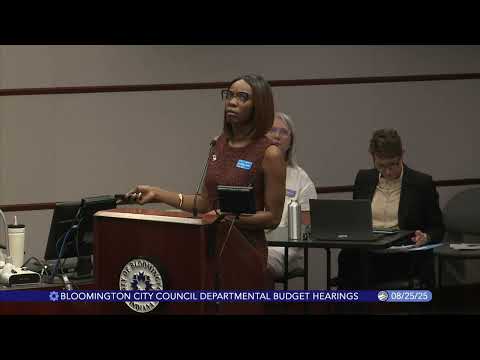
Tim Street, director of Bloomington Parks and Recreation, told the Common Council on Aug. 25 that the department will prioritize maintaining quality services as it confronts aging facilities, salary pressures and a growing parks inventory.
Tim Street, director of Bloomington Parks and Recreation, told the Common Council on Aug. 25 that the department will aim to preserve core services in 2026 while responding to aging facilities, rising salary costs and continued high public demand.
Street said the department oversees 34 parks and about 2,300 acres of property, runs some 300 programs and logged nearly one million participations last year. Parks employs 64 full‑time staff and more than 400 seasonal or part‑time support workers. The department reported recent achievements including completion of accessibility projects at Switchyard Park, a DNR grant and Black Heritage Preservation grants for Banneker Center repairs, and reaccreditation by CAPRA.
Street said the department’s master plan process — including community workshops, facilities assessments and a needs analysis — will guide investment choices. Early facility assessments have shown substantial deferred maintenance: the pools alone face an estimated $4–5 million in repairs, and consultants flagged serious refrigeration/ice‑arena equipment issues. Street said the budget requests roughly $2.6 million in capital needs for building repairs and equipment replacement in 2026 and that one senior vacant position (data and special projects manager) was eliminated to reduce costs.
The presentation noted that park security at Switchyard Park remains funded with ARPA for 2026 (the final ARPA year), and director Street said staff will need to collaborate with Bloomington Police Department and community partners to identify long‑term coverage as ARPA funds expire. He said the department is focusing on “quality over quantity” for services and maintenance as Bloomington’s parks inventory has expanded in recent years.
Council members asked about revenue opportunities such as public‑private partnerships for programming, cost‑recovery and pricing strategies, and whether printed program guides mailed to households still deliver value. Street said the department mails a printed parks guide to an opt‑in list of about 36,000 addresses and will refine outreach strategies as part of the master‑plan process. No ordinance or vote was taken during the hearing.