Get Full Government Meeting Transcripts, Videos, & Alerts Forever!
Get email alerts on the Budget Dei And Legal Constraints topic
No spam. Unsubscribe anytime.
City says federal and state executive orders forced conservative approach to DEI spending; $300,000 general-fund allocation to revert if unused
Summary
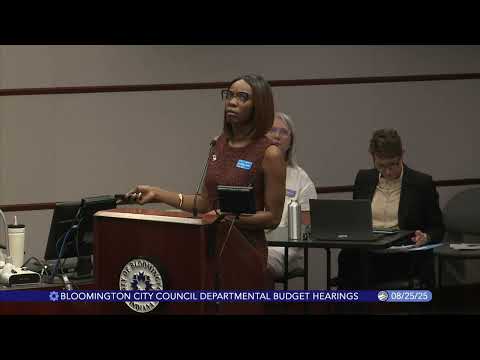
Margie Rice, Bloomington’s corporate counsel, told the Common Council on Aug. 25 that federal and state executive orders this year required the city to take a conservative approach to DEI spending tied to federal funds, citing a risk of losing federal grants and possible False Claims Act exposure if officials certify compliance and then violate those rules.
Mayor Mike Thompson and city legal staff told the Bloomington Common Council on Aug. 25 that federal and state executive orders issued earlier this year prompted a conservative approach to Diversity, Equity and Inclusion (DEI) spending tied to federal funds.
Margie Rice, corporate counsel for Bloomington City, said her office advised the administration to follow the federal and state guidance even when it conflicts with local priorities. “Based on legal advice from my office and from me, we have taken a conservative approach to follow the federal and state guidelines,” Rice told the council. She said the administration is acting out of concern that noncompliance could risk federal funding and expose city officials to liability under the False Claims Act if certification forms are signed and later found inconsistent with federal requirements.
The legal advice comes after council and residents pressed for continued city-supported DEI training. Council member Daley and others asked whether the roughly $300,000 that appeared in last year’s budget for DEI training (noted during the CFRD presentation) still exists. Controller staff told council that an amount of $300,000 that had been budgeted to the Community and Family Resources Department (CFRD) was not spent and will remain in the general fund; at year end, that unspent amount will revert to the general fund.
Deputy Mayor Gretchen Knapp framed the administration position in fiscal terms: city revenues are tighter after changes to state law and some one-time federal ARPA funding has been spent. Knapp said the administration wants to translate Bloomington’s stated values into “effective, sustainable action in this new environment.”
Mayor Thompson and Rice said the administration will continue programs that serve residents but must do so within legal constraints and available funding. Rice said the city had relied on outside counsel in forming its advice and emphasized the risk of losing federal grants that support many local programs if the city is judged out of compliance.
Council members and public speakers pushed for clearer local definitions and policies. Former council member and NAACP leader Christopher Sims urged a clear city definition of DEI and asked the administration to preserve commitments sustained by prior councils. Several public commenters, including residents who volunteer with holiday assistance programs, warned that cuts to targeted programs risked weakening trust between marginalized communities and the city.
The administration said it will continue to provide services within federal and state constraints and recommended using available departmental budgets and partner organizations to preserve outcomes for residents. No formal council action or vote occurred on DEI policy at the Aug. 25 hearing; Rice and the administration said further budget questions and legal clarifications will continue as council reviews the 2026 budget.