Get Full Government Meeting Transcripts, Videos, & Alerts Forever!
Get email alerts on the Public Health Sewage Alerts topic
No spam. Unsubscribe anytime.
Committee hears bill to use emergency alert system for raw‑sewage discharges; sponsors call it ‘Brown Alert’
Summary
Representative Saint Germain presented House Bill 4427 to require public notification through the Emergency Alert System when a raw‑sewage or contaminated water discharge exceeds health thresholds; members asked about triggers, who issues alerts and risks of alert fatigue.
The Michigan House Committee on Natural Resources and Tourism took testimony on House Bill 4427, a proposal by Representative Melanie (Saint Germain) to use the Emergency Alert System to notify the public when raw sewage or other contamination enters waterways.
“On April 3, a municipality had a malfunction at a basin and inadvertently discharged 1,200,000 gallons of raw sewage into a waterway,” Representative Saint Germain said, describing the incident that inspired the bill. She told the committee the discharge reached drains and ultimately Lake St. Clair and that residents and recreational users were not warned.
The bill—nicknamed the “Brown Alert” by Saint Germain—would trigger an alert when a discharge exceeds health thresholds (the sponsor cited E. coli exceedances as a trigger) and route that notification through public-health channels and the state’s emergency notification systems so residents in affected geographic areas would receive phone alerts.
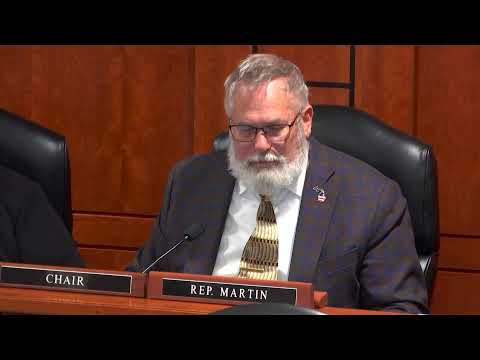
Committee members questioned operational and policy details. Representative Weiss asked how alerts would reach residents; Saint Germain said the system would be direct to phones via the Emergency Alert System. Representative Scott asked whether a follow‑up message would notify the public that conditions had been mitigated; Saint Germain said she would follow up on that detail. Vice Chair McFall, a co‑sponsor, said the legislation had been discussed with county drain commissioner offices and that existing permit conditions currently require some local notification to newspapers and commissioners.
Lawmakers also raised concerns about public confusion and “alert fatigue.” Representative Weiss suggested using a descriptive label such as “sewage discharge” instead of adding more color‑coded alerts; Saint Germain said the “Brown Alert” name came from discussion of color‑coded advisories used elsewhere but that the naming can be refined.
Staff displayed the state’s incident dashboard and cited multiple recent overflows submitted to the department: a Rockwood sanitary sewer overflow of 1,340,000 gallons into the Huron River and an Ontonagon overflow of about 1,800,000 gallons in Interior Township. Saint Germain played a short video of raw sewage discharging under ice from a retention basin to illustrate the hazards.
Committee members confirmed that the substitute for Saint Germain’s bill had been adopted earlier in the session by roll call (H‑1 substitute), but the committee did not vote on final passage of HB 4427 during the hearing. Saint Germain said the department is continuing to refine operational definitions and thresholds and that more work is expected to align notifications with public-health practice.
The committee scheduled a subsequent meeting; no formal committee vote on the bill’s merits was recorded during the hearing.