Get Full Government Meeting Transcripts, Videos, & Alerts Forever!
Get email alerts on the Nuisance Businesses topic
No spam. Unsubscribe anytime.
Council moves to tighten rules on ‘nuisance’ businesses, authorizes hearings on delta‑8 and kratom
Summary
Philadelphia City Council introduced multiple ordinances aimed at closing enforcement loopholes used by 24‑hour “nuisance” stores and approved a resolution to study the sale of unregulated substances such as delta‑8 and kratom after public testimony from food‑truck operators and business groups.
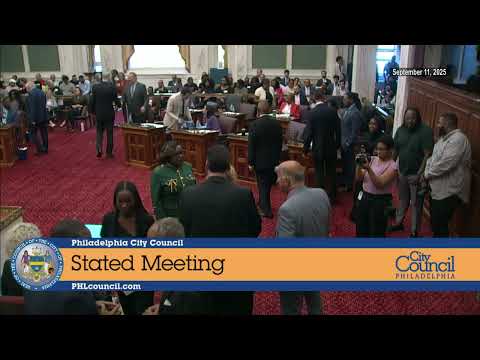
Philadelphia City Council on Thursday introduced a package of ordinances intended to make it harder for repeat “nuisance” businesses to reopen under new ownership and authorized committee hearings to examine the sale of unregulated substances such as delta‑8 and kratom.
The measures, carried by Majority Leader Catherine Gilmore Richardson, would (1) clarify penalties for businesses that continue operating after stop‑work or cease‑operations orders, (2) preserve nuisance‑business enforcement when ownership or a business’s LLC name changes, and (3) tighten other municipal code provisions to prevent serial violations. Council also adopted a resolution directing the Committee on Commerce and Economic Development to hold hearings on delta‑8 and kratom sales.
Council members and public speakers said the package responds to a surge of 24‑hour storefronts and unregulated shops that neighbors and some elected officials say have been tied to crime and quality‑of‑life problems. At the same time, small‑business owners and advocacy groups warned the proposed curfew language would harm late‑night entrepreneurs.
Majority Leader Catherine Gilmore Richardson, who introduced the bills, said during remarks on the chamber floor, “These businesses are pervasive. They're popping up all over the city.” She told colleagues the changes aim to close legal loopholes that allow businesses to evade enforcement by changing corporate names or ownership structures.
Several members of the public warned council against overly broad restrictions. Jose Luis, a North Philadelphia chef who owns a food truck, told council, “We are part of the solution. We are not a problem.” He said a proposed ordinance referenced in public testimony (bill 250292) would curtail food‑truck income by limiting operations between 11 p.m. and 6 a.m. Edward Bonilla, another mobile‑food operator, described steep income losses after restricted hours and asked council to consider existing small‑business impacts before finalizing curfew rules.
Jennifer McDonald, director of the City Work Initiative at the nonprofit Institute for Justice, said her organization supports stronger nuisance enforcement but warned a broad curfew “will harm the economic vitality” of neighborhoods and small entrepreneurs that rely on late‑night trade.
Councilmember Ketsi Lazada, whose Seventh Councilmanic District was singled out several times during public comment, said stricter local tools were necessary in some neighborhoods. “We have to do something,” Lazada said in the chamber. “In order for businesses to choose the Seventh Council District as a place where they want to bring their business, we need to do something now. We need to reduce violence.”
The session included back‑and‑forth about who should lead enforcement and how to avoid unintended consequences for legitimate businesses. Councilmember Cindy Bass challenged national advocacy groups testifying in the room, noting some organizations did not work or live in the neighborhoods most affected.
As a next step, council adopted the resolution authorizing hearings on unregulated substances; the hearing authorization was presented by Majority Leader Gilmore Richardson and placed on the final‑passage calendar and later adopted by voice vote. The new ordinances were introduced and referred to the appropriate committees for review; the sponsors said they expect committee hearings this fall to refine enforcement language and address impacts raised during public comment.
Council members and public speakers asked staff to provide data on where nuisance businesses are clustering, whether enforcement actions are being followed by repeat openings under new corporate names, and what exemptions (for pharmacies, restaurants, or food‑security operations) should apply. Council did not adopt any curfew ordinance during the session; it took the procedural step of introducing the measures and approving the hearing resolution that will inform any final legislation.
The council packet lists multiple related proposals introduced that pertain to nuisance enforcement and stop‑work penalties; those proposals will be discussed in committee before any final votes.
The council will schedule committee hearings and follow‑up briefings; sponsors said they will consider amendments that protect legitimate small businesses such as licensed pharmacies, hospitals and authorized food vendors while targeting unlawful activity.