Get Full Government Meeting Transcripts, Videos, & Alerts Forever!
Get email alerts on the West Harbor Amphitheater topic
No spam. Unsubscribe anytime.
City Council upholds Harbor Commission on West Harbor amphitheater, denies CEQA appeal
Summary
After extensive public comment and endorsements from labor and local businesses, the Los Angeles City Council voted unanimously to deny an appeal and affirm the Port of Los Angeles's certification of a supplemental environmental impact report for the West Harbor project, including a 6,200-seat amphitheater and related park elements.
The Los Angeles City Council voted to deny a legal appeal and uphold the Los Angeles Board of Harbor Commissioners' certification of the supplemental environmental impact report for the West Harbor waterfront project, including a proposed 6,200-seat amphitheater.
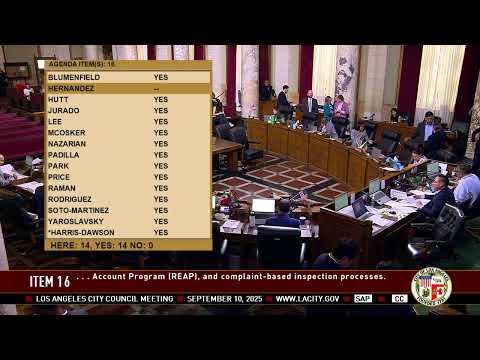
The action came after more than two hours of public comment in which developers, local business owners, arts and maritime organizations, and labor representatives urged the council to approve the project. Councilmember Tim McOsker introduced an amending motion (36a) that the council adopted; the roll call on the final motion recorded 15 ayes.
Councilmember Tim McOsker said the environmental review had been extensive and criticized the appeal as a last-minute challenge. "We carefully reviewed all the environmental documentation," McOsker said in the meeting record, calling the appeal "CEQA abuse" and urging the council to send a message that CEQA should be used for environmental protection, not to obstruct projects without legal basis.
Supporters told the council the amphitheater and related waterfront improvements would bring jobs, new park space and sustained foot traffic to downtown San Pedro. Eric Johnson, senior project executive for the West Harbor development team, described mitigation measures in the SEIR and said the development team had worked with the Port of Los Angeles for two years on the document. "We studied very thoroughly all of the impacts, developed thoughtful mitigation measures, which are being implemented," Johnson said.
Representatives from Nederlander Concerts, which would operate the venue, noted the company's long experience operating outdoor venues and said it would enforce mitigation measures on sound, curfew and traffic. Rena Wasserman, senior vice president for Nederlander Concerts, said the company had run the Greek Theatre for decades and was prepared to adopt mitigation practices to limit impacts on neighbors.
Labor and local business groups also spoke in favor. Elise Swanson, president and CEO of the San Pedro Chamber of Commerce, told the council the project would create roughly 1,700 ongoing jobs and significant economic output. The Los Angeles Maritime Institute and multiple union and trade groups also told the council the port and applicant had completed a thorough CEQA review.
Council debate emphasized the long history of planning and port review. McOsker and other councilmembers noted the Harbor Commission's unanimous approval of the SEIR and the wide community engagement that preceded the decision. The council adopted Motion 36a (McOsker/Park) and the item passed with a recorded vote of 15 ayes.
The item text adopted by the council upholds the Harbor Commission's certification of the SEIR, denies the CEQA appeal, and adopts the project as amended by Motion 36a. The council also sent the item forthwith to the Trade, Travel and Tourism Committee.
The council vote does not conclude potential legal challenges; McOsker said the administrative record will be available for judicial review if an appellant pursues litigation. The adopted motion directs project implementation consistent with the mitigation measures in the SEIR and the conditions negotiated with the Port of Los Angeles.
The council action completes a multi-year local review process for the West Harbor project, which supporters say will be a cultural and economic anchor for San Pedro and the region. Opponents who filed the CEQA appeal argued the environmental analysis was incomplete; the council majority rejected those arguments in voting to deny the appeal.
Item 36 was adopted as amended by Motion 36a (McOsker/Park).