Get Full Government Meeting Transcripts, Videos, & Alerts Forever!
Get email alerts on the School Mental Health topic
No spam. Unsubscribe anytime.
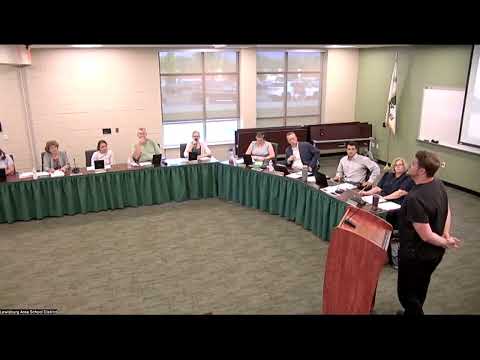
Lewisburg-area board hears plan for CSIU NEST clinic, district reports teletherapy uptake
Summary
At a Lewisburg Area Board of School Directors meeting, Dr. Sam Faulkner detailed a new CSIU-licensed outpatient clinic (NEST) meant to link clinical care with school-based supports; district staff reported recent increases in virtual counseling referrals and utilization.
The Lewisburg Area Board of School Directors on Tuesday heard a presentation on a newly licensed psychiatric outpatient clinic intended to expand school-based mental health services and an update on the district’s current mental-health provider partnerships.
Dr. Sam Faulkner, a pediatric psychologist who said he is affiliated with the CSIU and the CSU, described the NEST clinic — “Nurturing Environments for Support and Treatment” — as a state-licensed outpatient psychiatric clinic that will function as a regional hub and establish satellite clinic sites inside school districts. Faulkner said the clinic’s stated services include psychiatric evaluations, individual and group therapy, and limited medication management. “We will have maybe about a day a week” of medication-management access, he said, and emphasized that “the overwhelming, empirical evidence for treating youth mental health is in favor of psychological behavioral interventions.”
Faulkner said the license makes it easier to create satellite sites and that the program is working toward a formal agreement with at least one local district to host a satellite clinic. He described the NEST model as integrated with educational supports: clinical providers will be cross-trained to understand both psychopathology and school-based systems such as MTSS, SEL and PBIS so clinicians “can speak the same language when we’re serving children and families.” He told the board the clinic’s initial staffing will be small and cautioned it will not be able to serve very large caseloads at launch. He said an anticipated go‑live date is September 15 (year not specified in the meeting transcript) and asked board members to contact him for follow-up.
District staff also provided a separate update on the district’s current counseling partnerships and recent referral activity. A district presenter reported that, over a recent four‑month period, the district received 56 referrals to a virtual partner and that 74 percent of those referrals were utilized. The presenter said the district has been working with multiple vendors, including a virtual counseling provider added in February, and that counselors can view a dashboard tracking each referred student’s intake and counseling status so staff can support students while they are in school.
Both presenters emphasized that school connections and staff training are central to prevention and crisis response. Faulkner noted national medical groups’ statements that youth mental-health issues have risen in recent years and urged broad training: “If you’ve got the second leading cause of death, everybody in your building better know, at least have an idea of what to do when it shows up.” He recommended QPR (question, persuade, refer) as a triage-style training for school staff.
Board members asked about precedents for the model and about how the NEST clinic would coordinate with community partners; Faulkner said he has seen similar cross‑trained, colocated models in Denver and that the CSIU/CSU relationship makes it easier to place satellite clinics in local schools. The district presenter said some programs have been grant‑funded and noted plans to include additional sessions in an existing PCCD grant for the middle school.
The presentation and the district update did not include formal board action; presenters left contact information and invited follow-up conversations.
The board’s materials and public comments indicated the district will continue to pursue partnerships and grant funding to expand services, while acknowledging limited initial capacity at the NEST clinic and the need for school‑level training and coordinated referral pathways.