Get Full Government Meeting Transcripts, Videos, & Alerts Forever!
Get email alerts on the Planning Processes And Training topic
No spam. Unsubscribe anytime.
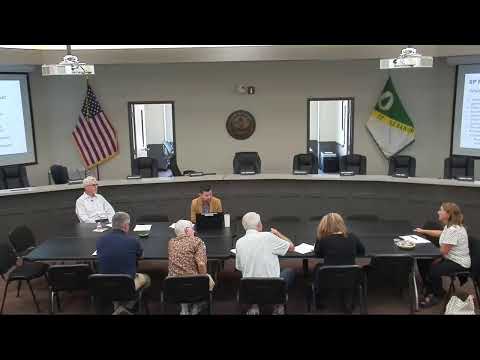
Planning staff runs training on Specific Plans; commission reviews new text‑only, hybrid and regular SP types
Summary
Planning staff provided an extended training for the commission explaining three Specific Plan (SP) application types (text‑only, hybrid, and full regular SP), the city's recent changes (three‑year sunset clause, text‑only cap at 5 acres, hybrid introduction), and the commission's role in reviewing and amending SPs.
Lebanon planning staff gave a detailed training to the Planning Commission explaining the city’s Specific Plan (SP) toolkit and recent changes to SP procedures and types.
Staff reviewed the purpose of SPs — a zoning district crafted for a particular property or group of properties to allow context‑sensitive development — and described three SP application types used in Lebanon: text‑only SPs, which require only regulatory text and are capped at 5 acres; hybrid SPs, a new option that requires regulatory text plus a generalized site layout (subdistricts and road network) and an architectural palette; and regular (full) SPs, which require a detailed master plan with exact building locations, road network and architectural elevations and allow up to a 25% plan change without an amendment.
Staff recounted recent ordinance changes: in 2022 the city added a three‑year sunset clause for new SPs; in 2023 the sunset clause was expanded to existing SPs and PUDs; in March 2023 the text‑only SP option was added and in June a hybrid SP type was adopted. Staff explained how SPs relate to the future land use plan, the practice of naming a comparable base zoning district as a fallback, and enforcement mechanisms (zoning enforcement, stop‑work orders, or withholding certificates of occupancy for noncompliance). Staff described the role of the SP Committee, how it provides early feedback to applicants, and how planning commission amendments can be made on the floor (including at second reading in City Council).
Commissioners asked about when the SP Committee should hold items and how much negotiation should occur at committee vs. the full commission; staff urged early coordination, recommended using the committee to flag needed changes, and noted applicants may still submit to city council with a negative recommendation if the commission votes that way. Several commissioners said they rely on staff recommendations and want clear, consolidated staff summaries ahead of hearings.
Ending: The training closed with an overview of next month’s required legal training for commissioners and with staff offering to provide clearer summary materials ahead of SP hearings to help commissioners prepare and consider amendments.