Get Full Government Meeting Transcripts, Videos, & Alerts Forever!
Get email alerts on the Land Use Vesting topic
No spam. Unsubscribe anytime.
Planning commission recommends notice to Westmoreland developer after sewer capacity lapse; 90‑day cure urged once tolling ends
Summary
Town staff told the Planning Commission that the Westmoreland PUD lost sewer capacity in mid‑2024 and Metro’s moratorium has tolled vesting. Commissioners unanimously recommended notifying the current developer of the PUD violation and that the developer be given 90 days to cure once tolling ends.
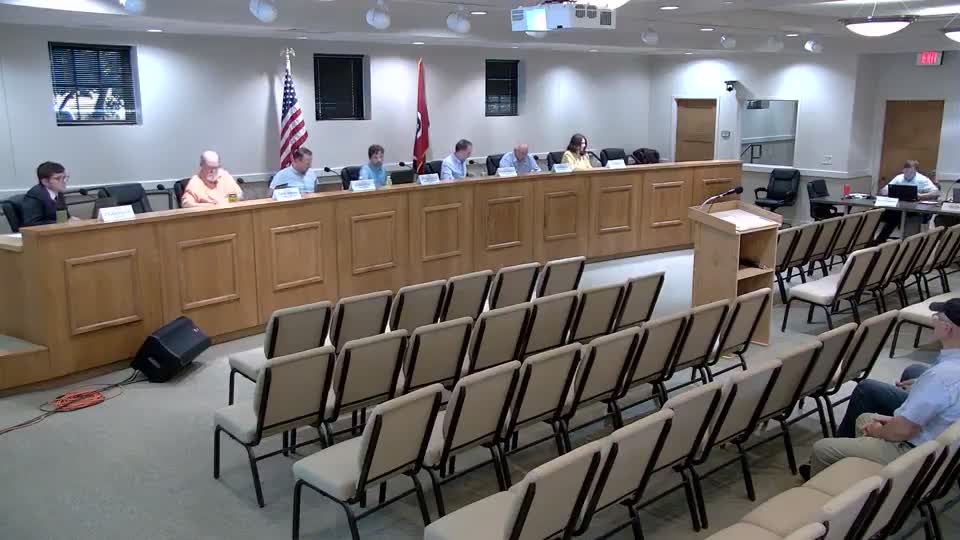
The Town of Nolensville Planning Commission on Aug. 12 recommended that the Board of Commissioners and town staff notify the current Westmoreland Planned Unit Development developer that the project is in violation of its PUD approval because it no longer holds sewer capacity, and that the developer be given the 90 days allowed under state vested‑rights law to cure the violation once the moratorium/tolling period ends.
The recommendation followed a staff and legal update on the Westmoreland PUD, a single‑family residential project located at 9849 Sam Donald Road. Town legal counsel and staff told the commission that the development’s sewer capacity letter lapsed in mid‑2024 and Metro later denied a new capacity letter; Metro’s internal regulations then placed a moratorium that, under state vesting law, tolls the running of the project’s vesting period. Town staff said that because Metro’s moratorium prevented the developer from curing the sewer capacity defect, the town could not reasonably treat the project differently from an applicant who applied while a moratorium was in effect.
Why it matters: Under the state vested‑rights statute discussed in the meeting, local jurisdictions must give a landowner notice of an approved‑plan violation and 90 days to cure; if a moratorium is in place the statute tolls running of the vesting period during the moratorium. Commissioners said they wanted that 90‑day cure period and formal notice put on the record now so the town and developer have clarity once Metro lifts its moratorium or issues additional capacity letters.
Details of the staff and counsel briefing: Counsel said vesting initially appeared to expire April 7, 2025 because of a date calculation; staff discovered the date calculation error but also discovered the sewer capacity letter had lapsed on or about July 2024. Metro denied a new capacity letter approximately Oct. 31, 2024, and staff said Metro’s moratorium on issuing capacity effectively tolled the vesting period. Counsel referenced the vested‑rights statutory provision cited in the staff packet (identified in the briefing as “13 4 3 10, g 4” in the transcript) that directs tolling during a legally enacted moratorium.
Public comment and commission reaction: Resident Bill Rooks told the commission he supports the Westmoreland development but questioned why the developer had been allowed an extension after their sewer letter lapsed and urged the commission to adhere to established rules. Commissioners pressed staff and counsel on whether the town had issued a formal notice of violation when the sewer capacity lapsed; staff and counsel said the town had not been aware of the lapse at the time and therefore had not previously issued the 90‑day notice that state law contemplates. Commissioners asked staff to prepare a standing list of projects with permit or capacity expirations so the town can track vesting and notices proactively.
Action taken: Commissioner motioned that the Planning Commission recommend to the Board of Commissioners and to staff that the present developer be formally notified they are in violation of the PUD for lack of sewer capacity and be notified of the 90 days to cure upon termination of the toll; the motion was seconded and passed unanimously.
What remains unresolved: Staff said Metro controls issuance of sewer capacity letters and the moratorium timeline; staff also said one option discussed internally would be to treat any vesting extension as limited to the amount of time remaining in the developer’s statutory cure window once tolling ends (staff described calculations in the meeting). The commission did not make a final determination about the numerical length of any extension beyond recommending formal notice and adherence to the state statute’s cure period. The item will be reported to the Board of Commissioners and staff will follow up with a list of projects and expiration dates as requested by commissioners.
Ending note: Commissioners asked staff to bring future vesting/expiration items to the Planning Commission before referral to the Board of Commissioners so the commission can provide recommendations and so the Board can consider any ordinance action in workshop as needed.