Get Full Government Meeting Transcripts, Videos, & Alerts Forever!
Get email alerts on the Homelessness topic
No spam. Unsubscribe anytime.
Dorchester County coalition presents 3-year strategic plan to address homelessness
Summary
A coalition led by Dorchester Forward presented a three-year, countywide plan focused on strengthening collaboration, increasing access to affordable housing and building a responsive system of care to address rising local homelessness counts.
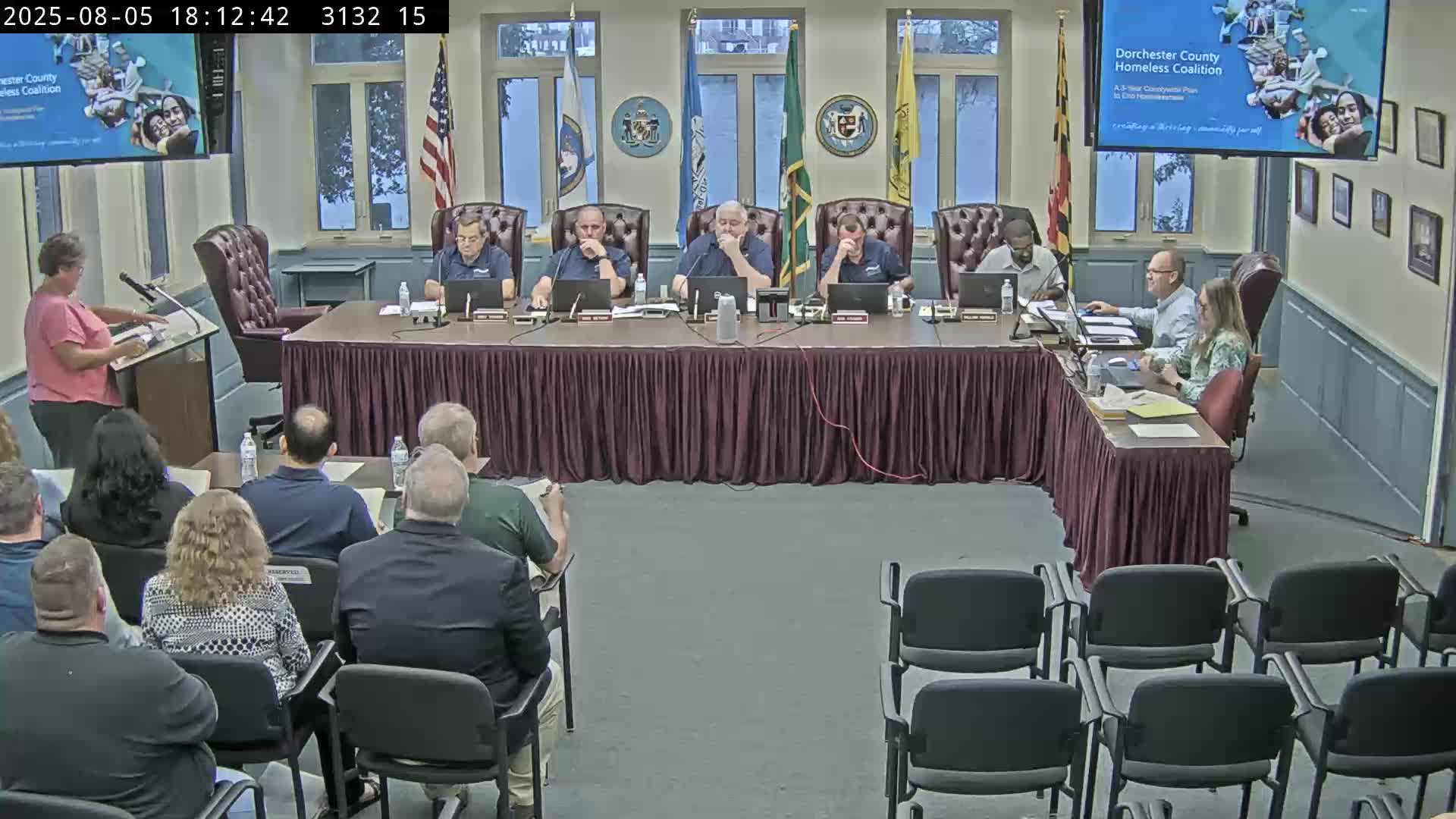
Nancy Shockley, representing the Dorchester County Homeless Coalition and Dorchester Forward, presented a three-year strategic plan to the Dorchester County Council on Aug. 5, outlining priorities to coordinate services, expand affordable housing and improve a system of care for people experiencing or at risk of homelessness.
The plan was developed after regional data collection and public outreach, Shockley said. She cited a point-in-time count conducted by Metro Behavioral Health Systems that recorded 71 people on a single day this year — 66 in shelters and five unsheltered — and a 184 percent increase in one metric from the prior year. She also referenced rising McKinney-Vento counts in county schools, from 80 in 2018–19 to 179 in 2024–25, with about 109 students noted as living in unstable situations at the time the plan was developed.
The plan sets three priorities: 1) strengthen cross-sector collaboration and designate a backbone organization to lead coordination; 2) increase access to quality affordable housing by creating a blended funding strategy that combines local, state and federal resources; and 3) develop a comprehensive, responsive system of care to meet immediate needs (cold-weather shelter, cooling centers) and long-term supportive services.
Shockley said the planning process engaged county and regional partners, including Delmarva Community Services, the Salvation Army and the temporary shelter operator, and drew on a regional needs assessment led by Metro Behavioral Health Systems. She emphasized the importance of involving people with lived experience in designing services: “We have to make sure those with lived experience with homelessness are at the table with us,” she said.
Council members asked how the county would avoid becoming a magnet for people from other jurisdictions if local services expand. Shockley and Andy Brooks, who identified himself as CEO of Gilmore Community Services, said the coalition discussed that concern and plans to coordinate regionally with neighboring counties and city partners, and to prioritize services for county residents while also planning for the transient nature of the population.
Brooks, who described Delmarva Community Services’ role operating a temporary shelter, told the council the shelter’s day‑to‑day decisions previously lacked a long-term roadmap and welcomed the strategic plan’s broader approach. Several council members asked about partners and capacity; Shockley said the shelter can house about 21 people in its facility (roughly 15 men and six women) and can arrange hotel rooms in extreme weather or for those with health needs.
Shockley and other presenters described drivers of homelessness in the county as rising housing costs, poverty, mental health and substance-use challenges, and gaps in lower-cost housing suitable for seniors. The coalition intends to pursue a mix of immediate service improvements and longer-term housing development and funding strategies.
Council members asked for follow-up briefings and site visits to neighboring programs; Shockley and Brookes said staff would schedule further meetings and coordinate with county departments and nonprofit partners. The presenters provided council members with copies of the strategic plan and data summaries for further review.
Ending: Council members thanked presenters and asked county staff to continue working with the coalition and regional partners. No formal council vote or budget action on the plan was recorded during the meeting; presenters were asked to return with implementation options and next steps for council consideration.