Get Full Government Meeting Transcripts, Videos, & Alerts Forever!
Get email alerts on the Labor Unions topic
No spam. Unsubscribe anytime.
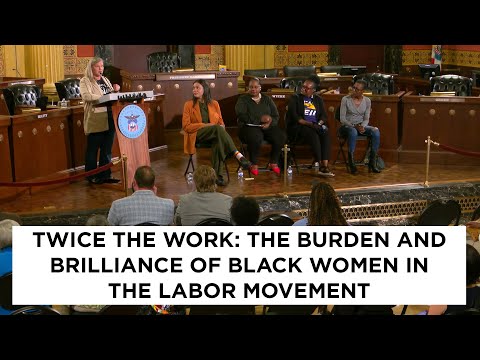
Columbus panel spotlights role of unions in economic stability for Black women
Summary
At a Labor Day–week event at Columbus City Hall, Councilman Rob Dorns and a panel of labor leaders emphasized unions’ role in providing economic stability for Black women, discussed organizing in nonprofits and the trades, and answered audience questions on AI, mentorship and unionizing creative workplaces.
Columbus City Council President Pro Tem Rob Dorns opened the second annual Labor Day event at Columbus City Hall on Labor Day week, saying his family’s economic stability came from union membership and urging attention to the contributions of unionized workers.
“Watching my dad in retirement being able to travel and enjoy his grandkids is because of that collective bargaining agreement,” Dorns said, describing himself as “a proud third generation union member.”
The panel, moderated by Jamie Shoemaker, executive director of the Central Labor Council, brought together local labor leaders and members to discuss how unions affect workers’ lives and careers, with a particular focus on Black women. Shoemaker noted national data on job losses and said Black women’s unemployment has hovered near 6 percent, citing the Bureau of Labor Statistics.
Panelists described concrete benefits members see from collective bargaining: workplace stability, stronger communication among staff, and protections that let employees “be unapologetically me,” as one panelist put it. Lisa Ann Ball, community education and racial justice manager for Kaleidoscope Youth Center and a founding member of the Kaleidoscope Workers Union, said unionization has helped the youth center improve communication and better support clients by stabilizing staff.
Speakers from a range of workplaces — nonprofits, education and building trades — described how unions changed their careers. Marcella Seals, who identified herself with a Columbus trades local, said joining a union provided steady pay and teaching opportunities for less-experienced coworkers. Janella Sims, Ohio state director and recording secretary for SEIU Local 1, said unions create “a space and a voice to be represented and to support each other” across diverse member backgrounds.
Audience members asked about organizing in small creative businesses and about the impact of artificial intelligence on jobs. Panelists advised workers and small employers to talk with unions to identify which organizations represent their field, to ask questions about representation and to use collective bargaining to build protections and retraining plans where possible. One panelist urged employers to consider the operational benefits of a stable, supported workforce.
Panelists also discussed mentorship and intergenerational organizing: they encouraged younger workers to seek mentors inside and outside their demographic groups and said unions can help create opportunities for leadership and skills development.
The event concluded with thanks from Shoemaker to elected officials and staff who supported the event, including Dorns’ staff member Ariel. Organizers opened the floor for audience questions and indicated follow-up conversations and outreach to interested attendees.
Why it matters: Panelists framed the discussion as part of a larger moment of labor debate in Ohio and nationally, arguing that collective bargaining and organizing remain tools for economic stability and workplace protections, particularly for Black women and other historically underrepresented workers.