Get Full Government Meeting Transcripts, Videos, & Alerts Forever!
Get email alerts on the County Budget topic
No spam. Unsubscribe anytime.
Cook County board reviews preliminary 2026 public health and human services budget; approves mobile crisis needs-assessment contract
Summary
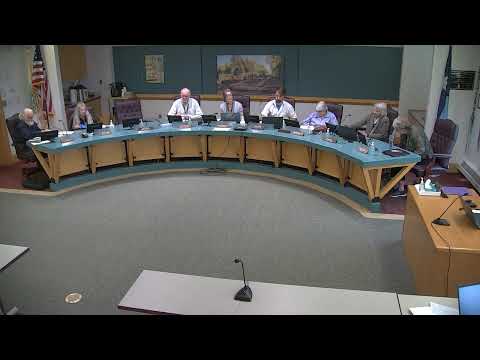
Cook County Public Health and Human Services Board members reviewed a preliminary 2026 budget on Tuesday and unanimously approved a needs-assessment contract for the county's mobile crisis response program.
Cook County Public Health and Human Services Board members reviewed a preliminary 2026 budget on Tuesday and unanimously approved a service agreement to complete a needs assessment for the county's mobile crisis response program.
Bob Plumb, a staff member presenting the budget, told the board, "I'm going to be presenting the preliminary 2026 public health and human services budget." He said the department's proposed 2026 net county cost is $3,123,977, a 3.7% increase from 2025, and that the requested levy is 27.8% higher than the approved levy for 2025 because the draft budget proposes no use of fund balance.
The board heard line-by-line explanations of department costs and revenue. Plumb said the department's 2026 budgeted expenditures are 8.57% higher than 2025, driven largely by personnel costs and the end of one-time federal COVID and ARPA funding. "The 2026 personnel cost include 2.75% COLA increase and projected 10% increase in health insurance," Plumb said.
Board members pressed staff for clarifications. Commissioner (unnamed in the transcript) questioned why economic assistance shows roughly $897,000 in personnel costs while client program payments appeared to be about $300,000; Plumb clarified the figures represent different line items, year-to-date vs. budget columns, and that many client programs are reimbursable through state or federal funding. Administrator Treble noted additional federal changes are expected and advised the board to review mandates and funding at a Committee of the Whole.
Fund balance and levy implications featured strongly. Plumb reported the PHHS fund balance at the end of 2024 was $3,309,216, with $3,282,072 identified as available after restricted amounts; the projected balance at the end of 2025 is $2,715,427 if revenues and expenditures match budgets. He said county fiscal policy requires PHHS to maintain a fund balance equal to 42% of budgeted expenditures; that threshold was stated in the presentation as $22,580,753, leaving $134,675 available under the proposed 2026 figures. Plumb recommended the board not budget to use fund balance for 2026 given funding uncertainties.
Child-care wage subsidy program. The board discussed the locally funded childcare wage enhancement that was created using fund balance in prior years. Plumb said the county previously budgeted $366,645 for wage subsidies but that only about 61% of that amount was spent in 2024 (roughly $224,000). He proposed a placeholder amount of $253,751 for 2026, calculated by applying the 61% utilization rate and adding two anticipated new providers. The program currently supports 197 spots across Cook County and Grand Portage; the 2025 enhancement averaged $6.11 per hour.
Commissioners discussed options if utilization exceeds the placeholder amount. Plumb said exceeding the budgeted amount could require dipping into fund balance but that such a decision would be up to the board. Commissioners suggested program rules (for example limiting payable hours) or seeking additional outside funding if costs rise.
Training, travel and electronic health record costs. Staff said projected increases in staff training and travel reflect a combination of continuing education, required client visits outside the county related to waiver services, and travel for onboarding new staff. Plumb explained that a substantial portion of the social services travel increase is related to electronic health record (EHR) implementation and data management software needed for casework, substance use disorder programming and the mobile crisis response effort; the EHR-related costs were presented separately from conventional travel/training figures.
Mobile crisis response grant and contract approval. Plumb and staff described the Department of Human Services (DHS) mobile crisis response grant as a statutorily required county service; staff said related expenditures (including EHR costs, clinical supervision and after-hours coverage) are reimbursable through the DHS grant. Andrea Aras, who is staffing and coordinating the mobile crisis response work locally, explained that a needs assessment is a deliverable in the grant and will examine alternative models given Cook County's low call volume and the potential for future grant funding uncertainty.
The board unanimously approved a service agreement with the University of Wisconsin Superior Center for Research and Evaluation Services to perform that needs assessment. Commissioner White moved approval of the contract; the motion passed unanimously.
Other discretionary funds and grants. Plumb listed discretionary and grant-funded public health programs included in the preliminary budget: substance misuse and suicide prevention grant (funding 1 FTE), age-friendly communities grant, cannabis education funding, public health emergency preparedness, CDC infrastructure sustainability grant, healthy housing grant, and the DHS mobile crisis response grant. The board also discussed the public health grant fund program and a proposed $150,000 allocation for locally determined public health grants in 2026 (down from $190,000 in 2025 but returning to a 2024 funding level); Plumb noted this allocation would increase levy support because it is not offset by outside revenue.
What the board decided. The board did not adopt a final 2026 budget at the meeting; the materials and the preliminary budget will return for further review. Plumb recommended no planned use of PHHS fund balance in 2026 and flagged federal and state funding changes that could alter revenue projections. The board approved the mobile crisis needs-assessment contract and approved the consent agenda items noted in the meeting with a unanimous vote earlier in the session.
The board asked staff to provide clearer line-item breakdowns (for example separating client-related travel from standard continuing education/travel and isolating EHR costs) in future budget documents to aid review. Staff indicated follow-up presentations are expected in September (including a presentation on proposed federal budget changes) and that the mobile crisis needs assessment will inform longer-term options for delivering crisis response services in Cook County.