Get Full Government Meeting Transcripts, Videos, & Alerts Forever!
Get email alerts on the Redistricting topic
No spam. Unsubscribe anytime.
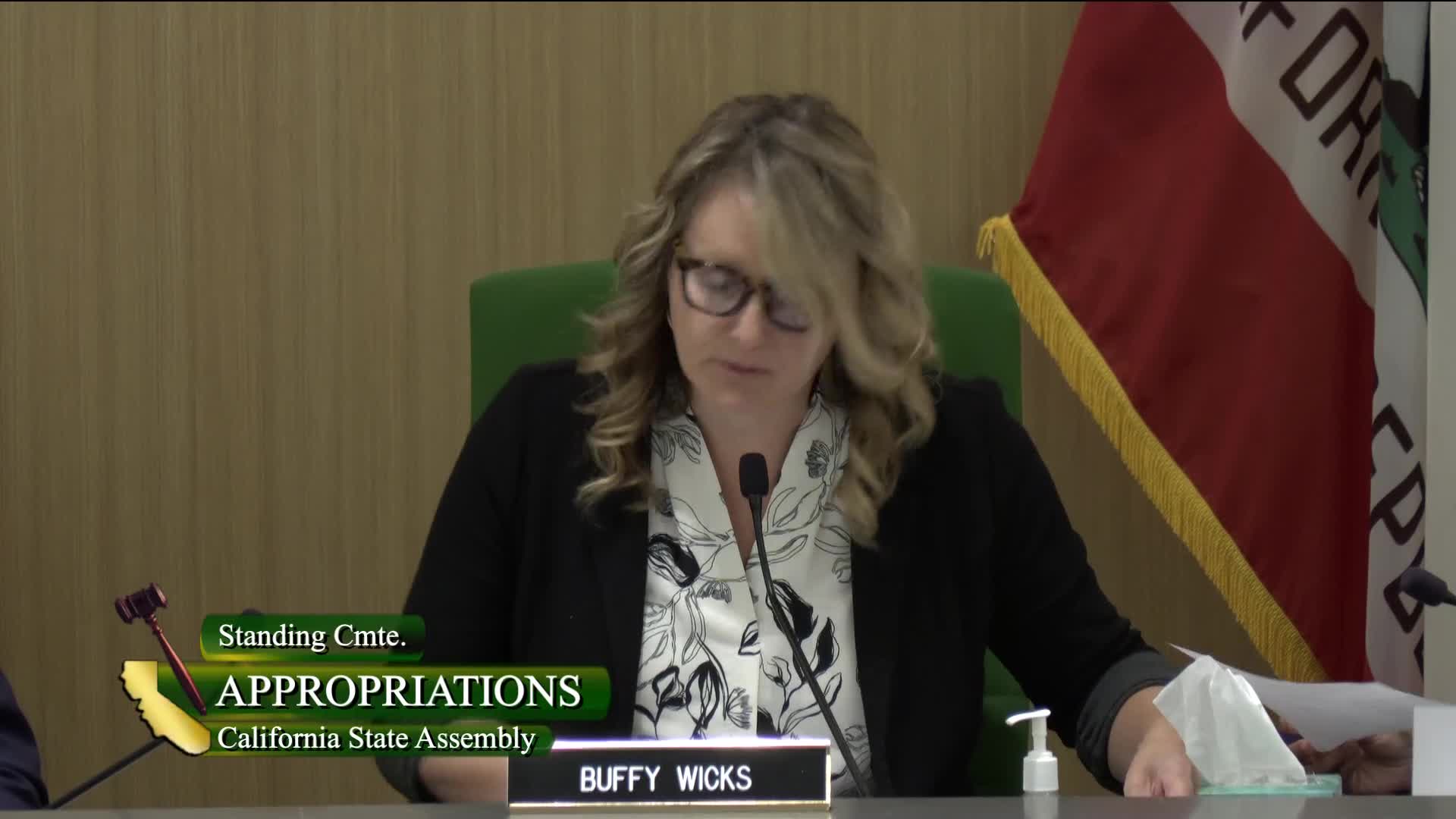
Assembly committee advances ACA 8 and companion bill to fund special election on mid-decade redistricting
Summary
Assemblymembers on the Assembly Appropriations Committee voted to advance Assembly Constitutional Amendment 8 and its companion funding bill, Senate Bill 280, sending both measures to the Assembly floor; ACA 8 would let Californians temporarily adopt new congressional maps only if other states enact mid‑decade partisan redistricting, and SB 280 would appropriate funds to hold a November special election if the measure qualifies.
Assemblymembers on the Assembly Appropriations Committee voted to advance Assembly Constitutional Amendment 8 (ACA 8) and a companion funding bill, Senate Bill 280, sending both measures to the Assembly floor for further debate.
ACA 8 would ask California voters in a special election whether to temporarily use new congressional district maps — drawn now and used through the 2030 congressional term — only if other states pursue mid‑decade partisan redistricting that, sponsors say, would dilute representation. SB 280 would appropriate funding to administer that special election on Nov. 4 if the initiative qualifies.
Proponents told the committee they view ACA 8 as a narrowly targeted, conditional response to what they described as a coordinated mid‑decade power grab in other states. "I'm here to present ACA 8 on behalf of Speaker Robert Rivas," said Isaac Bridal, who introduced the measure to the committee, saying the amendment ‘‘exists because Trump and the Republican controlled Texas legislature and other states ... are attempting to redraw congressional districts in the middle of a decade." Bridal emphasized that the measure would use its proposed map only if other states move first.
Jody Hicks, CEO and president of Planned Parenthood Affiliates of California, appeared as a primary witness in support and framed her testimony around program impacts from recent federal actions. "If we are not able to have a fair election, if we're not able to fight back in the way that we need to, we're not standing up for our values here in California," Hicks told the committee, citing federal budget changes she said would cut programs used by millions of Californians.
Trina Turner, a commissioner on the 2020 California Citizens Redistricting Commission who testified for supporters, said independent redistricting had produced fair maps but that the current national context required a different response. "There's a breach of trust in our democracy that has already happened, and it's hitting black and brown communities hardest," Turner said.
Opponents and skeptical members pressed fiscal and institutional concerns. Tom Lackey, identified in testimony as Republican caucus chair, argued the proposal would return redistricting power to politicians and cited polling and the independent commission as reasons to reject the approach. "Giving it back to the very people voters took it from isn't reform. It's a raw power grab," Lackey said.
Assemblymember Dixon, who spoke during the appropriations debate and said she would vote no, framed her opposition in fiscal terms: "This unnecessary, unbudgeted, expensive special election is expected to cost California taxpayers more than $230,000,000," she said, citing county cost estimates and arguing the state faces other spending priorities.
Committee members pressed technical and fiscal questions about litigation risk and county implementation. Assemblymember Tangipa asked whether litigation related to the measures would require additional appropriations; Christian Beltran of the Department of Finance told the committee the administration would work with the Secretary of State and county registrars to provide funding up front so counties would be made whole.
Supporters repeatedly said the proposed funding was an investment in protecting California's interests against changes in other states. "The state of California pays over $80 billion in federal taxes that we do not get back," Bridal said in debate, arguing the special election is a response to national actions that have fiscal and policy impacts on California.
The committee held multiple rounds of public comment. Organized labor, teachers and other statewide groups testified in support; the Republican caucus and other witnesses testified in opposition, warning of precedent, cost, and dilution of independent redistricting reforms.
Outcome and next steps: The committee moved both measures out on Assembly B roll calls; both are scheduled for Assembly floor consideration. The committee record shows motions to advance ACA 8 (moved by Mr. Slocce; second by Mr. Fong) and SB 280 (moved by Mr. Fong; second by Ms. Pacheco). The transcript records the measures as "moved out" on roll calls, but the committee minutes and official vote tallies were not listed in the hearing transcript.
Why it matters: ACA 8 and SB 280 would change the mechanics and timing of congressional maps used in California only if other states pursue mid‑decade partisan redistricting. Supporters say the measures are a defensive response to preserve fair representation; opponents say the change risks returning power to politicians and imposes significant, up‑front costs on counties and the state.
Votes at a glance: The hearing transcript records that both measures were moved forward on roll calls in Appropriations; specific member vote tallies were not published in the hearing transcript and are listed as not specified in the committee record excerpt provided to the reporter.
Community context and caveats: The transcript shows sustained debate over both policy and costs. Advocates focused on electoral fairness and downstream effects of federal policy on health and other services; opponents emphasized fiscal constraints and institutional principles of independent redistricting. The transcript does not include the official roll‑call vote counts for the committee; the Assembly Journal and official committee minutes should be consulted for the certified vote tallies.
Next: Both measures will be calendared for Assembly floor action; if ACA 8 ultimately qualifies for the ballot and receives voter approval, the special election mechanics described in SB 280 would be used to fund and administer that vote.