Get Full Government Meeting Transcripts, Videos, & Alerts Forever!
Get email alerts on the Student Technology Policy topic
No spam. Unsubscribe anytime.
Montville board asks policy committee to draft stricter high school cell‑phone rules after wide debate
Summary
After a lengthy debate, the Montville Township Board of Education asked the policy committee to draft options and run surveys this fall on restricting student cell‑phone use at Montville Township High School rather than immediately imposing a full ban.
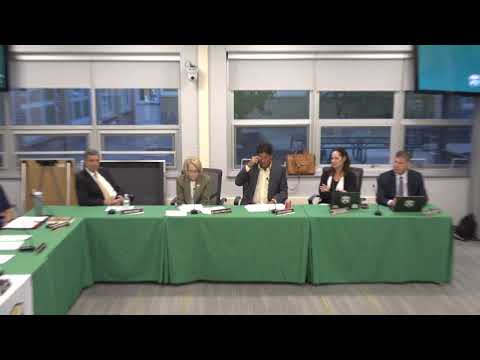
The Montville Township Board of Education asked its Policy Committee on Wednesday to draft multiple options and circulate surveys to students, staff and parents about limiting cell‑phone use at Montville Township High School after an extended discussion that produced no immediate ban.
Board members debated three near‑term approaches — keep teacher discretion, ban phones from classrooms but allow use at noninstructional times, or impose a full ban — and a longer‑term process to study ‘‘wander’’ pouches or other enforcement measures. The board agreed by consensus to ask the policy committee to prepare a set of policy options that span the range of views, and for the superintendent and administrators to prepare surveys to run this fall to gather community input.
The issue drew repeated comments from board members about classroom disruptions, student mental health and preparing teens for adult life. ‘‘I think a lot of the teachers are just having a lot of problems with saying, I can’t compete with Instagram. I can’t compete with TikTok. I’m trying to teach, and the kids are texting somebody,’’ said a board member during the discussion, noting that teachers want clearer district guidance. Several board members said they favored stronger limits in class; others argued a full ban would be too paternalistic for high‑school students and could harm students who rely on phones for safety or health reasons.
Board member Caitlin said she opposed a blanket ban. ‘‘I am very against a complete ban. I think that’s treating them like toddlers,’’ she said, adding that policies should reflect developmental differences between elementary and high school students. Several other board members said they favored a classroom ban at minimum, while public speakers and some board members urged a full‑day ban to reduce distraction, cyberbullying and anxiety.
Superintendent Tom Gorman suggested the policy committee and administration work together on two tracks: (1) an interim policy for the coming school year, and (2) a more permanent policy developed after surveys and further study. Board counsel Steve (last name not specified in the record) reviewed state practice and noted there is no statutory requirement to permit or forbid remote participation at open meetings, a separate agenda item the board addressed that evening.
Public commenters included students and residents who urged the board to adopt a strong policy. ‘‘Most of the people I know that are in high school or going into high school would all, like, love a break from their phones,’’ said incoming freshman Rebecca Korchman. A parent, Yolena of Towaco, cited national research to argue a ban would reduce bullying and improve focus, and urged the board not to let emotion override the evidence.
The board did not vote on a ban. Instead it directed the policy committee to prepare multiple draft policies for consideration — including at least one more restrictive option and one less restrictive option — and to review the surveys before release. The superintendent said surveys could be ready in September or October, with a more formal policy discussion later in the fall or winter.
The board also instructed the policy committee to consider scope questions raised during the discussion: whether any policy should apply only to the high school or district‑wide, how to handle smartwatches and emerging wearable technology, what exceptions (for instructional use or special needs) are appropriate, and reasonable notice requirements for implementation.
Next steps the board identified included: policy committee drafts of multiple options; superintendent/administration preparation of surveys for students, staff and parents with demographic questions to separate responses by school level; and follow‑up visits or research on other districts’ approaches. The board president asked for the policy committee’s options to be ready for the next regular meeting cycle.