Get Full Government Meeting Transcripts, Videos, & Alerts Forever!
Get email alerts on the Comprehensive Plan topic
No spam. Unsubscribe anytime.
Planning commission accepts Community Facilities chapter; housing chapter sees major revisions, extended review
Summary
The commission voted to accept the final draft of the Comprehensive Plan’s Community Facilities chapter and engaged in an extended review of the draft Housing chapter, which includes new language on priority funding areas, public sewer feasibility studies and recommendations to allow more housing types.
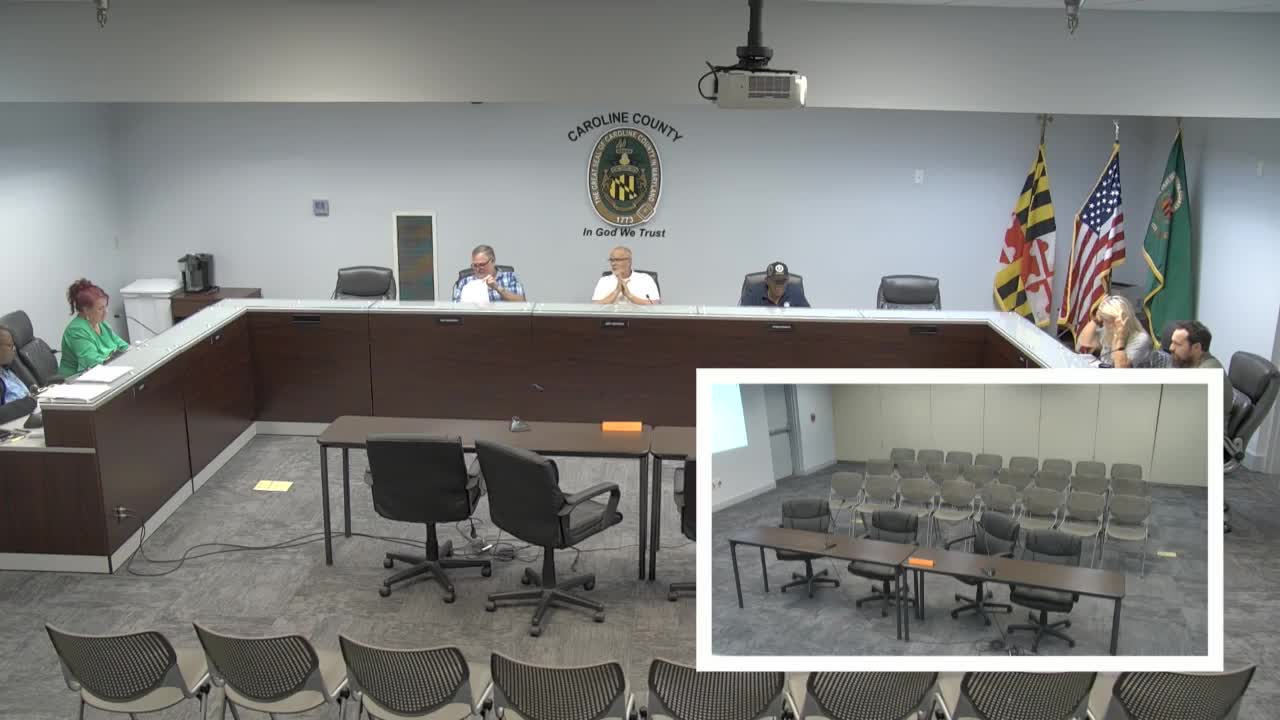
The Caroline County Planning Commission voted to accept the final draft of the Comprehensive Plan’s Community Facilities chapter and held an extensive discussion on the draft Housing chapter, with commissioners and staff emphasizing sewer feasibility, septic regulation conflicts and tools to expand housing options.
Why it matters: The Comprehensive Plan guides county land-use decisions and implementation. Changes to the Community Facilities and Housing chapters can affect where the county encourages growth, how it addresses failing septic systems and what housing types the county will permit or promote.
Community Facilities: Staff reported the Board of Education’s Aug. 5 action selecting a north-side site for the new Lockerman Middle School (approximately 15.50 acres), and the Community Facilities chapter was updated to reflect the school decision, corrected building dates and incorporate funding schedules tied to a July 2024 memorandum of understanding for road improvements. Commissioners voted to accept the chapter’s final draft for inclusion in the broader Comprehensive Plan update; the draft will be updated again before formal adoption if substantive new items arise before the final package.
Housing chapter discussion: Planning staff presented a heavily revised Housing chapter that shifts priorities toward identifying land and infrastructure in designated Priority Funding Areas (PFAs) and village centers, streamlining permitting, and resolving conflicts between state septic regulations and local housing goals. Staff recommended a feasibility study to consider creating a county water and sewer department or contracting such services, prioritized modernization of public sewer infrastructure, and proposed allowing a broader mix of housing types — including accessory dwelling units (ADUs), duplexes and restricted allowances for single-wide and double-wide manufactured homes outside mobile-home parks — subject to objective standards.
Key technical and policy points discussed: - Zoning and septic tiers: Commissioners and staff discussed Maryland’s tiered septic system rules and the limits they create for denser development outside towns. The commission agreed the county should review septic-tier designations in proximity to towns and rural villages to enable appropriate infill or targeted sewer expansions. - Public wastewater capacity and regional partnerships: Staff noted that most regional wastewater facilities are owned and run by municipalities (for example, Greensboro’s treatment plant serving areas outside its municipal boundary). Any expansion into county areas would require coordination with towns and could require annexation, service agreements or other compromises. - Protecting existing housing stock: Staff and several commissioners emphasized that one purpose of considering water/sewer expansion is to prevent abandonment when septic systems fail, not only to enable new development. - Funding and governance options: Staff suggested forming public-private partnerships (PPPs) or a county-level housing-focused task force and raised the possibility of forming a joint municipal–county housing authority to pursue grant funding.
Outcomes and next steps: The commission accepted the Community Facilities chapter final draft for inclusion in the comprehensive-plan update and instructed staff to return with a revised Housing chapter for more review in September. Staff will refine implementation steps, align objectives and implementation language, and coordinate with towns and state agencies on septic and sewer feasibility work.
No formal regulatory changes were adopted for the Housing chapter at the meeting; the chapter remains a draft pending additional technical work and public review.