Get Full Government Meeting Transcripts, Videos, & Alerts Forever!
Get email alerts on the Donation Bins topic
No spam. Unsubscribe anytime.
Utica council denies appeal, upholds revocation of donation‑bin license after months of complaints
Summary
After months of complaints about donations left outside a clothing donation bin at Auburn and Shaner/Hall Road, the Utica City Council denied an appeal from the operator and sustained a revocation of the site’s license following a lengthy public hearing on Aug. 12.
The Utica City Council voted unanimously Aug. 12 to deny an appeal from a textile‑recycling vendor and uphold the city’s revocation of a donation‑bin license for a location at Shelby Corners, citing repeated instances of donated items left on the ground outside the bin.
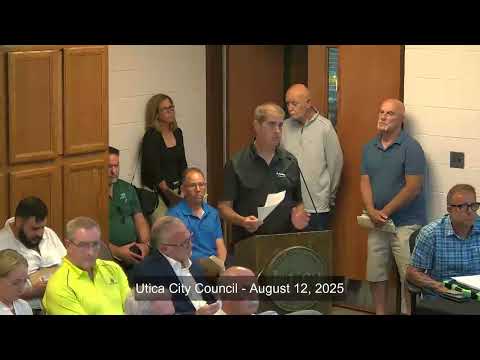
The decision follows a two‑hour public hearing in which representatives for the operator, American Textile Recycling Service (ATRS), and the Michigan Humane Society argued the bin supports nonprofit fundraising and said they had increased service and signage to reduce drop‑offs outside the container. The council heard voices on both sides before voting 7‑0 to deny the appeal.
“Those funds are critical to our work,” said Matt Pepper, identifying himself as president and CEO of Michigan Humane, urging the council to find a solution that would preserve the fundraising stream. ATRS representative Patrick Bennett told the council his crews visit the site multiple times per week and that the company reduced the number of bins at that location from four to two and increased service days to try to address overflow.
ATRS lawyer Kristen Green acknowledged there was a problem at the site and said the operator had stepped up its maintenance schedule and added signage. She also argued the city’s enforcement letter dated June 25 and the July 8 revocation did not follow the ordinance’s requirements for sequential notices tied to individual violations, and that ATRS had evidence showing they removed material within the seven‑day remedy window listed in the ordinance.
City officials and several council members said the record showed repeated violations after the June warning. “There have been repeated instances since that day of garbage outside the bins, which is what led to your revocation,” the mayor said during the hearing. Council members said inspectors had documented multiple occasions when donated items were left on the ground despite prior notices and outreach.
Councilmember Dionne moved to deny the appeal, seconded by Councilmember Torenzi. The council recorded votes of yes from Torenzi, O’Donnell, Diane, Backus, Weaver, DeVrent and Mayor Calandrino; the motion carried 7‑0.
Council members and city staff said the ruling does not prevent the operator from proposing alternative mitigation steps or seeking a new permit in the future if the operator can show a different plan that meets the city’s ordinance. At the hearing, ATRS offered to increase service frequency and suggested a temporary third bin or other operational changes if the council would reconsider; council members repeatedly stressed that any change must meet the letter and intent of the city’s ordinance and prevent recurring litter and blight.
The ordinance cited by staff requires operators and property owners to maintain the area surrounding donation containers free of donated items and debris and sets out a process for citations and revocation when violations persist. The city provided council members a timeline that included the June 25 warning letter and a July 8 revocation notice; ATRS representatives said they have timestamps showing cleanup on several of the cited dates and disputed the city’s characterization that the violations continued without remediation.
By denying the appeal, the council sustained the revocation for the Shelby Corners bin. Council members said they were open to working with operators and property owners on longer‑term fixes — including different placement, increased collection frequency, or alternative donation sites that reduce sidewalk and parking‑area clutter — but emphasized enforcement would continue where the ordinance was not followed.
The decision affects fundraising tied to that bin; Pepper told the council the location generated about $4,000 annually for Michigan Humane, an amount he said made the site “critical to our work.” Representatives for ATRS and Michigan Humane said they would continue to pursue options to collect donations in ways that meet the city’s rules.
The public hearing record and council vote close the formal appeal. The council did not take final action that would immediately permit new bins at the site; any future application or policy change would require separate review and compliance with the city’s ordinance and permitting process.