Get Full Government Meeting Transcripts, Videos, & Alerts Forever!
Get email alerts on the Ems Operations topic
No spam. Unsubscribe anytime.
EMS report: 8,007 ambulance dispatches in July; department cites gains in hospital offload and sobering-center transports
Summary
Deputy Chief Simon Pang reported July ambulance dispatches and described a small but measurable improvement in ambulance offload delays, a rise in transports to the city sobering center, continued Narcan use, and a new violence-in-the-workplace policy to support medics.
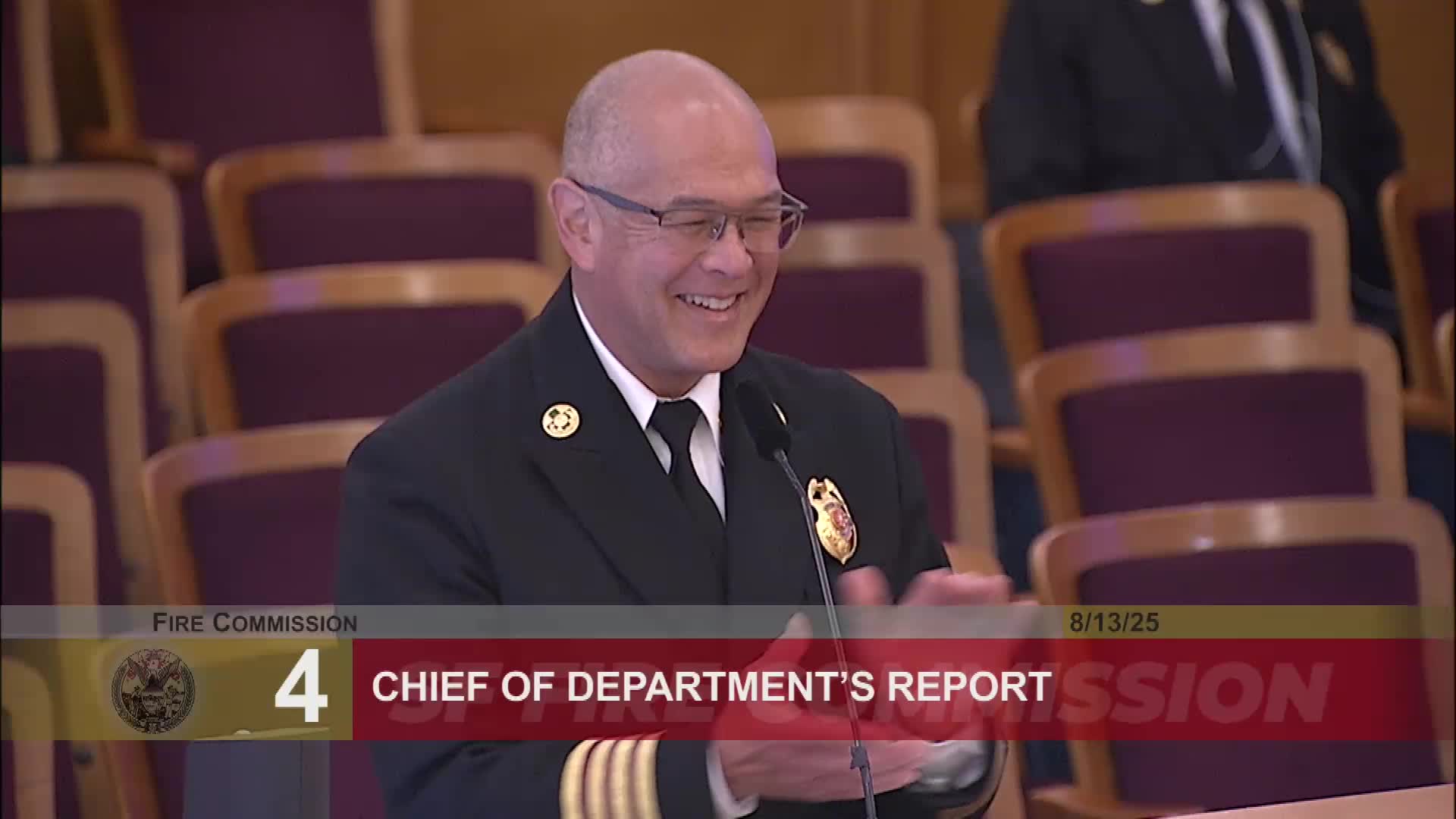
Deputy Chief Simon Pang told the Fire Commission on Aug. 13 that San Francisco Fire Department ambulances were dispatched to 8,007 calls in July and that the department is seeing modest but meaningful improvements in ambulance patient offload delays at hospitals.
Pang said the department recorded roughly 150 hours of ambulance time lost to hospital delays in July but that metrics are improving compared with the prior year. He credited persistent messaging and operational changes for part of the improvement and pointed to one concrete change: increased use of the city's sobering center as an alternative destination for appropriate patients.
"We asked our captains to start messaging our members, don't forget about the sobering center," Pang said. He told the commission that transports to the sobering center rose from 17 in June to 25 in July, a 47% increase, and that average turnaround there is about nine minutes versus roughly 38 minutes at emergency departments.
Why it matters: Faster offload times return ambulances to service more quickly, reducing system strain and improving response capacity. Finding appropriate alternative destinations also routes people to care better suited to their needs.
Other operations and clinical measures
Pang said July produced an average of 14 code-3 returns per day (lights-and-sirens transports) and an average of four field pronouncements per day. He noted a decline in dispatches for rescue captains since May and has asked Emergency Communications to review call-taking protocols; staff suspect changes in how call-takers ask about breathing may be reducing unnecessary high-level dispatches.
The department continues to track naloxone (Narcan) use: 204 patients received naloxone in July versus 181 in June, but Pang cautioned against drawing an upward trend in overdoses because the proportion of Rhode-Island–verified overdoses (a stricter verification) was similar between months. He said naloxone is often used as a diagnostic to rule out an opioid overdose in an unconsciously altered patient.
Cardiac arrest and bystander response
Pang highlighted a recent survivor story to underscore the value of rapid bystander CPR and early defibrillation. He described a July meeting with Elizabeth Curtis, a 39-year-old survivor whose cardiac arrest was witnessed, who had a shockable rhythm and who received immediate bystander CPR; the event met the Utstein criteria that correlate with higher survival rates.
Outreach, innovation and safety policy
Pang said the department plans to offer more organized public hands-only CPR training to improve bystander response. He also announced a 60-day pilot of AI-assisted electronic patient-care-report narratives with their vendor (ESO) for roughly 20 members to test whether documentation time in the field can be reduced.
On workplace safety, Pang described the department—s new Violence in the Workplace policy (issued Aug. 1) after a multi-year, multi-stakeholder process with the DA, the police and city attorneys. He said members filed 111 workplace-violence reports in the prior 12 months and that 93% of those incidents targeted ambulance paramedics and EMTs. The policy creates a process for supervisors to advocate for medics at the scene, to insist on police reports and to gather evidence (witness statements, video) for DA review.
Ending
Pang said community paramedicine and street-crisis teams continue to handle a substantial share of work: the Community Paramedicine Division handled more than 20,000 calls for service annually, roughly 10% of the fire department's volume. He told the commission the division continues to pursue alternatives to emergency department transport and to coordinate with city behavioral-health and shelter partners.