Get Full Government Meeting Transcripts, Videos, & Alerts Forever!
Get email alerts on the Facilities Seismic topic
No spam. Unsubscribe anytime.
Fire commission reviews seismic risks for Stations 2 and 40 and seeks funding in 2028 "Easter" bond
Summary
Officials said two fire stations remain in the highest seismic-risk category and work with city engineers and the city administrator's office to evaluate retrofit vs. rebuild options and to pursue funding in the 2028 general obligation ("Easter") bond cycle.
The San Francisco Fire Department told the Fire Commission on Aug. 13 that two engine housesStation 2 and Station 40remain in Category 4 for seismic risk and that the department will seek funding through the city's planned 2028 Emergency and Seismic Resilience (EASTER) bond to repair or replace them.
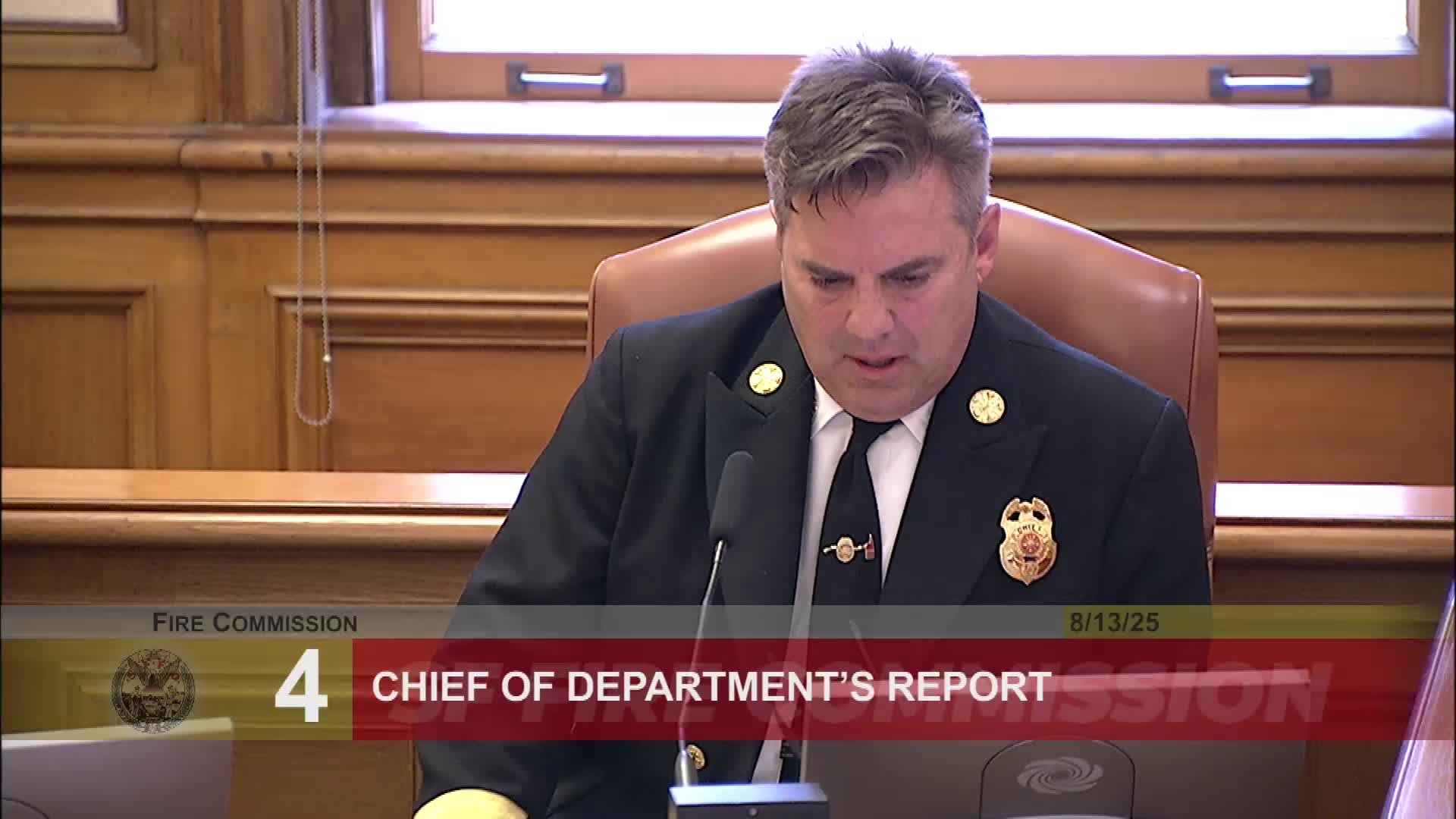
The department said the stations are critical to response in dense neighborhoods and that the next step is a secondary engineering survey, followed by cost estimates for retrofit or rebuild. Chief of Department Dean Crispin told commissioners the engineers estimated a secondary survey would cost about $30,000 to $40,000 and that the department is “ideally going to fund that through our program.”
Why it matters: Station 2 serves Chinatown, North Beach, the Financial District, Tenderloin and Nob Hill, the department said, making it a high priority for earthquake resilience. Station 40, built in the 1950s, serves the Sunset and Golden Gate Heights and has substantial wood framing that, department staff said, may require full replacement rather than retrofit.
Department briefing and options
Crispin described the department—s meeting with Department of Public Works seismic engineers and the city administrator's office to place station needs in the bond proposal. "Station 2 is clearly of particular interest because it's in such a high density area," he said. He told the commission Station 2 was constructed in the mid-1990s and may be a candidate for retrofit, which the department said could take about a year to 18 months; a rebuild could take two to three years. By contrast, Crispin said Station 40 —might require a full rebuildadding to cost and timeline.
Crispin said early conversations with DPW engineers will determine whether retrofit is feasible for Station 2 and that engineers would produce additional technical analysis to inform the bond request and construction timeline. He also told the commission that the department has asked the city administrator to consider including Station 2 and Station 40 in the initial bond priorities alongside previously proposed rebuilds of Station 7 and the Bureau of Equipment.
Costs and bond context
At the meeting, staff described a range of cost estimates for related projects. Crispin and commissioners cited an earlier estimated cost for Station 13 at about $37 million and suggested combined projects could exceed triple-digit millions. The city administrator—s preliminary framing for the EASTER bond was described in the briefing as roughly $350 million in total for multiple public-safety and infrastructure priorities; how funds would be allocated among agencies remained to be decided.
Commissioner and staff next steps
Commissioners asked the department to pursue a timeline and to present the engineer—s secondary study to the commission when done. Commissioner Alan Lowe and others said they would seek a commission resolution in support of the Station 13 rebuild at an upcoming meeting; the clerk agreed to place an item on the next agenda. Crispin asked engineers to prioritize the secondary seismic surveys and cost estimates to allow the department to finalize its list for the 2028 bond submission.
The department underscored trade-offs between cost and community disruption: a retrofit may be faster and less disruptive to response capabilities than a full rebuild, while a rebuild is likely more costly and longer.
Ending note
Department staff said they expected the secondary seismic surveys and initial cost estimates for Stations 2 and 40 within roughly a month, at which point the commission and city capital planners expected to have firmer numbers to inform inclusion in the 2028 bond package.