Get Full Government Meeting Transcripts, Videos, & Alerts Forever!
Get email alerts on the Student Code Of Conduct topic
No spam. Unsubscribe anytime.
Board approves updated student code of conduct; trustees debate personal communication device rules under House Bill 1481
Summary
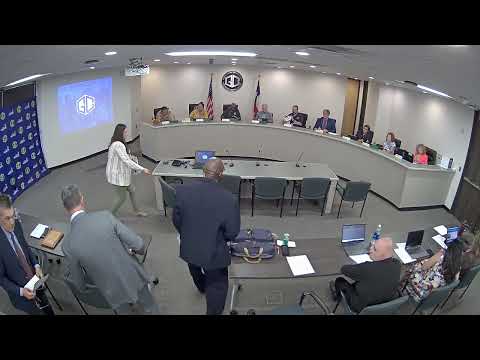
Trustees approved the district’s 2025–26 student code of conduct as part of the consent agenda; the meeting featured extensive discussion about how the district will implement House Bill 1481 restrictions on personal communication devices.
The Goose Creek CISD Board of Trustees approved the district’s 2025–26 student code of conduct as part of the consent agenda, while trustees and staff debated how to implement new state limits on student use of personal communication devices in schools.
Carrie Smith, district staff presenting the code update, told trustees the district drafted language guided by TASB (Texas Association of School Boards) guidance and the recent legislative changes. Smith read the proposed policy language into the record: "Students shall not use personal communication devices, including but not limited to telephones, cell phones, smartphone or flip phone, smartwatch, tablet, laptop, radio device, paging device, smart glasses, earbuds, headphones with the exception for instructional use or any other personal electronic device on school property during the school day and shall store the device in accordance with the method of storage established by the district." Smith added that the district’s proposed discipline progression would start with parent pickup and ISS for first offenses and escalate to placement at DAEP after repeated violations.
Nut graf: Trustees discussed two implementation approaches allowed under the law — an absolute ban on devices on campus during the instructional day versus a requirement that devices be secured in a backpack or purse during the district's designated instructional hours — and asked for clarity on communications to parents and training for staff before the policy takes effect.
Trustees pressed staff about operational details: who stores and retrieves devices, expectations for substitutes and the process for medical or IEP‑related exceptions. Dr. O’Brien and administration explained allowable exceptions under state law and district procedures for students with individualized education programs or medical directives; the district plans to identify students with medical exceptions with a health‑services symbol on their ID badges.
Board members also raised enforcement concerns. One trustee said teachers should not be responsible for confiscating phones and was told administrators or security staff will retrieve devices so classroom instruction is not interrupted. The district plans communication slides for campuses and class meetings; administrators said the policy would be in effect at the start of school and that the first week will include transition reminders.
The code of conduct was listed on the board’s consent agenda and approved by the board as part of items adopted earlier in the meeting.
Ending: Administrators said they will distribute specific campus‑level guidance and parent communications before the policy’s start date and that staff training has been scheduled for assistant principals and student support staff to prepare for implementation.