Get Full Government Meeting Transcripts, Videos, & Alerts Forever!
Get email alerts on the Education Strategic Plan topic
No spam. Unsubscribe anytime.
Goose Creek CISD updates 2025–2030 strategic plan, highlights dual‑credit growth and 90% CCMR rate
Summary
District leaders presented a draft 2025–2030 strategic plan emphasizing academic performance, growing dual‑credit enrollment and a reported 90% College, Career and Military Readiness rate; the board did not take formal action on the plan.
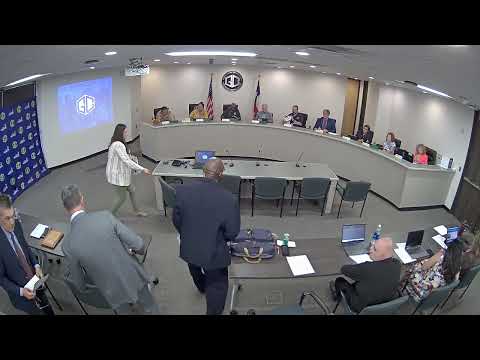
At a Goose Creek CISD Board of Trustees meeting, district leaders presented updates to the district’s strategic plan and reported gains in college and career readiness and dual‑credit participation. The board heard a draft of the 2025–2030 strategic plan and an academic performance overview from district administrators.
The presentation, led by Kendall David, the district’s executive director of community engagement, and Kevin Foxworth, executive director for academics, emphasized five strategic goals — academic performance, community engagement, organizational development, operational excellence and financial stewardship — and proposed updates tied to a five‑year horizon.
The district credited a 90% College, Career and Military Readiness (CCMR) rate among its students as a major achievement. "We were at 90%," Kevin Foxworth said, noting the district’s reported rate is roughly 14 percentage points above the state average that was cited in the presentation. Administrators also described growth in dual‑credit enrollment, from roughly 1,000 students in earlier years to 2,577 last year, and said dual‑credit participation now represents a substantial share of high‑school students.
Nut graf: District staff told trustees the strategic plan will be a living document used to guide resource allocation and program priorities through 2030; board review and a possible approval were scheduled for the September meeting. The plan ties specific academic initiatives — including professional development, use of highly qualified instructional materials and expanded social‑emotional learning supports — to measurable outcomes such as increases at the "meets and masters" performance levels.
Administrators identified celebrations and challenges. Among celebrations, staff noted a reported increase in scholarships awarded by local seniors (described in the presentation as nearly $28 million, up about $8 million year over year), higher graduation rates above state averages and growth in advanced placement (AP) and dual‑credit success rates. On challenges, presenters pointed to state funding pressures, teacher shortages, aging facilities and cybersecurity as threats the plan must address.
Trustees asked about equity in access to dual‑credit courses; in response, leaders said counselors, tutors and outreach efforts intentionally target students who are economically disadvantaged or underrepresented among college‑going populations. "We want to hook that kid — let them know you can take a college class and you can do it," Foxworth told the board.
The board did not vote on the strategic plan the same night. Administrators said they will bring the draft back for formal consideration at the September board meeting and that an action team will continue quarterly reviews to measure progress and recommend updates.
Ending: Trustees commended staff on the reported academic gains and requested continued detail on implementation steps, especially for instructional materials, teacher development and attendance strategies.