Get Full Government Meeting Transcripts, Videos, & Alerts Forever!
Get email alerts on the Transportation topic
No spam. Unsubscribe anytime.
Fulshear council rescinds 2016 opposition and signals contingent support for Westpark Tollway; seeks stronger city role in downtown design
Summary
Council voted to approve a resolution expressing contingent support for extension of the Westpark Tollway through the downtown Fulshear area while seeking a formal agreement to secure city input — and potentially decision-making influence — over design where the route affects city-owned property.
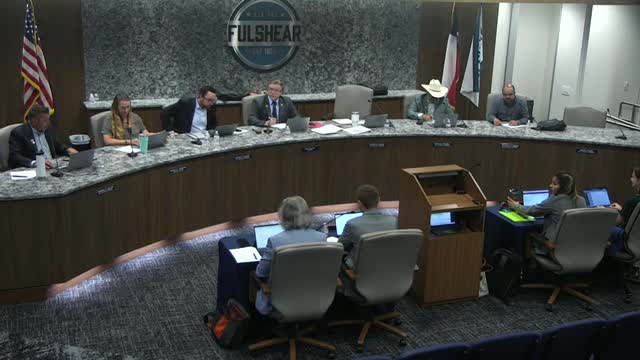
The Fulshear City Council voted Aug. 5 to adopt a resolution expressing contingent support for extension of the Westpark Tollway through the downtown area, while asking county leaders to codify collaboration with the city on design decisions where the tollway touches Fulshear property.
The measure rescinds a 2016 resolution that had opposed the tollway; staff said the toll authority already owns most of the right-of-way inside the city limits and the new resolution reflects the county commissioner’s request that the earlier opposition be withdrawn.
Why it matters: The extension could affect downtown traffic, pedestrian access and city infrastructure. Council members focused debate on the city-owned wastewater treatment plant that lies in the route’s path; staff said the plant is the single parcel the city still owns in the corridor and could provide leverage for negotiating design details or compensation should relocation become necessary.
Design input and potential leverage City staff said the new resolution is a political signal of conditional support and that any binding commitments on design, property transfer or cost sharing would likely be captured in a future interlocal agreement. Council members sought stronger language in the resolution and asked staff to request that the toll authority provide opportunities not just for “engagement” but for “agreement” on design elements, including materials, landscaping and pedestrian access, especially for the segment closer to downtown.
Council and staff also discussed eminent-domain risk: staff said the toll authority could pursue condemnation in theory, but noted that if eminent domain were used the authority would still have to compensate the city for relocation costs and any decommissioning of the wastewater facility.
Next steps Council directed staff to amend the resolution language to strengthen city expectations for design collaboration and to pursue a formal, codified interlocal agreement with the toll authority and Fort Bend County that would spell out design review, coordination meetings and negotiation steps related to relocating the wastewater plant if needed.
Ending Staff cautioned that a resolution is not binding on the county or toll authority but said the conversation and added language will be used when negotiating any formal agreement.