Get Full Government Meeting Transcripts, Videos, & Alerts Forever!
Get email alerts on the Speed Limits topic
No spam. Unsubscribe anytime.
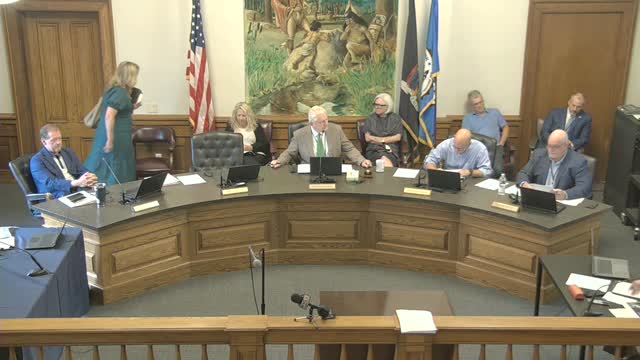
Council opens public hearing on citywide 25 mph limit; no vote, officials cite enforcement questions
Summary
Saratoga Springs held a combined public hearing on three ordinances to set a 25 mph citywide speed limit with limited exemptions. Complete Streets Advisory Board presented safety data and broad public comment favored the change; council left the hearing open for a later vote and emphasized enforcement and jurisdictional issues.
Saratoga Springs City Council held a public hearing on proposed amendments to city code that would lower most local speed limits from 30 mph to 25 mph, with exemptions for joint-jurisdiction roads, arterial streets and school zones.
The council combined three proposed ordinances into a single hearing: an amendment to chapter 225-12 (inside/outside speed limits) and two schedule amendments (225-68 for the inside district and 225-69 for the outside district). Commissioner Cole opened the hearing by citing a 2022 change to New York law that allows municipalities to set local limits as low as 25 mph. He said an engineering study by Stantec recommended the reduction and that the lower limits “make roadways safer.”
Ted Ors, vice chair of the Complete Streets Advisory Board, presented the board’s findings and the engineering rationale. Ors cited crash-survival statistics used in the study and explained differences in stopping distance and injury risk at different speeds. “Each 1 mile an hour reduction in average speed can result in a 5% reduction in crashes,” Ors said. He said the initiative would begin in the Inner Tax District where sidewalks and pedestrian activity are concentrated, then be expanded and refined for outlying streets and state routes with additional engineering study.
More than a dozen residents addressed the council during the public comment portion. Speakers said they walk and bike regularly and described near-misses and speeding on local roads. Several urged the council to add enforcement tools, automated speed displays, or portable speed-calming devices. Kirk Kimmel, a Washington Street resident, said he supported the ordinance but warned the limit “without any enforcement ... will not be really very useful” and cited data from a temporary radar trailer showing many vehicles far above the existing 30 mph limit.
Commissioners and staff acknowledged the enforcement concern. Commissioner Cole said the city reinstated a traffic safety unit earlier in the year but that it currently has three officers focusing on school zones and commercial traffic. He said the city would seek to coordinate enforcement with the county and emphasized that sign installation and some implementation steps would not occur immediately: new speed limit signs in the inner district are expected after track season and a public education campaign would precede enforcement changes.
Council members also flagged the complexity of joint-jurisdiction roads such as Route 9 and Route 50 and Crescent Avenue, which involve county or state control; city staff said those corridors will require separate coordination and additional engineering study before any change. The council left the hearing open and did not vote; the mayor’s office said a vote would be scheduled at a subsequent meeting to allow more time for public input and interagency coordination.
The Complete Streets board proposed a phased rollout (inner district first), signage and public outreach, targeted enforcement, and follow-up engineering for arterial and state routes. Council members asked staff to return with implementation timelines, cost estimates for signs and education, and a plan for enforcement resources before a final vote.
The hearing record includes repeated community requests for stronger enforcement (automated or camera-based options and speed-trailer deployments) and for further study of particular corridors identified by residents (for example, the Route 9/Church Street/Crescent corridor and the bridge area near the lake).