Lifetime Citizen Portal Access — AI Briefings, Alerts & Unlimited Follows
U.N. secretary-general urges digital registries, shorter mandates and fewer reports to curb duplication
Loading...
Summary
The United Nations secretary-general presented a report proposing digital mandate registries, clearer and shorter mandates, fewer meetings and reports, and steps to address fragmented funding and oversight across the U.N. system; the document is offered to member states for consideration under the U.N.80 initiative.
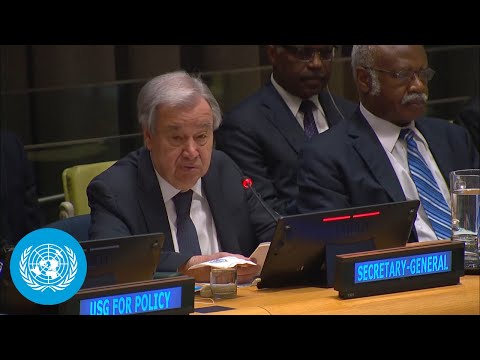
The Secretary-General presented a report to member states outlining proposals to improve how U.N. mandates are created, delivered and reviewed, urging a shift toward digital registries, clearer mandates and fewer, better-targeted reports.
The report, presented under the U.N.80 initiative, frames the problem as a growing gap between the number and complexity of mandates and the resources and systems available to implement them. The Secretary-General said the aim is not to question member states’ authority over mandates but to make implementation “more effective, more efficient, and with greater impact.”
The report highlights three stages of the mandate life cycle: creation, delivery and review. For mandate creation, it recommends a system-wide, accessible digital mandate registry and use of AI-assisted analysis to flag duplication before new mandates are adopted. “There is no easy way to know what already exists,” the Secretary-General said, noting that “today, there are more than 40,000 resolutions and decisions on the books and counting.”
On delivery, the report calls for fewer meetings and more tailored reporting formats. The Secretary-General said the U.N. system supported roughly 27,000 meetings involving about 240 bodies last year and produced approximately 1,100 reports, many of them recurring and increasingly long. He noted that about one in five reports received fewer than 1,000 downloads and that “out of every $10 of the regular budget goes to direct servicing costs,” arguing that the current volume strains staff and finances.
The report also addressed coordination and oversight, recommending stronger internal controls for strategic and programmatic oversight, clearer linkage of mandate citations to entities’ deliverables, and better use of existing coordination platforms to reduce duplication across entities. The Secretary-General said the secretariat’s 2026 program budget estimates will reflect some proposals and that further items could be included in the 2027 budget process.
On funding, the report emphasized the fragmentation of resources: in 2023, about 80% of system funding came from voluntary contributions and, despite the 2019 funding compact, a large share of those contributions were heavily earmarked. The Secretary-General warned that highly earmarked, small-value contributions raise transparency costs and limit impact, and he urged greater use of pooled funding mechanisms.
Regarding mandate review, the report said reviews are rare: more than 30% of subjects of resolutions adopted in 1990 remained on the agenda in 2024, and 85% of active mandates contain no instructions for review or termination. The report proposes exploring structured, periodic review mechanisms and harmonized results-and-resources frameworks; the Secretary-General said only roughly 40% of U.N. entities have strategic plans and about 30% have integrated results-and-resources frameworks.
The Secretary-General framed the proposals as options for member states to consider and said the secretariat stands ready to support consultations. Translated versions of the report were said to be forthcoming; the report was made available in English the day before the presentation.
The presentation repeatedly emphasized staff across duty stations as essential to implementing mandates, saying their expertise and dedication are indispensable and that reforms must support those who carry mandates out.
Next steps described in the presentation included member-state consideration of the proposals and potential intergovernmental processes if states choose to pursue a formal mandate-review exercise. The Secretary-General said the secretariat can implement measures within its remit but that mandates, including their creation, review and retirement, remain the prerogative of member states.