Get Full Government Meeting Transcripts, Videos, & Alerts Forever!
Get email alerts on the Gaza Humanitarian Access topic
No spam. Unsubscribe anytime.
UN: Aid entering Gaza remains insufficient as fuel shortages and convoy delays persist
Summary
UN humanitarian officials said hundreds of thousands of liters of fuel are needed daily in Gaza, aid deliveries remain impeded by dangerous routes and long waits, and OCHA reported more than 100 people killed in two days along food convoy routes.
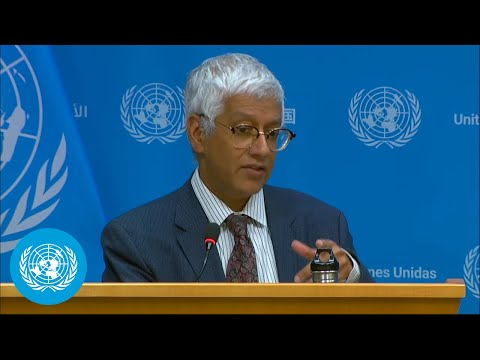
UN humanitarian officials warned at a United Nations press briefing that aid entering Gaza remains insufficient to meet urgent needs and that civilians continue to be killed and injured while searching for food.
The Office for the Coordination of Humanitarian Affairs (OCHA) reported that more than 100 people were killed in the past two days and hundreds more injured along food convoy routes or near militarized distribution hubs. OCHA said community-level delivery at scale and unrestricted flow of aid into Gaza are required to prevent further loss of life.
OCHA noted that market prices remain volatile and out of reach for many families; over the past two weeks humanitarian partners distributed cash to 20,000 families. The briefing said humanitarians cannot address the crisis alone and urged that commercial supplies also be allowed in.
The World Health Organization reported delivering 11 trucks of medical supplies, including trauma and laboratory supplies, to a warehouse in Deir al-Balah. The UN collected and delivered approximately 150,000 liters of fuel from Kerem Shalom Crossing to a UN-managed fuel station on the night prior to the briefing, but officials said the UN and partners need hundreds of thousands of liters every day to power health, water and sanitation, and emergency telecommunications.
Humanitarian movements face delays and impediments. Approved missions often take many hours because teams wait at multiple points along prescribed routes; one fuel mission took 18 hours to complete, while the direct distance cited between Deir al-Balah and Kerem Shalom is about 24 kilometers. Officials said the routes instructed by Israeli authorities are often dangerous, congested or impassable.
"Civilians must always be protected and community-level delivery at scale must be facilitated," OCHA said during the briefing.
The briefing noted limited increases in aid access in recent days but stressed that the amounts that have entered Gaza so far remain insufficient and that fuel, safe passage and unfettered humanitarian access are still urgently needed.