Get Full Government Meeting Transcripts, Videos, & Alerts Forever!
Get email alerts on the Budget Djj topic
No spam. Unsubscribe anytime.
Marion County budgets face $1.66 million juvenile-justice spike; commissioners weigh one-time funding to hold millage
Summary
County budget staff told commissioners the Department of Juvenile Justice (DJJ) allocation rose 61.6%, adding $1,663,000 to the county's obligations. Commissioners asked staff to seek trend data from state DJJ officials and discussed using nonrecurring funds to avoid raising the millage rate.
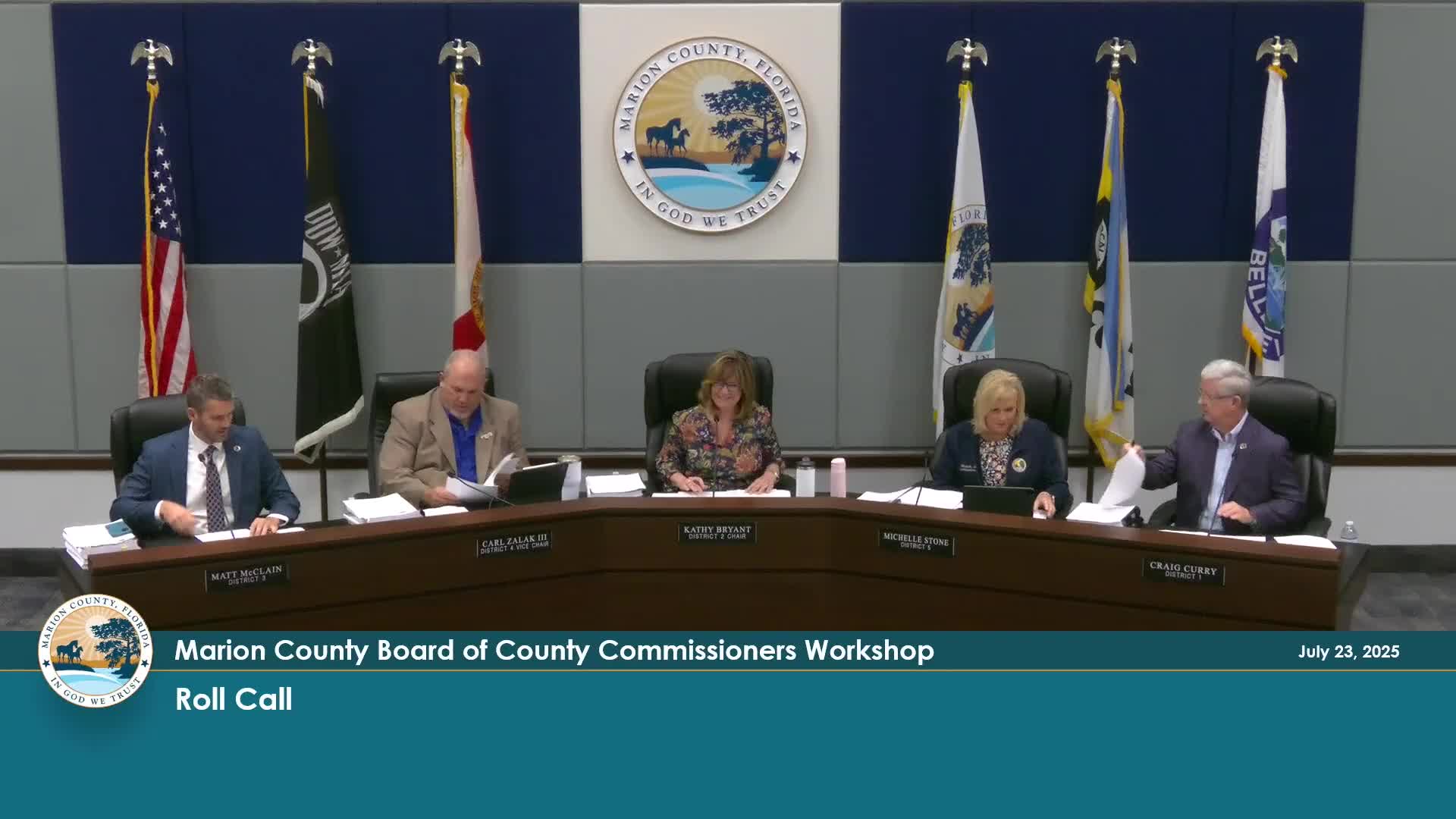
Audrey Fowler, Marion County budget director, told the Board of County Commissioners during a continuation of the FY2025–26 budget workshop that the county's DJJ bill rose sharply. “The DJJ was a 61.6% increase. It went from $2,700,000 to $4,300,000. So it was $1,663,000 increase to the DJJ bill,” Fowler said.
The jump matters for the county's millage calculation: Fowler said the reserve for cash carry forward is $6,200,000 (a little over two months of operating expenses) and explained that a remaining 0.04 mills equates to about $1,448,912 in revenue. Commissioners discussed trade-offs between recurring and nonrecurring funds and whether to use one-time money to lower the proposed millage.
State Attorney Bill Gladson described why the DJJ bill may have increased, linking it to changes in juvenile detention practice and a more active placement process. Gladson said local law enforcement, the sheriff and county prosecutors pushed the Department of Juvenile Justice to hold and place more violent juvenile offenders instead of turning them back into the community. “Going back about 3 years, maybe 4, we saw a huge spike in violent juvenile crime,” Gladson said, and he described coordinated meetings with DJJ and a local DJJ representative, Randy Reynolds, to identify prolific offenders and secure placements.
Commissioners asked for more data before making final budget choices. Chair Bryant and Commissioner Zalick pressed staff for numbers and trends; Commissioner Curry asked whether the county could obtain updated counts for the first half of 2025 to see whether the spike persists. County staff agreed to request trend information from the DJJ contact named in the meeting and to prepare options for using available one-time funds in the general fund to mitigate any millage increase.
Budget staff summarized the short-term fiscal options. Fowler said the county currently has approximately $1.472 million in nonrecurring general-fund dollars above the cash-carryforward minimum; using $475,000 of that would reduce the general-fund millage to the board's target of 3.35 while leaving roughly $1.0 million in nonrecurring reserves for contingencies.
The board directed staff to: (a) request DJJ placement and detention trend data for January–June 2025 from the state DJJ representative Randy Reynolds and (b) prepare a written options memo showing the tax impact of covering part of the DJJ increase with one-time general-fund dollars versus adjusting the millage.
The discussion did not include any formal vote; commissioners said they wanted the additional data before committing to millage or program changes.
Ending: Commissioners emphasized that the goal was to understand the drivers of the higher DJJ bill and to present an evidence-backed recommendation to the public and the board at a later meeting. Staff committed to returning with the requested trend data and with options that show the tax impact of one-time funding vs. higher recurring obligations.