Get Full Government Meeting Transcripts, Videos, & Alerts Forever!
Get email alerts on the Economic Development Energy topic
No spam. Unsubscribe anytime.
County adopts ordinance to enable $497 million industrial revenue bonds for 330 MW solar‑battery project
Summary
Sandoval County adopted an ordinance authorizing issuance of up to $497,000,000 of industrial revenue bonds and a payment‑in‑lieu‑of‑tax (PILOT) schedule for a 330‑megawatt solar and battery project; bond counsel and county staff said litigation could halt closing but the county’s obligation would be limited to tax treatment only.
Sandoval County commissioners voted on July 23 to adopt an ordinance authorizing industrial revenue bonds that would support a 330‑megawatt solar and battery generation project and establish a payment‑in‑lieu‑of‑tax framework for the county and local school districts.
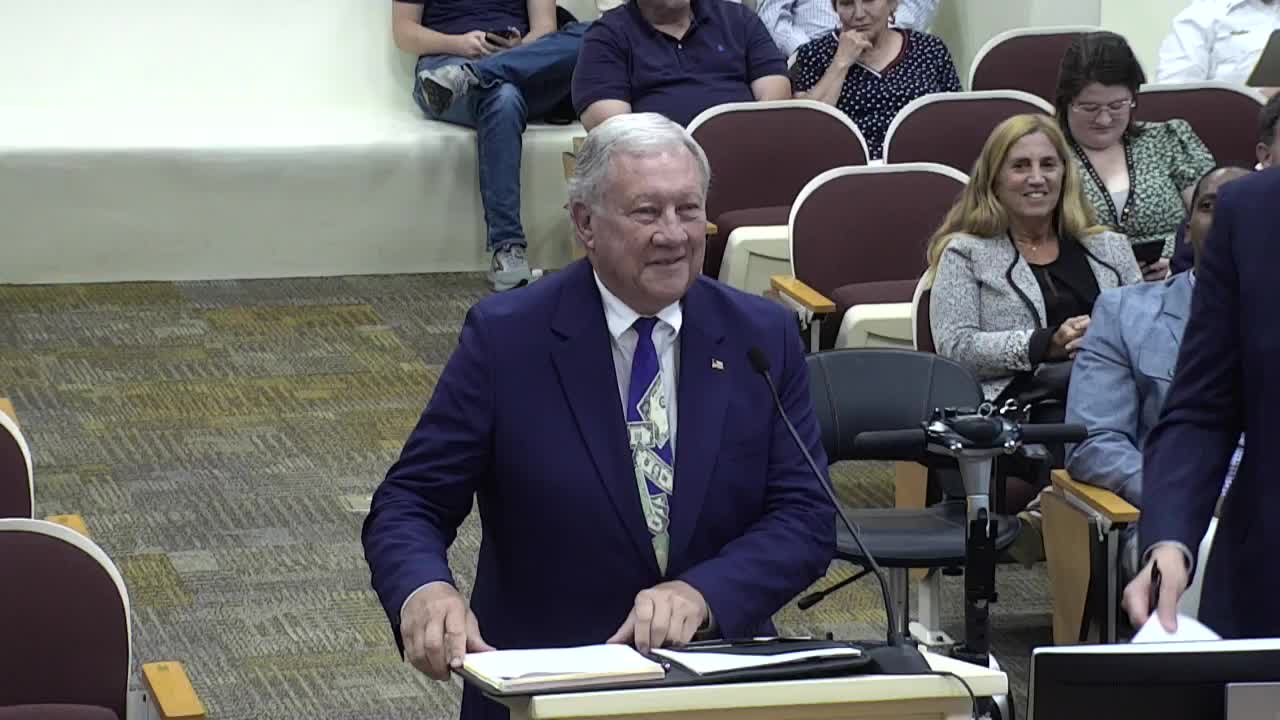
County bond counsel and staff described the ordinance as the final step in a multi‑part transaction that authorizes up to $497 million in conduit financing. Dan Opperman of the Taft Law Firm, serving as bond counsel, told the commission the ordinance and related agreements — an indenture, lease and bond purchase agreement — were in substantially final form and that statutory notices had been published.
Rob Burpo, county staff, described the PILOT calculation and its assumed price trajectory. Using an escalated metric the county and counsel modeled a starting price of $3,200 per megawatt‑hour (escalated from prior assumptions used in earlier projects) and the project’s 330 megawatts produced modeled PILOT receipts of about $1,056,000 for the first five‑year period in the study; the county’s share of the PILOT would begin at roughly $600,000 and escalate over time as the payment schedule increases.
Opperman summarized legal and timing points: if the ordinance is adopted, the county starts a 180‑day window to close the transaction, but outstanding litigation or successful protests against land‑use approvals elsewhere could prevent closing. “Should the Protestants succeed in their legal case, this…would kill the deal and we would go beyond the hundred and 80 days that we have to to consummate to close on this,” counsel said. County staff and counsel emphasized that the county does not pledge its full faith and credit for conduit industrial revenue bonds; the project obligor is responsible for repayment.
Commissioners asked how the PILOT would be shared with school districts. Burpo explained the county performed a Senate Bill 474 study that allocates the pilot among the county and the five school districts based on statutory formulae, but commissioners criticized the statute’s language for counting total district enrollment rather than enrollment inside county boundaries, which yields a large allocation to Albuquerque Public Schools for reasons of how the statute reads.
The ordinance passed on a roll‑call vote. Chair Meek, Vice Chair Perez, Commissioner Brook, Commissioner Hur and Commissioner Jones each voted yes.
Ending — County staff said the project representatives and counsel will proceed to meet closing requirements and monitor ongoing litigation; staff noted that litigation could prevent close and that the county’s action authorizes a tax mechanism rather than county debt or operations oversight.