USVI housing agencies ask for steady funding as federal cuts loom
Loading...
Summary
Two territory housing agencies told the legislature they face large program costs, unpaid stamp taxes and uncertainty over proposed federal HUD budget cuts while seeking continued local appropriations and help speeding project rollouts.
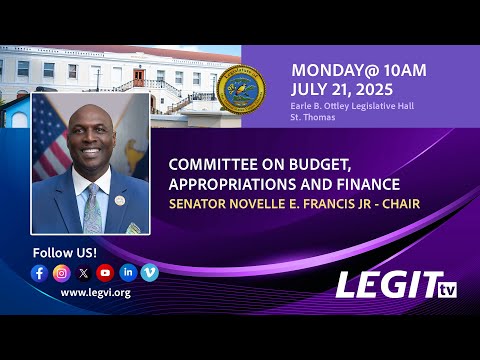
The Virgin Islands Housing Finance Authority (VIHFA) and the Virgin Islands Housing Authority (VIHA) presented their fiscal 2026 budgets to the Legislature’s Committee on Budget, Appropriations and Finance on July 21, saying local appropriations and federal grants are both essential to keep programs and construction on track.
VIHFA Executive Director Eugene Jones Jr. said VIHFA’s proposed operating budget for FY2026 is $28,924,234, including a requested $2,000,000 from the general fund. Jones told the committee VIHFA expects other revenue from stamp tax collections, home sales, commercial leases, mortgages and federal reimbursements. “The authority was projected to receive $5,000,000 in stamp tax revenue for fiscal year 2024,” Jones said, and his office is seeking a multi‑year balance owed by government. Jones said the general fund appropriation has historically funded salaries and fringe for about 20 locally funded positions.
VIHA Executive Director Dwayne Alexander described the housing authority’s operating and capital needs across public housing and voucher programs and said the agency currently has a “troubled” HUD designation but is working to improve its score. Alexander said the authority manages roughly 2,129 public housing units in 18 communities and said capital fund and HUD allocations are needed to preserve units and proceed with redevelopment projects. He listed active redevelopment and rehab work — including large projects at Hamilton D. Jackson and plans for senior housing and other phases — and said capital fund obligations and FEMA and CDBG‑DR funds are central to that work.
Why it matters: both agencies said their operations rely on federal grants that may be cut in Washington, and on local receipts such as stamp tax transfers that have not been consistently delivered. Jones and Alexander asked legislators to sustain local appropriations while both agencies try to speed up construction, improve occupancy and use mitigation and recovery funds for housing preservation and new builds.
Key facts and numbers - VIHFA FY2026 operating budget proposed: $28,924,234, including $2,000,000 general fund. Jones said VIHFA projected $5,000,000 in stamp tax revenue for FY2024 but has not received later years’ disbursements. - VIHFA personnel/service projection cited: roughly $13.1 million for personnel costs in FY2026. VIHFA reported 4 current vacancies and said rising insurance and retirement costs increase pressure on local appropriations. - VIHA major program figures cited: public housing operating ~$20,000,000, capital fund program ~$11,200,000 for FY2026 authorization (reported as awards/allocations), housing choice voucher program ~$17,000,000. VIHA reported 168 filled positions and 32 vacancies (staffing counts varied by filing date in testimony). - Both agencies highlighted large federal grants they administer: CDBG‑DR, Mitigation (MIT), HOME, ESG, Emergency Rental Assistance, Homeowner Assistance Fund (HAF), FEMA and other federal programs described in testimony.
Discussion and staff direction - VIHFA: Jones said VIHFA is pressing the Office of Management and Budget (OMB) and a board member who is OMB director to recover stamp tax receipts owed to VIHFA and that the authority has drawn monthly general fund support for salaries. He said VIHFA is exploring tax‑exempt bonds and the possibility of MTW (Moving to Work) flexibility to combine funding streams. - VIHA: Alexander said HUD budget uncertainty (cited draft federal proposals) could cut programs and change how rental assistance is delivered; he urged monitoring and advocacy with federal appropriators. He said VIHA is prioritizing vacancy turn‑around, using capital funds and partnerships with developers, and continuing large FEMA and HUD‑funded redevelopment projects.
What legislators asked and what agencies promised - Legislators pressed for better public outreach about housing programs (VIHA said it has a newsletter, radio outreach, meet‑the‑resident sessions and planned ramped‑up outreach for 2026). VIHA and VIHFA agreed to provide additional line‑item and personnel funding detail on request (including breakdowns of positions supported by stamp tax or other internal revenues). - Multiple senators asked for updates on specific redevelopment sites (Tutu High Rise abatement/demolition timeline, Wild Pineapple and Queen Louise projects, Loveland/Calabash/Bellevue acquisitions under mitigation funds) and were told construction and environmental clearances are in various stages; several projects anticipate ground breakings in late summer to fall 2025 or later depending on permitting and EPA/environmental clearances.
Uncertainties and limits - Agencies repeatedly distinguished types of funding and the limits on local authority: neighborhood and redevelopment projects depend on HUD, FEMA CDBG‑DR, mitigation, or private developer financing; VIHFA and VIHA said they must follow HUD requirements for HOME, ESG and HAF programs and that HOME funds carry resale/recapture requirements. - Both agencies said they are monitoring proposed federal HUD budget changes that could reduce funding and change program structure; they did not predict precise revenue impacts.
Ending note Lawmakers asked for follow‑up materials the agencies committed to provide: detailed staffing/funding breakdowns showing which positions are supported by local appropriation, stamp tax, federal reimbursements or other revenues; updated schedules for Newport‑area and St. Croix projects; and documentation of the agencies’ grant balances and draw schedules. Both agencies emphasized they want to preserve staff and keep projects moving while awaiting federal and local receipts.