Get email alerts on the Juvenile Services topic
No spam. Unsubscribe anytime.
Bannock County approves application for two juvenile programs; authorizes juvenile justice signature
Summary
Commissioners approved the juvenile justice office's applications for two programs — a gender‑specific curriculum (Girl Circle) and an evidence‑based truancy course — and authorized Todd Marder to sign electronically; the county will not incur direct costs from the awards.
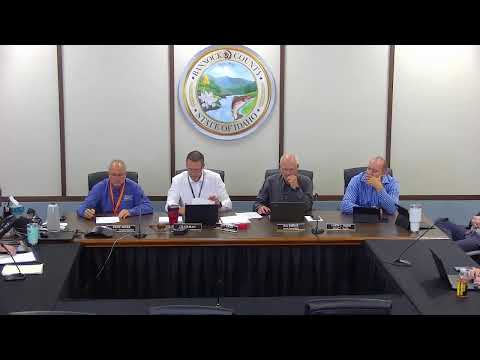
The Bannock County Board of Commissioners on Aug. 22 approved applications from the county's juvenile justice office for two youth‑focused programs and authorized Juvenile Justice staff to sign the applications electronically.
Todd Marder of Bannock County Juvenile Justice told commissioners the Idaho Juvenile Justice Commission's Youth Committee offered two no‑cost support opportunities: the Rise Up initiative, which provides the Girl Circle curriculum, and the Step Forward initiative, which supplies access to Truancy 101 online courses from Third Millennium Classrooms.
Marder said the Girl Circle curriculum package would cost $2,472 and could support repeated groups; the Truancy 101 access would be provided in units that cost $60 per course. He requested 200 Truancy 101 course seats (initially he considered requesting 150) for a total program value the committee would provide of about $12,000. Marder said the committee would purchase the courses and provide county staff with logins and access; "it's kinda a sweet deal because really no money changes hands," he said.
Marder described planned implementation: master's‑level interns (often on AmeriCorps contracts) would lead group work and staff would incorporate online course results into case management plans. He said both curricula are evidence‑based and that the county would receive access to students' responses so case managers could help implement action plans.
Commissioner Molly moved to approve the two grant applications and authorize Marder's electronic signature; the motion carried with the board saying "aye." No county budget appropriation is needed because program materials and course seats will be provided directly by the Juvenile Justice Commission committee, Marder said.
Why it matters: the programs target gender‑specific supports and truancy prevention and would be available to youth referred to the juvenile office or probation services without a direct cost to county taxpayers.
AI generated
The text on this page is AI generated. Summaries, highlights, analysis, and video transcripts are all produced from the original source material.
AI can make mistakes, so if you spot one, and we will fix it for everyone.
Note: the source content is unaltered by us. Any content source we link to, be it a video, an audio recording, or a document, is presented exactly as its publisher released it. That publisher is usually a government body, sometimes an individual official or another organisation.