Get Full Government Meeting Transcripts, Videos, & Alerts Forever!
Get email alerts on the Disaster Recovery Ltrg topic
No spam. Unsubscribe anytime.
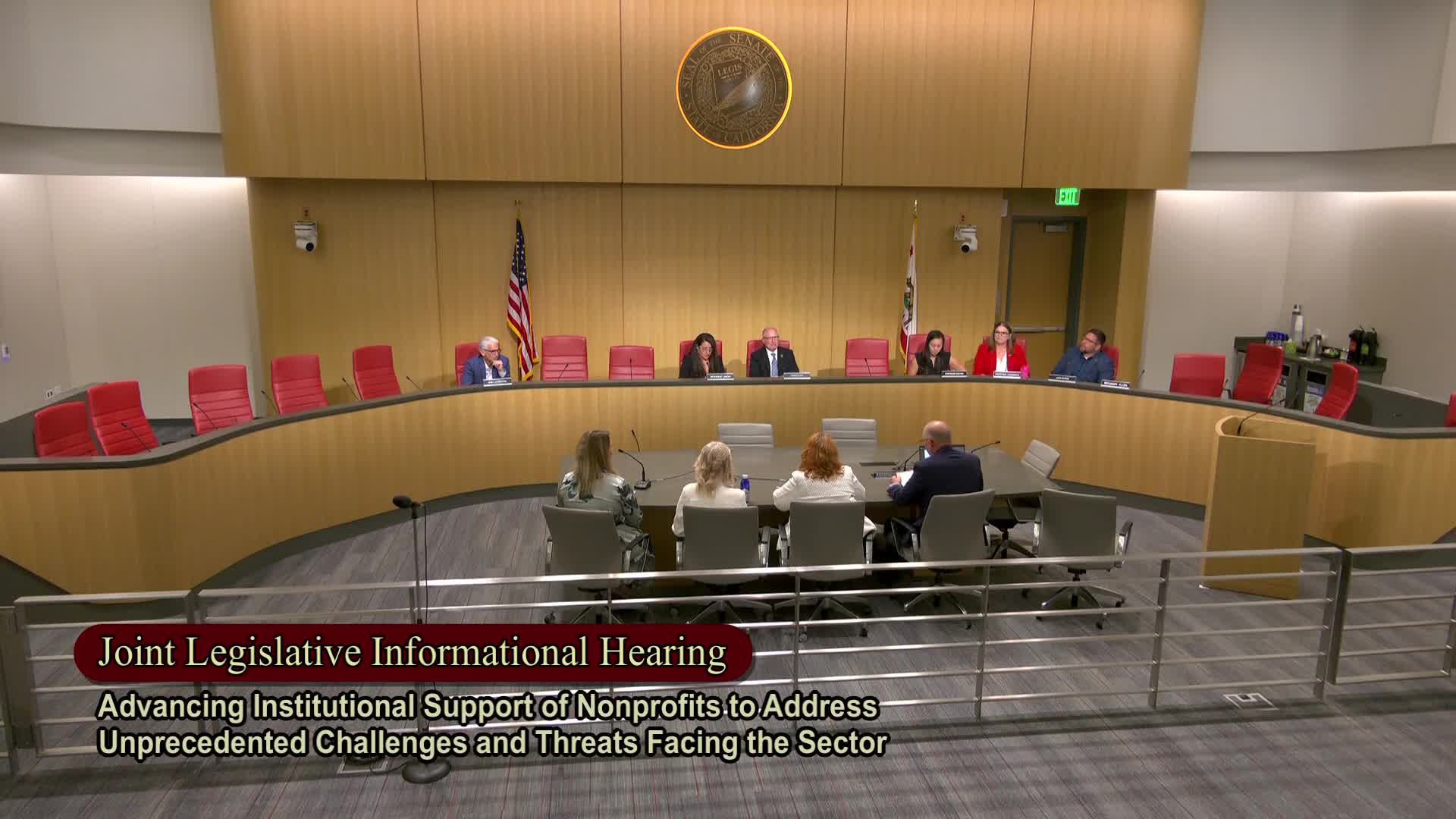
Camp Fire Collaborative urges sustainable funding for long‑term recovery groups
Summary
Representatives of the Camp Fire Collaborative and Cal OES told lawmakers that long‑term recovery groups (LTRGs) win results after major wildfires but lack stable funding for administration and unmet‑needs work; witnesses recommended flexible spending, dedicated support and streamlined partnerships.
Bruce Yurman, director of the Camp Fire Collaborative, and Abby Browning of the California Governor’s Office of Emergency Services (Cal OES) described how long‑term recovery groups coordinate dozens of organizations to serve disaster survivors — and how those groups struggle to cover administrative costs once initial donations and declared‑disaster resources wane.
Yurman described the Camp Fire Collaborative’s work after the 2018 Camp Fire, which “destroyed more than 18,000 structures, burned 150,000 acres and claimed 86 lives,” and said his group helped more than 2,000 families secure housing and directed over $17,000,000 in gap funding. He said LTRGs perform durable case management: “Nearly 7 years later, disaster case managers in Butte County ... are still serving more than 100 active cases with new cases each and every week.”
Cal OES role and donations coordination Abby Browning said Cal OES’ Office of Private Sector & NGO Coordination connects corporate and nonprofit donations to local response and recovery efforts, citing examples such as airline transport for firefighters, Airbnb housing credits and corporate donations to vetted local funds. She described volunteer and donation coordination through VOADs (Voluntary Organizations Active in Disaster) and summarized a recent wildfire resource hub in Pasadena that distributed roughly $12,000,000 in aid and goods over six days.
Funding gap and recommendations Both witnesses said that while FEMA and Cal OES provide valuable training and connections, LTRGs must secure office space, fiduciary systems and operational funds locally. Yurman recommended three steps: flexible spending, sustainable investment in LTRGs and streamlined partnerships to get resources to survivors faster. Testimony stressed that recovery often lasts years and that initial federal declarations do not cover persistent administrative needs.
Lawmakers asked how to translate those recommendations into state supports. Witnesses suggested state grants that cover administration, predictable funding streams for LTRG operations and expanded public–philanthropic partnerships. No formal votes resulted from the hearing.