Get Full Government Meeting Transcripts, Videos, & Alerts Forever!
Get email alerts on the Nonprofit Funding And Government Contracting topic
No spam. Unsubscribe anytime.
Nonprofit leaders urge California to backfill federal cuts, propose state office and payment reforms
Summary
At a joint Assembly–Senate select committee hearing, nonprofit and state emergency officials warned recent federal funding cuts and payment delays threaten services and recovery work; witnesses urged an Office of Nonprofit Empowerment, wider use of advance payments, prompt-payment rules and full indirect-cost coverage.
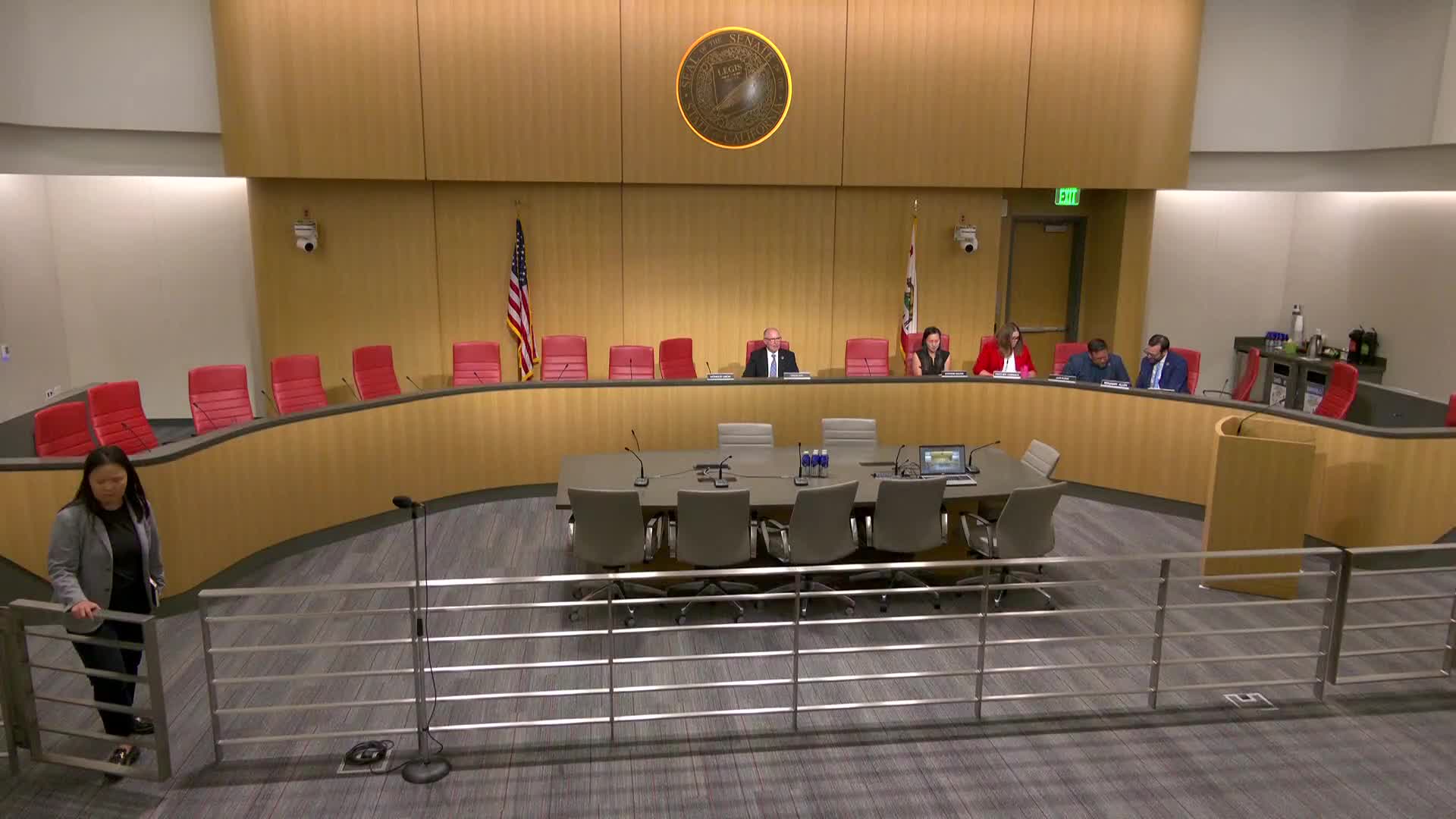
Nonprofit leaders, disaster-response coordinators and state officials told a joint California State Assembly and Senate select committee hearing that sudden federal funding reductions and slow state payments threaten nonprofits’ ability to deliver services across the state.
The hearing convened lawmakers and representatives from community foundations, Cal OES and major nonprofit networks to describe how contract timing, reimbursement models and cuts to federal programs are straining organizations that provide food, housing, health care and disaster recovery. Jeff Green, CEO of the California Association of Nonprofits, said the sector lacks a central point of contact inside state government. “We need better infrastructure within state government and nonprofits really need a voice in state government,” Green said.
Why it matters: Witnesses described the problem as both immediate and systemic — an urgent cash-flow crisis for organizations on the ground and a long-term risk to the nonprofit workforce. Annie Chang, vice president of community engagement at Nonprofit Finance Fund, summarized survey findings showing delays in state payments and limited reserve capacity: “26% of nonprofits in California get paid over 60 days late,” she told the committee. The combination of frozen federal funds, sudden cuts to safety-net programs, and lagging state reimbursements, panelists said, will force some programs to downscale or stop.
Most urgent claims and proposals - Office of Nonprofit Empowerment: Cal Nonprofits proposed a small, permanent state office to serve as a centralized point of contact, provide technical assistance, coordinate across agencies and recommend policies to normalize practices such as advance payments and prompt reimbursements. Green said a staff of a “half dozen” could provide the functions the sector needs. - Advanced payments and prompt pay: Several witnesses urged wider use of upfront or working-capital advances so nonprofits do not have to front program costs. Alfredo Cruz Jr., executive director of Community Resource Project, described how reimbursement-only contracts force organizations to take high-interest loans or refrain from bidding on state work. - Indirect-cost recovery and OMB guidance: Nonprofit Finance Fund noted that many California contracts provide indirect-cost reimbursement well below federal OMB guidance. Chang said the 2024 OMB guidance raising the de minimis indirect rate from 10% to 15% has not been widely adopted in state contracting.
Evidence and examples - Scale: Laura Seaman, who leads the League of California Community Foundations, said in testimony that “California's nonprofit sector makes up 10% of the state's workforce with over 1,700,000 people.” She and other witnesses described community foundations as long-term local partners that steward public and philanthropic funds and can help coordinate crisis response. - Food banks and SNAP: Multiple panelists tied federal changes to rising demand for services. Panelists cited recent federal actions and legislative proposals that they said would reduce available assistance and increase reliance on local nonprofits (details appear in testimony from FoodShare Ventura County and others). - Disaster response: Abby Browning of the Governor’s Office of Emergency Services described how Cal OES coordinates private-sector and NGO donations during declared disasters, and how long-term recovery groups (LTRGs) function after large fires.
No formal actions were taken at the hearing. Lawmakers asked panelists for follow-up details and potential pilot steps such as agency-level modeling of advance-pay programs, tighter timelines for invoice processing and adoption of consistent indirect-cost policies. Several legislators described the state budget outlook as constrained and asked witnesses to propose interim steps that would not require large up-front state outlays.
What panelists asked lawmakers to do next Panel witnesses recommended: (1) normalize advanced payments or make them a routine option in state contracts, (2) shorten and enforce prompt-payment timelines so nonprofits are not forced to borrow to cover operations, (3) adopt or align with the 2024 OMB guidance on indirect rates, and (4) study or pilot a small Office of Nonprofit Empowerment to centralize assistance and interagency coordination.
Looking ahead: Lawmakers signaled interest in pilot programs and administrative changes rather than sole reliance on large budget increases. Several committee members said they would pursue additional hearings and district-level events to raise public attention and support for nonprofit partners.