Get Full Government Meeting Transcripts, Videos, & Alerts Forever!
Get email alerts on the Public Participation topic
No spam. Unsubscribe anytime.
Poudre School District trustees debate limiting public comment under proposed GP 3.13
Summary
Board members and dozens of public commenters sparred over a proposed change to GP 3.13 that would limit community comment to one meeting a month; board deferred a vote for further leadership discussion.
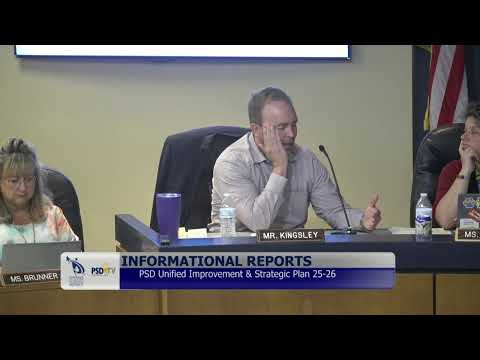
A proposed change to Poudre School District Board Policy GP 3.13 that would limit community public comment to one meeting per month drew sustained public criticism and hours of discussion at the board’s Aug. 12, 2025, meeting.
Speakers at the boardroom and by remote comment said the change would reduce community access and harm parents and advocates who rely on regular public comment to surface concerns, particularly about special education and student mental health.
Taylor Unwin, a frequent public commenter, told the board: “Tonight I'm concerned about any suggestion to limit public comment.” Unwin said the policy change was already being implemented in practice and urged the board to “refer and investigate the February 14 complaint under policy 3.12 and report it back to the public,” rather than curtail comment.
Why it matters: public comment is the most direct way parents, students and staff present concerns to the full board in public session. Several speakers and board members framed the dispute as a trade-off between protecting board member time and preserving transparent access to elected officials.
Board members and staff described the proposal as part of a broader plan to add in-person community engagement sessions—longer, two-hour neighborhood meetings intended for two-way dialogue—and to reduce some regular-meeting agenda items so the board can finish business earlier. Board President Kristen Draper said the engagement sessions would be “in the schools” and intended to create more nuanced, two-way conversations with families.
Public commenters pushed back strongly. Danny Lawrence, who described himself as a parent active on special-education issues, provided numbers from last year’s public comment: “Last school year, there were a 100 speeches given and 18 school board meetings totaling 306 minutes, roughly 5 hours of talk time,” he said, noting that 42% of the comments concerned services for disabled students. Lawrence asked the board not to “vote to silence a specific protected class that was just gaining some long overdue awareness.”
Teachers and union leaders also opposed the change. Wendy Bergman, a social-studies teacher at Rocky Mountain High School, warned of an immediate effect on students if people who connect them to services lose the ability to speak publicly: “When our social worker leaves in January our students won't get that support,” she said, describing how a social-work fellow helped a student avoid expulsion and return to passing grades. Candace Mosier, president of the Poudre Education Association, said the union would continue to press for educator voices to be heard.
Several board directors said they supported the engagement sessions but wrestled with how to preserve accessibility and transparency. Director Scott Schoenbauer urged keeping public comment at each regular meeting, saying: “There's nothing more powerful than a person talking, a kid talking about the heat in their school or an important issue to them.” Director Kevin Havelda proposed a compromise to cap community comment at 30 minutes with board discretion to extend when demand is high.
Procedural status: the board did not vote on GP 3.13 at the Aug. 12 meeting. President Draper and other directors said the item will return for a vote at the next scheduled meeting after leadership talks. Director Jim Brokish reminded the room that this is not a decision made that night: “We're not voting on this tonight, we're voting on this next Friday.”
Board staff and several directors emphasized the plan is intended as part of a package of reforms—time stamps on agendas, more engagement sessions in schools, and restructuring recognitions—but declined to finalize policy language before broader leadership discussion.
The debate highlighted a persistent tension for the board: balancing efficiency and the desire for deeper, two-way engagement, while ensuring that those who cannot attend daytime meetings or longer community sessions still have a reliable route to address the full board in public.
Looking ahead: directors said they will discuss specific language and implementation details in leadership meetings and return the proposal for a formal vote at the next meeting. Several directors urged the board to adopt clear time stamps and to retain flexibility so the board can extend comment when issues attract broad community interest.