Get Full Government Meeting Transcripts, Videos, & Alerts Forever!
Get email alerts on the Public Lands Transfer topic
No spam. Unsubscribe anytime.
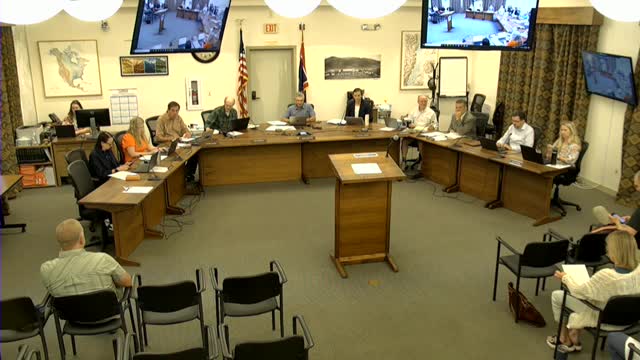
Teton County commissioners authorize pursuit of congressional transfer for BLM Snake River parcels
Summary
After months of public meetings, the County will pursue federal legislation to transfer several small BLM parcels along the Snake River — including Parcels 9 and 10 — into county ownership and conservation, with an associated memorandum of understanding and land-trust protections, commissioners voted unanimously.
Teton County commissioners voted unanimously to direct county staff and the county attorney to pursue congressional legislation to transfer Bureau of Land Management parcels along the Snake River — specifically parcels 9 and 10 and Parcels 23A, 23B and 24, and other parcels as appropriate — into Teton County ownership, with associated memoranda of understanding and conservation easements.
The decision follows a long-running effort to resolve a 2004 BLM resource management plan and a 2008 transfer plan that envisioned keeping the small parcels in public ownership while protecting wildlife, public access, open space and recreational values. "The United States currently owns 12 isolated parcels of land administered by the US Bureau of Land Management," said Keith Gingery, deputy county attorney, describing the background and the narrow question before the board: whether to pursue a legislative option, the Recreation and Public Purposes Act (RPPA) option, or take no action and leave parcels with BLM.
County staff and multiple public commenters framed the decision as a choice between administrative transfer under RPPA, which yields patents (deeds) through an application process the county has used for boat ramps, and a legislative path that would require an act of Congress. Stefan Fodor, speaking for the Walton Ranch (4W), urged support for a legislative transfer that would implement a three-zone plan for Parcels 9 and 10 — a 248-acre recreation zone, a 70-acre agricultural zone and a 43-acre wildlife zone — and place a conservation easement across the property.
Supporters including the Jackson Hole Conservation Alliance, the Snake River Fund and Friends of Pathways urged the county either to use RPPA or to pursue the legislative option in a way that secures permanent conservation and public access. "Decouple the pathway analysis and power line burial from the land transfer and keep management prescriptions in public hands," Orion Hatch of the Snake River Fund said, recommending RPPA. Several speakers, including Amberley Baker (legal counsel for Sewell Partners/Snake River Ranch family), noted that Parcels 23 and 24 already have an MOU and that a legislative package could include both 9–10 and 23–24.
Commissioners discussed logistics: the county would need to refine any MOU with private landowners (the Walton Ranch), reengage the Jackson Hole Land Trust on conservation easement terms, and possibly engage Western Land Group to shepherd legislation through Congress. County staff said Senator John Barrasso’s office has indicated willingness to sponsor or shepherd such legislation. Gingery emphasized that pursuing the legislative option would be the start of a longer process, not an immediate transfer.
After discussion the board adopted a motion directing staff to pursue a legislative transfer of BLM Snake River Corridor Parcels 9 and 10, Parcels 23A, 23B and 24 and such other parcels as may be appropriate; to prepare any associated memorandum of understanding; and to seek assistance from the Wyoming County Commissioners Association. The motion passed unanimously.
The county’s next steps under the legislative path, as described at the meeting, include negotiating final MOU terms with Walton Ranch representatives, coordinating with the Jackson Hole Land Trust on conservation easement language, and deciding whether to retain Western Land Group for federal legislative assistance. Staff and speakers repeatedly noted RPPA remains an available administrative alternative if legislative efforts stall.
Details to watch going forward include whether a final MOU allows continued agricultural lease on portions of Parcel 9/10, the exact configuration of the proposed recreation and wildlife zones, any amendments to existing conservation easements to enable pathway easements or buried utilities, and the timeline for preparing legislation with Senator Barrasso’s office.
Votes at a glance: The board voted unanimously to direct staff to pursue a legislative transfer of BLM Snake River Corridor Parcels 9 and 10, 23A, 23B and 24 and such other parcels as appropriate; mover: Commissioner Karlman; second: Commissioner Gardner; outcome: approved unanimously.
The board did not authorize immediate conveyance, easement changes, or easement amendments at this meeting; it authorized staff to pursue the legislative option and related negotiations.