Get Full Government Meeting Transcripts, Videos, & Alerts Forever!
Get email alerts on the Nuisance Code topic
No spam. Unsubscribe anytime.
Colleyville council begins drafting approach to programmable residential lighting; seeks more study and outreach
Summary
Council discussed whether to regulate motion and programmable residential lights through nuisance code changes, agreed to consult a property owner and bring the topic back for another work session.
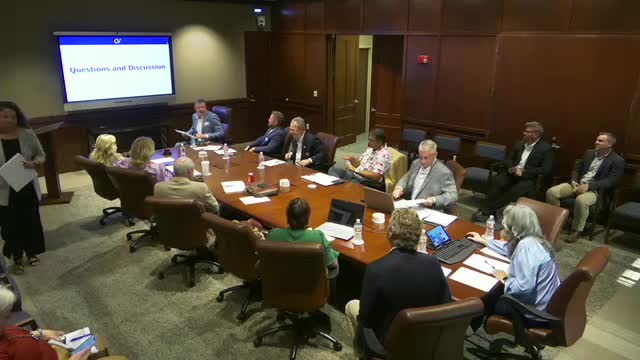
The Colleyville City Council discussed how to address increasingly programmable and motion‑capable residential outdoor lighting during its Aug. 5, 2025 work session, with staff recommending the city treat problematic lighting under the municipal nuisance code rather than by detailed technical luminance standards.
The nut graf: staff and council noted that modern LED and programmable display systems can create glare or driver distraction; city legal staff explained nuisance law gives councils flexibility to address neighbor complaints and safety concerns without the technical and enforcement complexity of specifying lumen levels or exact glare metrics.
A staff advisor reviewed existing code and enforcement options, noting section 42‑27 of the municipal code lists nuisance items and currently includes outdoor lighting provisions limited to some recreational and sports‑court uses. He recommended an amendment focused on “outdoor lighting fronting improved right of way” and standards such as prohibiting attention‑getting devices that may distract drivers, preventing illumination of adjoining properties, and avoiding negative impacts to surrounding properties. “Lights shall not be of an attention getting device nature that may distract motorized vehicle operations,” the advisor said while explaining the safety rationale for that formulation.
Councilmembers expressed varied views: some said they preferred a hands‑off approach unless a problem is demonstrated, others said the city should adopt a clearer standard before programmable lighting becomes widespread. Several councilmembers noted one local property’s programmable lighting had prompted neighbor complaints about glare and distraction when entering a nearby roadway. Council members asked staff to contact the property owner to discuss options (for example, switching to soft white or limiting motion), and they directed staff to return with draft language for a future work session.
Ending: Council asked staff to reach out to the property owner, research comparable ordinances, and return with proposed nuisance‑based language and enforcement options at a later work session; no ordinance or formal vote was taken at the meeting.